
Hitachi Rail Reports AI Digital Suite to Optimize Rail
Hitachi Rail launched its AI digital suite to optimize rail operations and increase service capacity on networks over 50 years old.
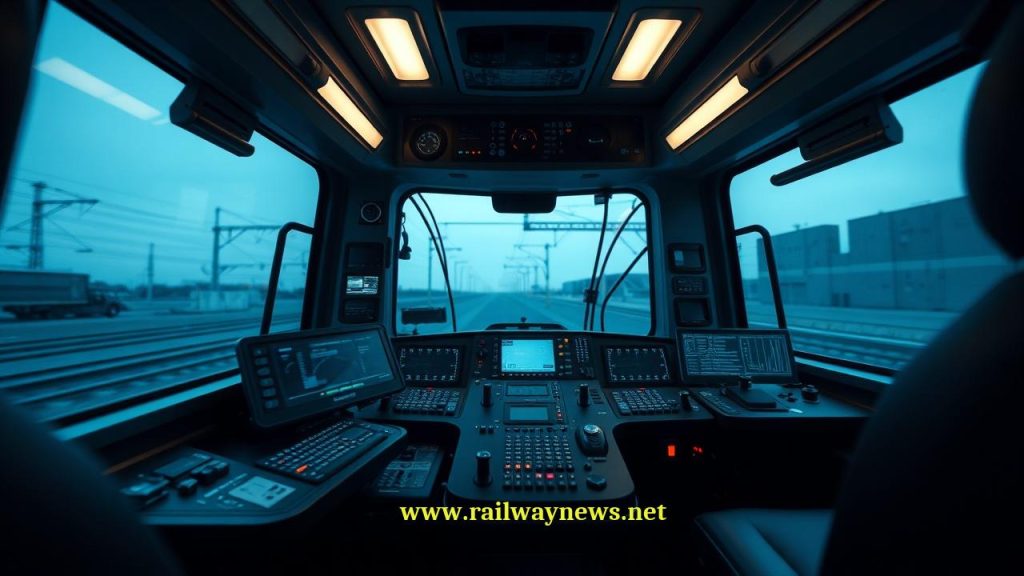
⚡ In Brief: Hitachi Rail has outlined its vision for an AI-driven digital suite to optimize railway operations, addressing challenges on legacy networks like the UK’s where integrated data solutions are being applied to major upgrade projects.
[LONDON, UK] – Hitachi Rail has presented its strategy for using artificial intelligence and edge computing to create a fully optimized railway ecosystem, from train operations to predictive maintenance. During a recent conference panel, Chief Technology & Innovation Officer Mariella Guerricchio detailed how the company’s digital suite integrates data from trains, signalling, and infrastructure. This approach is designed to increase service capacity on networks facing rising passenger demand.
What Are the Technical Specifications?
Hitachi Rail’s digital suite is designed to function as a central data hub for the entire railway ecosystem. The system harmonizes data collected from proprietary sensors, existing operator systems, and digital twins of physical assets. This integrated data is then processed using AI solutions to enable applications such as real-time operational optimization, predictive maintenance scheduling to anticipate failures, and strategies to reduce energy consumption across the network. The company noted that a key challenge is integrating these modern technologies with legacy rail networks, many of which are between 50 and 100 years old.
Key Technical Data
| Parameter | Value |
|---|---|
| Technology / System Name | Hitachi Rail Digital Suite for Rail |
| Total Value | Not disclosed |
| Parties Involved | Hitachi Rail, various network operators (unspecified) |
| Timeline / Completion | Not disclosed |
| Country / Corridor | Global application |
Where Does This Technology Stand in the Market?
Hitachi’s digital suite enters a competitive market for rail asset management and operational intelligence platforms. Siemens Mobility’s “Railigent X” application suite offers a comparable service, using AI and the Internet of Things (IoT) to analyze data from rolling stock and infrastructure for 100% system availability. Similarly, Alstom’s “HealthHub” platform specializes in predictive maintenance by monitoring the health of trains, infrastructure, and signalling systems to manage asset lifecycle. While all three platforms aim to improve efficiency and reliability, Hitachi emphasizes the integration of signalling and operational data, whereas Alstom’s HealthHub is more heavily focused on rolling stock component monitoring (Source: Siemens Mobility, 2023; Alstom, 2023). The real-world application of these principles is visible in projects like Amey’s data analytics work for Network Rail, which informs optioneering and assesses station dwell times on key UK corridors.
Editor’s Analysis
Hitachi’s vision of “industrial autonomy” correctly identifies that the future of rail efficiency lies in data integration, not just driverless trains. However, the primary obstacle, which the company acknowledges, is the difficulty of retrofitting these digital solutions onto aging, disparate national rail networks. The success of this strategy will depend less on the sophistication of the AI and more on the ability to standardize data inputs and ensure interoperability across legacy systems, a challenge consultancy firms like Amey are actively addressing in major upgrade programmes such as Northern Powerhouse Rail. This push towards digitalization aligns with broader market trends, as the global railway signalling market is projected to grow steadily through 2025, driven by investments in technology to enhance safety and efficiency (Source: Market Research Future, 2023).
FAQ
Q: What specific problems does Hitachi’s AI platform aim to solve?
A: The platform is designed to optimize the entire railway ecosystem by enabling predictive maintenance to prevent failures, reducing energy consumption, and analyzing operational data in real-time to increase service capacity.
Q: Who are the main competitors to Hitachi in the digital rail technology space?
A: Key competitors include Siemens Mobility with its Railigent X platform and Alstom with its HealthHub solution. Both offer data-driven analytics and predictive maintenance services for the rail sector.
Q: What is the biggest challenge to implementing this technology on existing railways?
A: The primary challenge is integrating modern digital technologies with legacy infrastructure, some of which is over 100 years old. Ensuring interoperability and compliance with stringent safety regulations for AI in a critical system are also significant hurdles.

Railway infrastructure, rolling stock and transport technologies specialist focused on global rail industry developments, high-speed rail systems, signaling technologies and freight transportation. Covering railway investments, public transport modernization, rail operations and international mobility projects across Europe, Asia and North America.
RELATED POSTS

August 4, 2026 1:11 pm
Hitachi Rail Canada secured a $407.7M contract to install CBTC...

August 11, 2026 11:13 am
Hungary confirmed the €2.5B Hungarian rail upgrade will not see...

August 4, 2026 11:12 am
MBTA confirmed a $150.8 million overhaul of the 85-year-old Green...

August 5, 2026 7:11 pm
JR Central secured Shizuoka governor approval July 7, 2026 for...

August 1, 2026 7:14 pm
€205 billion funding shortfall threatens the TEN-T rail network's completion...
August 1, 2026 7:56 am
BMZ delivered two new TEM18DM diesel shunting locos to RZD...