
Herrenknecht Delivers 235-Meter TBM for Mont Cenis Base Tunnel
Herrenknecht delivered a 235-meter dual-mode TBM for the 57.5 km Mont Cenis Base Tunnel, central to Lyon-Turin rail.
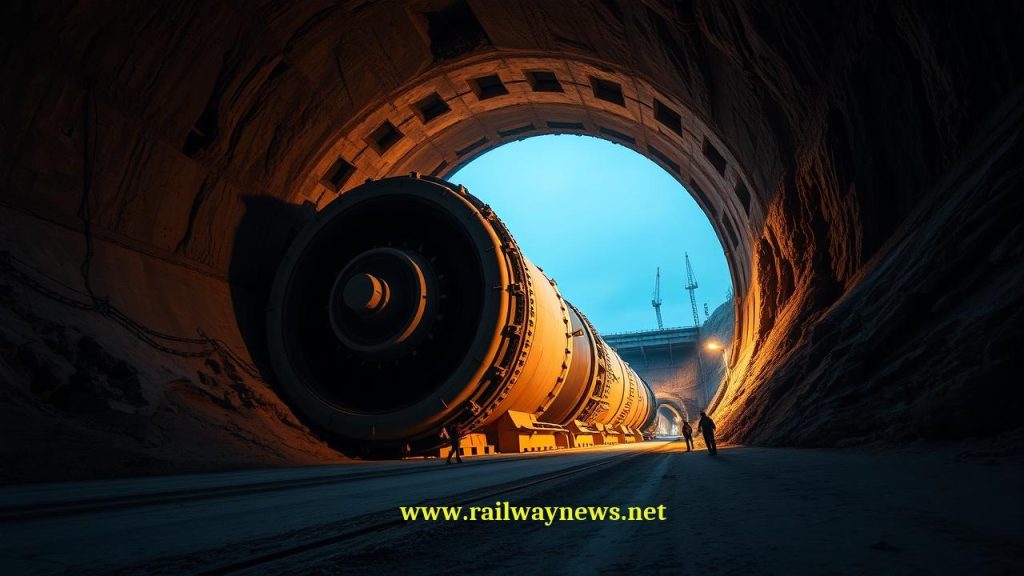
⚡ In Brief: Herrenknecht has delivered the first 235-meter, dual-mode Tunnel Boring Machine (TBM) to the UXT consortium for excavating the 12.5 km Italian section of the 57.5 km Mont Cenis base tunnel, the core of the Euralpine Lyon-Turin high-speed rail project.
SCHWANAU, GERMANY – The first of two large Tunnel Boring Machines (TBMs) for the Italian portion of the Lyon-Turin rail line has been delivered at the Herrenknecht factory. The 235-meter-long machine, featuring a 10.16-meter diameter cutterhead, was built for the UXT consortium (Itinera, Ghella, and Spie Batignolles) to excavate the Mont Cenis base tunnel.
What Is the Full Scope of This Project?
This TBM delivery is a critical milestone for the construction of the Mont Cenis Base Tunnel, the central component of the 270 km Lyon-Turin high-speed line. The custom-built Herrenknecht machine is a dual-mode TBM designed to operate in both hard rock (“open mode”) and loose soil (“closed mode”) under geological overburden of up to 2,000 meters. With 13 motors generating 4,550 kW of power, it will advance approximately 10 meters per day from the Chiomonte construction site in Italy toward the French side of the tunnel.
Key Project Data
| Parameter | Value |
|---|---|
| Project / Contract Name | Euralpine Lyon-Turin (TELT) Base Tunnel – TBM Delivery |
| Total Value | Not disclosed |
| Parties Involved | TELT (Client), Herrenknecht (TBM Manufacturer), UXT Consortium (Itinera, Ghella, Spie Batignolles), IS2P (Project Management) |
| Timeline / Completion | Projected TBM advance of 10 meters/day; overall project completion date not specified. |
| Country / Corridor | Italy / France (Mediterranean TEN-T Corridor) |
How Does This Compare to Similar Projects?
Upon completion, the 57.5 km Mont Cenis Base Tunnel will become the longest railway tunnel in the world, surpassing the current record holder. The project’s scale is comparable to other major Alpine crossings that required highly specialized boring technology. For context, the Gotthard Base Tunnel in Switzerland, currently the world’s longest at 57.1 km, also utilized four Herrenknecht TBMs to excavate through challenging Alpine geology (Source: Herrenknecht AG, 2016). The Lyon-Turin tunnel’s slightly longer route and extreme overburden depths of up to 2,000 meters necessitate advanced, custom-engineered solutions like the dual-mode TBM delivered for this section.
Editor’s Analysis
The delivery of this highly specialized TBM underscores the immense capital and engineering commitment behind Europe’s strategic shift from road to rail freight. This project is not merely about a new rail link; it represents a foundational investment in the continent’s decarbonization and supply chain resilience. The scale of the machinery required reflects the financial and technical barriers involved in creating modern, high-capacity rail corridors, which aligns with the broader trend of massive state-backed spending on electrified transport as part of the European energy transition. (Source: edie.net, 2026).
FAQ
Q: Why is this specific TBM notable?
A: It is a 235-meter-long, dual-mode machine specifically designed by Herrenknecht to handle the varied and extreme geological conditions under the Alps, including both hard rock and loose soil at depths of up to 2,000 meters.
Q: How long is the full tunnel and where does it rank globally?
A: The Mont Cenis Base Tunnel is 57.5 km long. Once completed, it will be the longest railway tunnel in the world, surpassing Switzerland’s 57.1 km Gotthard Base Tunnel.
Q: What is the primary purpose of the Lyon-Turin line?
A: The line is a key component of the EU’s TEN-T Mediterranean Corridor, designed to shift significant volumes of freight and passenger traffic from Alpine roads to rail, thereby reducing carbon emissions and travel times.

Railway infrastructure, rolling stock and transport technologies specialist focused on global rail industry developments, high-speed rail systems, signaling technologies and freight transportation. Covering railway investments, public transport modernization, rail operations and international mobility projects across Europe, Asia and North America.
RELATED POSTS
September 6, 2026 5:19 am
Hitachi delivered Taiwan's first N700ST high-speed train from Japan in...
September 6, 2026 6:17 am
Hungary ordered a national ban on most freight trains from...
September 6, 2026 1:17 am
Hitachi Toshiba Supreme Consortium confirmed the first of 12 N700ST...

September 5, 2026 4:19 pm
CPK launched formal tender talks with four consortia to design...
September 7, 2026 8:16 am
Midea, Gree and TCL shipped air conditioners via China Railway...

September 5, 2026 7:14 pm
HS2 Ltd signed renegotiated civils contracts with EKFB and Align...