
STB Reports NS UP CPKC Meridian Speedway Mandate Denial
U.S. STB denied a September 2025 request by NS and UP for CPKC to fix Meridian Speedway intermodal service.
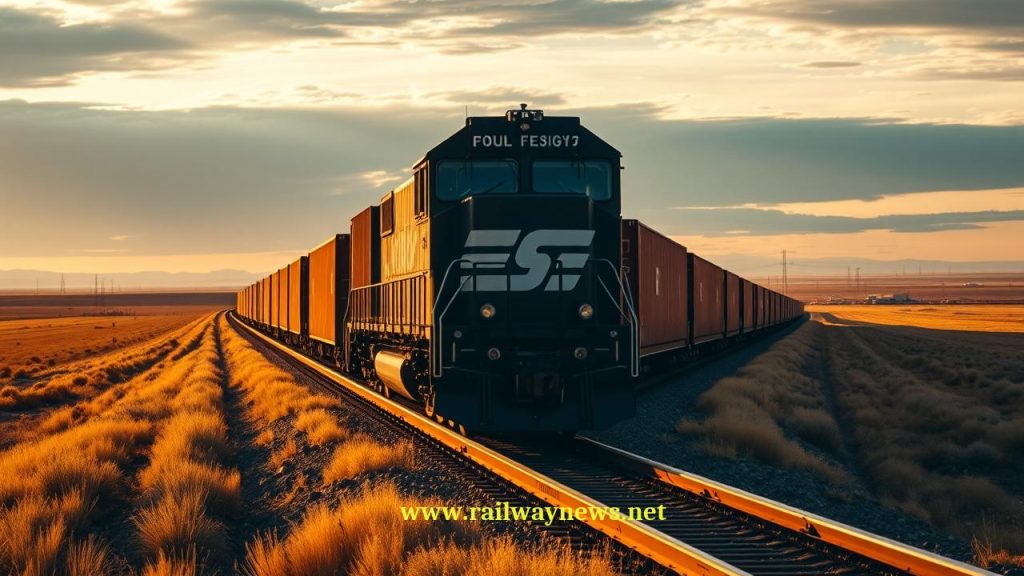
⚡ In Brief: The U.S. Surface Transportation Board denied a request by Norfolk Southern and Union Pacific to compel CPKC to fix intermodal service on the Meridian Speedway, a key corridor where performance has allegedly deteriorated since the 2023 CP-KCS merger, prompting legislative attention.
WASHINGTON D.C. – The U.S. Surface Transportation Board (STB) has denied a September 2025 request from Norfolk Southern (NS) and Union Pacific (UP) to mandate service improvements by CPKC on the Meridian Speedway. The Class I railroads alleged a significant decline in intermodal service on the 320-mile corridor connecting Mississippi and Louisiana since CPKC’s formation in 2023. NS claims the service issues have led some customers to divert freight from rail to truck transport.
What Does This Regulation Cover?
The ruling specifically addresses the formal petition by NS and UP for the STB to compel CPKC to submit a detailed service restoration plan for the Meridian Speedway. By denying the request, the board allows CPKC to continue addressing the operational challenges without a direct and immediate regulatory mandate. The decision does not validate or dismiss the underlying service deterioration claims but rather declines to force a specific procedural action upon CPKC at this time.
Key Regulatory Data
| Parameter | Value |
|---|---|
| Regulation / Policy Name | STB Ruling on Meridian Speedway Intermodal Service Request |
| Total Value | Not applicable |
| Parties Involved | Surface Transportation Board (STB), CPKC, Norfolk Southern (NS), Union Pacific (UP) |
| Timeline / Completion | Request filed Sept. 2025; Ruling issued last week |
| Country / Corridor | United States / Meridian Speedway (Meridian, MS – Shreveport, LA) |
How Does This Compare to Global Standards?
This dispute is a significant test of the STB’s seven-year oversight period imposed on the CPKC merger, which was approved in March 2023. While the STB has broad authority to remedy service failures or anti-competitive actions resulting from a merger, this denial suggests a preference for allowing carriers to resolve operational issues directly before imposing formal mandates. This contrasts with some European regulatory approaches where performance metrics and service levels are more rigidly enforced post-merger. The involvement of US legislators, confirmed in separate reports, indicates that political pressure may escalate if service does not align with the pro-competitive standards promised during the merger review process. (Source: Surface Transportation Board, 2023).
Editor’s Analysis
The STB’s decision places the onus squarely back on CPKC to resolve the integration challenges on the Meridian Speedway, a critical artery for Mexico-US Southeast trade. Failure to restore reliable intermodal service risks not only further diversion of high-value freight to trucking but also invites intensified regulatory and legislative scrutiny, potentially undermining the strategic benefits of the merger. This situation highlights a classic post-merger conflict where operational realities clash with the service commitments made to gain regulatory approval.
FAQ
Q: Why is the Meridian Speedway so important?
A: The Meridian Speedway is a 320-mile rail corridor providing the most direct route for intermodal traffic between the U.S. Southeast and markets in Texas and Mexico. It was a central component of the CPKC merger, intended to create a new single-line North American network.
Q: What was the STB’s specific reason for denying the request?
A: The specific rationale for the STB’s denial was not detailed in the initial announcement. Such decisions can occur if the board believes the issue does not yet warrant a formal regulatory intervention or if it determines the petitioners have not exhausted all commercial remedies.
Q: What happens next for shippers on this route?
A: Shippers will continue to work with CPKC on service, but NS claims some have already shifted to trucking. The ongoing legislative discussions could lead to further hearings or pressure on both the STB and CPKC to ensure service reliability meets customer and economic needs.

Railway infrastructure, rolling stock and transport technologies specialist focused on global rail industry developments, high-speed rail systems, signaling technologies and freight transportation. Covering railway investments, public transport modernization, rail operations and international mobility projects across Europe, Asia and North America.
RELATED POSTS

September 5, 2026 4:19 pm
CPK launched formal tender talks with four consortia to design...
September 5, 2026 7:14 pm
HS2 Ltd signed renegotiated civils contracts with EKFB and Align...
September 6, 2026 4:12 am
Alstom delivered the first of 100 new G Class trams...
September 6, 2026 6:17 am
Hungary ordered a national ban on most freight trains from...
September 6, 2026 8:17 am
DB InfraGO reopened the Nuremberg-Regensburg line in Bavaria on 31...
September 7, 2026 8:16 am
Midea, Gree and TCL shipped air conditioners via China Railway...