
Deutsche Bahn Opens Modernised Hamburg-Berlin Line June 14
Deutsche Bahn reopened its modernised 278km Hamburg-Berlin line on June 14, increasing capacity on Germany’s busiest rail link.
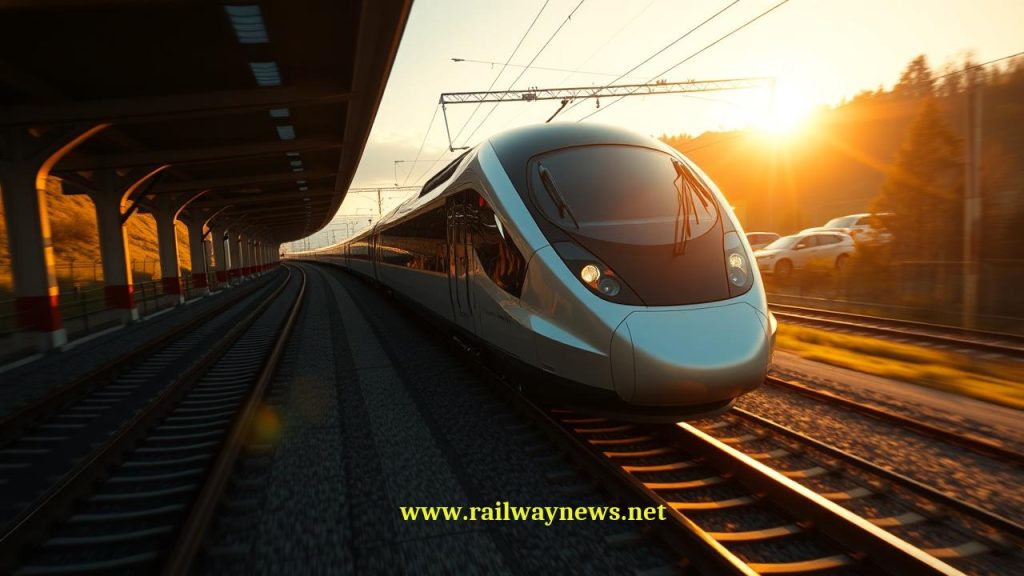
⚡ In Brief: Deutsche Bahn will fully reopen the modernised 278km Hamburg-Berlin line on June 14, following a phased recommissioning, after upgrading 165km of track, 250 points, and 28 stations to increase capacity on Germany’s busiest direct rail link.
BERLIN, GERMANY – Deutsche Bahn (DB) will reopen its modernised Hamburg–Berlin line in two stages, with full services resuming on June 14. The 278km corridor, which handles 470 trains daily, underwent a full closure to upgrade infrastructure, including 165km of track and 28 stations. The project’s completion was delayed by severe winter weather, necessitating a phased recommissioning starting May 15 on the northern section.
What Is the Full Scope of This Project?
The project involves a detailed upgrade of the 278km Hamburg-Berlin corridor, one of Germany’s most critical rail arteries. The work includes the complete renewal of 165 kilometres of track, replacement of nearly 250 points, and the installation of six new crossover points to improve operational flexibility. Additionally, 28 stations have been upgraded, and the signalling infrastructure has been modernised with ETCS-ready axle-counting technology.
Key Project Data
| Parameter | Value |
|---|---|
| Project / Contract Name | Hamburg–Berlin Corridor Modernisation |
| Total Value | Not disclosed |
| Parties Involved | DB InfraGO, unnamed construction companies |
| Timeline / Completion | May 15 (Phase 1), June 14 (Phase 2) |
| Country / Corridor | Germany / Hamburg–Berlin |
How Does This Compare to Similar Projects?
The successful, albeit slightly delayed, delivery of the Hamburg-Berlin corridor upgrade contrasts with other major transport projects in the region. For instance, the Fehmarn Belt Fixed Link, a critical rail and road tunnel connecting Germany and Denmark, has faced significant postponements and is now not expected to open until at least 2031, a multi-year delay from its original schedule (Source: CleanTechnica). While the Hamburg-Berlin project is a national upgrade rather than a new-build international tunnel, DB InfraGO’s ability to complete the work within a year-long closure, despite severe weather, demonstrates effective project management on existing core network lines.
Editor’s Analysis
The completion of this upgrade aligns with Germany’s broader strategy to enhance rail capacity and reliability on its core network. The integration of ETCS-ready technology is particularly significant, positioning the corridor for future digitalised operations and interoperability. This investment reflects a wider trend in the German rail signalling market, which is projected to grow at a compound annual growth rate (CAGR) of 16.6% through 2033 due to regulatory and technological pressures (Source: InternetRetailing.net).
FAQ
Q: Why was the Hamburg-Berlin line reopening delayed?
A: The full reopening was delayed from its original schedule due to an unusually severe and prolonged winter in northern Germany. Weeks of persistent frost and continuous snow cover slowed construction, consuming the project’s planned time buffers.
Q: What specific upgrades were made to the line?
A: The modernization included renewing 165km of track, nearly 250 points, and upgrading 28 stations. DB InfraGO also installed new crossovers and modernised signalling systems to prepare for the future deployment of the European Train Control System (ETCS).
Q: Will more trains run on the line after the upgrade?
A: Yes, the improvements are designed to allow for increased rail traffic compared to before the closure. FlixTrain will introduce a new service every two hours, adding to Deutsche Bahn’s existing half-hourly ICE services.

Railway infrastructure, rolling stock and transport technologies specialist focused on global rail industry developments, high-speed rail systems, signaling technologies and freight transportation. Covering railway investments, public transport modernization, rail operations and international mobility projects across Europe, Asia and North America.
RELATED POSTS

September 6, 2026 5:19 am
Hitachi delivered Taiwan's first N700ST high-speed train from Japan in...

September 5, 2026 4:19 pm
CPK launched formal tender talks with four consortia to design...

September 5, 2026 7:14 pm
HS2 Ltd signed renegotiated civils contracts with EKFB and Align...

September 6, 2026 6:17 am
Hungary ordered a national ban on most freight trains from...

September 6, 2026 1:17 am
Hitachi Toshiba Supreme Consortium confirmed the first of 12 N700ST...
September 5, 2026 5:17 pm
Chiltern Railways completed the Banbury Station ticket office and main...