
U.S. Senate Launches Secure Tracks Act Dual Inspections
U.S. Senators introduced the Secure Tracks Act that mandates dual automated and human track inspections nationwide.
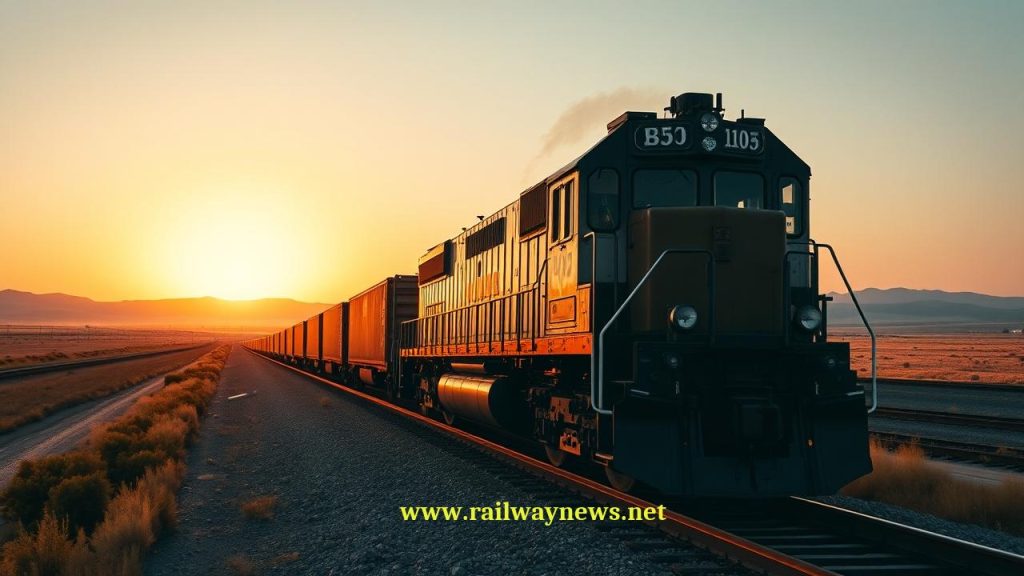
⚡ In Brief: U.S. Senators Tammy Baldwin and Josh Hawley introduced the bipartisan Secure Tracks Act, which would legally mandate that railroads use a combination of automated track inspection (ATI) technology and in-person human track inspections to prevent derailments.
WASHINGTON D.C. – A bipartisan bill introduced in the U.S. Senate on Wednesday by Sens. Tammy Baldwin (D-Wis.) and Josh Hawley (R-Mo.) would require railroads to employ both automated and human track inspection methods. The proposed Secure Tracks Act aims to enhance rail safety by mandating this dual-system approach. The legislation comes in response to Federal Railroad Administration (FRA) waivers that have allowed major railroads to reduce the frequency of manual inspections.
What Does This Regulation Cover?
The Secure Tracks Act mandates a hybrid model for track integrity verification, legally requiring the use of both automated track inspection (ATI) systems and traditional manual inspections by human personnel. The bill’s sponsors argue that while ATI is effective for detecting certain internal rail defects and geometric deviations, it cannot identify other critical issues that cause derailments, such as ballast problems, vegetation encroachment, or certain types of cracks visible only to the human eye. The legislation is a direct challenge to recent FRA waivers that have permitted railroads to substitute technology for human inspectors, a practice the senators claim compromises safety.
Key Regulatory Data
| Parameter | Value |
|---|---|
| Regulation / Policy Name | Secure Tracks Act |
| Total Value | Not applicable; implementation cost for railroads not disclosed. |
| Parties Involved | U.S. Sens. Tammy Baldwin (D-Wis.), Josh Hawley (R-Mo.), Federal Railroad Administration, U.S. railroads |
| Timeline / Completion | Not disclosed; dependent on U.S. legislative process. |
| Country / Corridor | United States (nationwide) |
How Does This Compare to Global Standards?
The proposed dual-inspection mandate aligns with established safety practices in other major railway networks, particularly in Europe. The European Union Agency for Railways (ERA) oversees standards that, while embracing technology, still require a combination of automated and visual inspections, with the frequency determined by factors like line speed and tonnage. For example, high-speed lines often require more frequent and technologically advanced inspections but do not eliminate the role of human oversight. The bill’s co-sponsor, Sen. Hawley, has shown a consistent interest in regulating automation, co-sponsoring federal AI legislation that calls for greater human oversight and risk evaluation in other sectors. (Source: GovTech, 2024). This suggests the Secure Tracks Act is part of a broader policy trend questioning the full replacement of human judgment with automated systems in critical infrastructure.
Editor’s Analysis
This legislation signals a growing political counter-movement to the rail industry’s push for operational efficiency through automation. While railroads have invested heavily in ATI to reduce labor costs and improve data collection, the bill reflects lawmaker and public concern that this shift has gone too far, too fast, potentially at the expense of safety. The proposal places the U.S. regulatory conversation in line with global norms that treat technology as a supplement, not a replacement, for experienced human inspectors. This trend toward re-emphasizing human oversight could influence future infrastructure investment strategies, which have recently focused heavily on technology-driven modernization. (Source: Inp.net.pk, 2024).
FAQ
Q: Why is this legislation being proposed now?
A: The bill was introduced in direct response to the Federal Railroad Administration (FRA) granting waivers that allow railroads to reduce human track inspections in favor of automated systems, a move the senators believe compromises safety.
Q: What types of defects can automated systems miss?
A: According to the bill’s sponsors, ATI can fail to detect issues like fouled ballast, obstructed drainage, vegetation overgrowth, and certain types of cracks or joint bar defects that are more readily identified by an experienced human inspector.
Q: What would be the financial impact on railroad operators?
A: The specific cost to railroads has not been officially disclosed. However, mandating both human and automated inspections would prevent operators from fully realizing the labor cost savings associated with a primarily technology-based inspection strategy.

Railway infrastructure, rolling stock and transport technologies specialist focused on global rail industry developments, high-speed rail systems, signaling technologies and freight transportation. Covering railway investments, public transport modernization, rail operations and international mobility projects across Europe, Asia and North America.
RELATED POSTS

September 6, 2026 5:19 am
Hitachi delivered Taiwan's first N700ST high-speed train from Japan in...

September 5, 2026 4:19 pm
CPK launched formal tender talks with four consortia to design...

September 5, 2026 7:14 pm
HS2 Ltd signed renegotiated civils contracts with EKFB and Align...

September 6, 2026 6:17 am
Hungary ordered a national ban on most freight trains from...

September 6, 2026 1:17 am
Hitachi Toshiba Supreme Consortium confirmed the first of 12 N700ST...
September 6, 2026 8:17 am
DB InfraGO reopened the Nuremberg-Regensburg line in Bavaria on 31...