
HS2 Curzon Street Station Completes 2,011 Piles Birmingham
Mace Dragados JV completed 2,011 concrete foundation piles for HS2 Curzon Street station in Birmingham by March 2026.
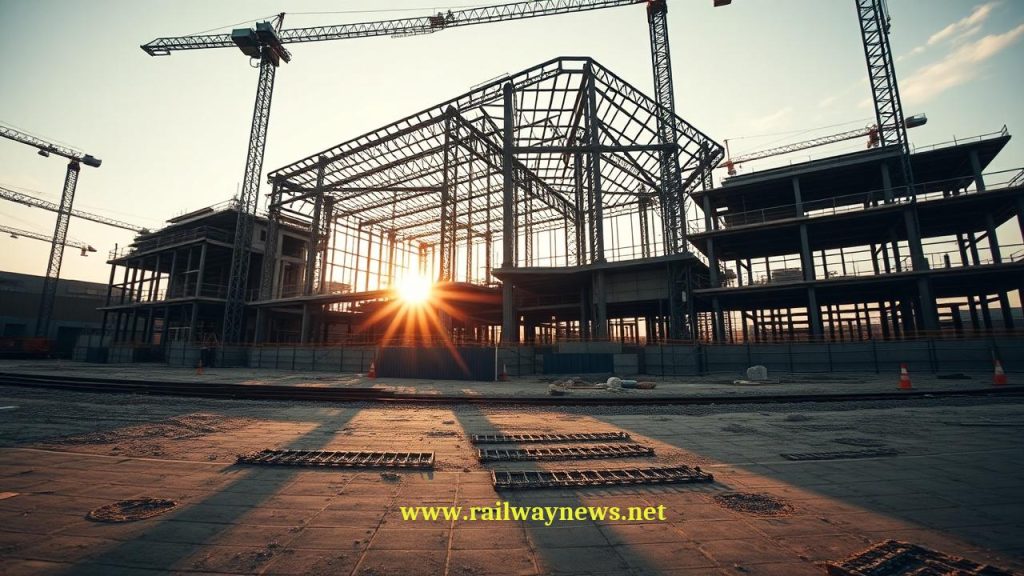
⚡ In Brief: HS2 construction partner Mace Dragados JV has completed the installation of 2,011 concrete foundation piles for the new seven-platform Curzon Street station in Birmingham, UK, clearing the way for the main phase of construction.
BIRMINGHAM, UK – Contractors have completed foundational piling for the new High Speed 2 (HS2) Curzon Street station in central Birmingham. The Mace Dragados joint venture (MDJV) installed the last of 2,011 concrete piles in early March 2026, a project phase that began in September 2024. The work involved excavating 47,000 cubic metres of material to prepare the site for the new city centre terminus.
What Is the Full Scope of This Project?
The Curzon Street station project encompasses the construction of a 400-metre-long, seven-platform terminus with a large arched roof. The sub-surface works require a total of 19,000 tonnes of reinforced steel and 69,000 cubic metres of concrete. The station is designed with two main entrances to connect with the city centre, Digbeth, and Moor Street station, and will integrate with the West Midlands Metro tram extension.
Key Project Data
| Parameter | Value |
|---|---|
| Project / Contract Name | HS2 Curzon Street Station – Foundation Works |
| Total Value | Not disclosed |
| Parties Involved | HS2 Ltd, Mace Dragados JV (MDJV), Keltbray, Balfour Beatty VINCI, Network Rail |
| Timeline / Completion | Piling works: Sep 2024 – Mar 2026 |
| Country / Corridor | United Kingdom / HS2 Phase 1 (London-Birmingham) |
How Does This Compare to Similar Projects?
The scale of the HS2 project, including individual elements like Curzon Street station, is significantly larger than other concurrent UK regional transport investments. For instance, the Mayor of the North East recently approved a £53.6 million transport investment package for significant regional improvements (Source: Public Sector Executive, 2024). While that figure represents a major upgrade for the North East, it underscores the multi-billion-pound scope of the single HS2 corridor, where individual station contracts and associated works command budgets orders of magnitude higher.
Editor’s Analysis
The completion of foundational work at Curzon Street provides a tangible milestone for the HS2 project amid a “detailed reset” led by CEO Mark Wild to control costs. This physical progress is critical for maintaining political and public confidence in the troubled mega-project. The long-term, multi-contractor nature of this build reflects a wider industry trend of securing extended commitments to de-risk complex supply chains, a strategy seen in other capital-intensive sectors seeking to ensure stability over project lifecycles spanning a decade or more (Source: Flex LNG, 2024).
FAQ
Q: What are the key features of the new Curzon Street station?
A: The station will have seven platforms, a 400-metre-long arched roof, and two main entrances. It is designed to integrate with the West Midlands Metro, local bus services, and walking and cycling routes.
Q: What is the total construction cost for Curzon Street station?
A: The specific cost for the Curzon Street station build has not been disclosed in the latest project update. HS2 reports costs at a programme-wide level rather than for individual station contracts.
Q: How will the new station impact transport in Birmingham?
A: Once complete, it will serve as the main HS2 terminus in the city, freeing up capacity on the existing West Coast Main Line. It aims to improve connectivity by linking high-speed rail with local tram, bus, and active travel networks at a central point.

Railway infrastructure, rolling stock and transport technologies specialist focused on global rail industry developments, high-speed rail systems, signaling technologies and freight transportation. Covering railway investments, public transport modernization, rail operations and international mobility projects across Europe, Asia and North America.
RELATED POSTS

October 8, 2026 1:15 pm
Alstom secured a €1bn contract to build 13 automated trains,...

October 1, 2026 7:09 am
United States regulators confirmed a September 30 deadline for the...

October 8, 2026 12:18 pm
Siemens Mobility signed an agreement with VinSpeed to supply 350...

October 4, 2026 5:14 pm
Alstom secured a CA$4.7 billion order from VIA Rail Canada...

October 5, 2026 6:12 pm
AECOM and Jacobs secured a contract in September 2026 to...

October 1, 2026 12:13 am
Illinois approved $1.5 billion annually for the Northern Illinois Transit...