
NFTA Secures Federal Approval for 7-Mile Light-Rail Extension US
NFTA secures US federal approval for its 7-mile light-rail extension project in Buffalo, New York, connecting University at Buffalo campuses.
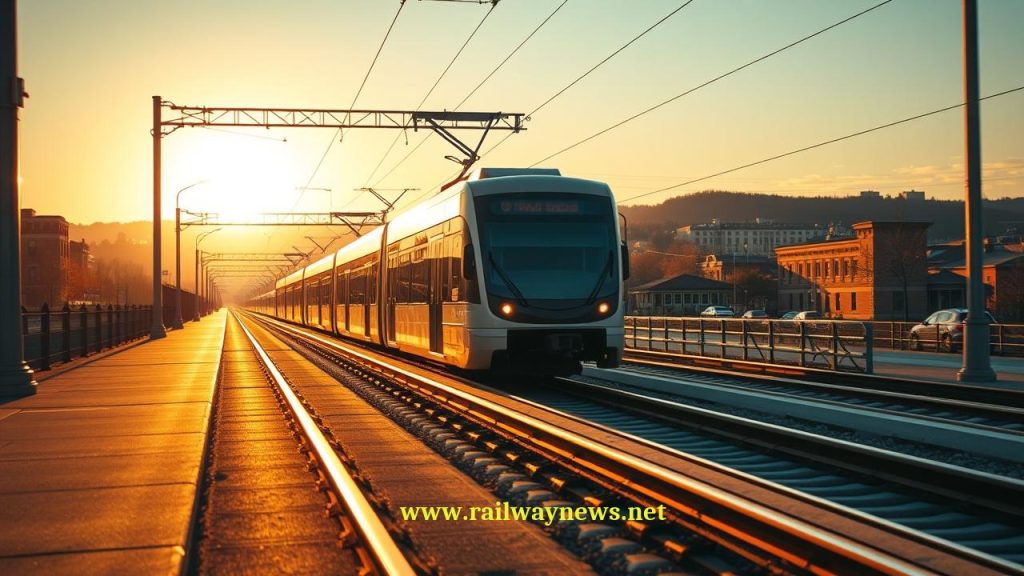
NFTA Light-Rail Extension Secures Federal Environmental Approval
The U.S. Federal Transit Administration (FTA) has issued a final environmental impact statement and record of decision for the Niagara Frontier Transportation Authority’s (NFTA) proposed 7-mile light-rail extension project in Buffalo, New York. This decision formally selects the light-rail option as the preferred alternative for expanding public transit into the suburban towns of Tonawanda and Amherst. The project is designed to connect the existing system’s terminus at the University at Buffalo South Campus with the university’s North Campus.
Project Scope and Alternatives Analysis
The environmental review process, conducted jointly by the FTA and NFTA, evaluated three distinct scenarios for the transit corridor. The alternatives included a no-build option, the implementation of a bus rapid transit (BRT) line, and the construction of the light-rail transit (LRT) extension. The LRT option was ultimately selected based on analysis indicating it would provide the fastest travel times between the two university campuses and surrounding communities.
Additionally, the environmental impact statement concluded that the light-rail extension offers the highest ridership potential and the greatest projected economic impact for the region. The project’s stated objectives include reducing automobile dependency and traffic congestion, enhancing the operational effectiveness of the existing transit network, and supporting targeted economic growth along the corridor. Specific technical details, construction timelines, and total project cost were not disclosed in the announcement.
“[EMR launches a pioneering GPS ticketing trial, offering frictionless travel. Digital rail journeys hit 87% as the UK embraces automated, account-based systems.]” – Full article title (Dec 2025)
Regional Strategy and Federal Funding Context
The approval advances a fixed-guideway transit investment intended to connect major regional employment and education hubs. This type of corridor-based project is a common strategy in mid-sized U.S. metropolitan areas seeking to leverage transit infrastructure for economic development and urban revitalization. The success of such projects is heavily dependent on securing federal capital investment grants, which requires demonstrating a favorable cost-benefit analysis.
The NFTA project moves forward within a complex and competitive federal funding environment for major transit initiatives. For instance, New York’s Metropolitan Transportation Authority (MTA) has faced challenges securing federal funds for its Second Avenue Subway extension. Conversely, federal funding recently resumed for the multi-billion-dollar Gateway rail tunnel project connecting New York and New Jersey, illustrating that large-scale infrastructure projects can advance despite fiscal and political hurdles. The NFTA’s ability to secure its share of federal capital grants will be the determining factor in the project’s progression.
| Metric | Value |
|---|---|
| Project Length | 7 miles |
| Location | Buffalo, Tonawanda, Amherst, New York |
| Key Termini | University at Buffalo South & North Campuses |
| Selected Alternative | Light-Rail Transit (LRT) |
| Projected Cost | Not Disclosed |
Next Steps
With the record of decision secured, the NFTA is now positioned to proceed with final design and engineering work for the extension. The authority’s next critical phase will involve assembling a complete funding package, which requires securing commitments from local, state, and federal sources.

Railway infrastructure, rolling stock and transport technologies specialist focused on global rail industry developments, high-speed rail systems, signaling technologies and freight transportation. Covering railway investments, public transport modernization, rail operations and international mobility projects across Europe, Asia and North America.
RELATED POSTS

October 1, 2026 7:09 am
United States regulators confirmed a September 30 deadline for the...

October 5, 2026 6:12 pm
AECOM and Jacobs secured a contract in September 2026 to...

October 1, 2026 12:13 am
Illinois approved $1.5 billion annually for the Northern Illinois Transit...

October 4, 2026 11:08 pm
Sound Transit confirmed the September 30 opening of Seattle Pinehurst...

October 5, 2026 1:13 pm
New York MTA confirmed a late 2026 DEIS release for...

October 6, 2026 9:17 am
Illinois approved $1.1M in state funds to upgrade two McHenry...