
Siemens, Stadler Confirm €3B Copenhagen S-Bane GoA4 Train Deal
Copenhagen S-Bane automates with a €3 billion Siemens-Stadler contract for 226 GoA4 trains. Full driverless operation targets 2033.
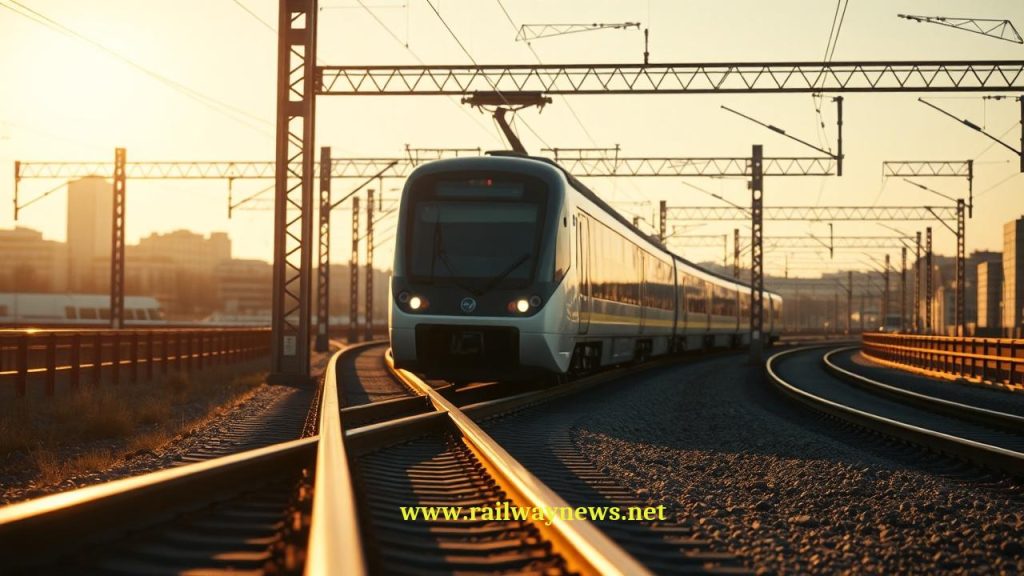
📉 Market Brief:
- Event: Siemens/Stadler consortium confirms EUR 3B contract for Copenhagen S-Bane GoA4 fleet.
- Key Data: 226 fully automated electric multiple units (EMUs); deliveries from 2032-2040.
- Impact: Establishes world’s largest GoA4 open rail system, increases network capacity by 10M passengers/year.
A consortium of Siemens Mobility and Stadler has confirmed a framework agreement with Danish State Railways (DSB) valued at approximately EUR 3 billion. The agreement covers the supply of 226 fully automated electric multiple units for Copenhagen’s S-Bane suburban network. This project is set to create the world’s largest open rail system operating at Grade of Automation 4 (GoA4).
The contract specifies a division of responsibilities within the consortium, with Siemens Mobility acting as the leader. Siemens Mobility’s scope includes the complete electrical equipment for the trains, encompassing traction and braking systems, on-board power supplies, and advanced train and vehicle control systems. The company will also provide the passenger information systems and the bogies. Stadler is responsible for the mechanical scope, supplying the car bodies, couplings, all interior equipment, seating, air conditioning units, and doors, in addition to managing the final assembly of the rolling stock.
A long-term maintenance agreement is integrated into the contract, covering a minimum period of 30 years. The operational model for this agreement stipulates that the Siemens-Stadler consortium retains overall responsibility for fleet availability and performance. However, the physical maintenance work will be executed by DSB’s existing technical staff. The consortium will provide technical support, specialized IT systems, and advanced maintenance management solutions to the DSB workforce. Siemens Mobility will separately deliver a detailed technical support and spare parts agreement (TSSSA+).
The project’s timeline extends over the next two decades. The first automated operations on the network are scheduled for 2030, with the first of the new trains slated to enter passenger service in 2032. Deliveries will continue progressively until 2040, while the complete migration to driverless operation across the S-Bane network is planned for completion by 2033. This infrastructure modernization is being carried out in collaboration with Banedanmark, the national rail infrastructure owner, and DSB.
“Linz’s Regional-Stadtbahn project eyes €540M EIB backing to overhaul its network, integrating tram and rail for a modern, efficient public transit system.” – Full article title (December 19, 2025)
The transition to GoA4 automation is projected to yield significant operational improvements. During peak hours, the interval between trains will be reduced to 7.5 minutes on each line, converging to a 1.5-minute headway in the central Copenhagen corridor. This frequency increase translates to a rise of up to 35% in the number of departures on several key routes. DSB projects these enhancements will create capacity for approximately 10 million additional passengers annually, building on the 111 million passengers carried in 2025.
The new rolling stock will feature a 56-meter train length, designed to accommodate a mix of passengers. Each unit will offer 120 fixed seats, 36 folding seats, and a standing capacity for approximately 300 passengers. The interior design emphasizes accessibility with platform-level entry, wide aisles, and designated multifunctional spaces for bicycles, strollers, and passengers with reduced mobility. Modern passenger information systems, air conditioning, and dedicated work areas with tables are also included in the specifications.
Technologically, the project is underpinned by Siemens Mobility’s Trainguard MT Communications-Based Train Control (CBTC) system, which enables the GoA4 level of automation. The trains will also incorporate Siemens Mobility’s Air-free Brake System. This technology replaces traditional pneumatic components, which reduces vehicle weight, lowers the CO₂ footprint by more than 50% compared to conventional systems, and contributes to reduced overall operating costs. External data sources verify the core details of the agreement, describing the project as creating the world’s largest fleet of fully automated electric trains, a claim closely related to the primary source’s description of the world’s largest GoA4 system.
| Metric | Value / Specification |
|---|---|
| Project Value | Approximately EUR 3 billion |
| Base Rolling Stock Order | 226 Electric Multiple Units |
| Optional Units | Up to 100 additional trains |
| Automation Level | Grade of Automation 4 (GoA4) |
| Control System | Siemens Trainguard MT CBTC |
| First Train Service | 2032 |
| Full Automation Target | 2033 |
| Delivery Completion | 2040 |
| Maintenance Agreement Term | Minimum 30 years |
| Train Length | 56 meters |
| Total Capacity per Train | ~456 passengers (156 seated, 300 standing) |
| Projected Annual Capacity Increase | 10 million passengers |
| Minimum Peak Headway (Central) | 1.5 minutes |
DSB has described the project as the most extensive transformation in the 90-year history of the S-Bane network. The full implementation of the framework agreement will replace the current fleet and fundamentally alter the operational model of Copenhagen’s primary suburban rail service.

Railway infrastructure, rolling stock and transport technologies specialist focused on global rail industry developments, high-speed rail systems, signaling technologies and freight transportation. Covering railway investments, public transport modernization, rail operations and international mobility projects across Europe, Asia and North America.
RELATED POSTS
September 6, 2026 5:19 am
Hitachi delivered Taiwan's first N700ST high-speed train from Japan in...

September 5, 2026 4:19 pm
CPK launched formal tender talks with four consortia to design...

September 6, 2026 4:12 am
Alstom delivered the first of 100 new G Class trams...
September 6, 2026 6:17 am
Hungary ordered a national ban on most freight trains from...
September 6, 2026 1:17 am
Hitachi Toshiba Supreme Consortium confirmed the first of 12 N700ST...
September 5, 2026 6:17 pm
Universal Signalling won a deal to install its U-Cross system...