
L.A. Metro Confirms Heavy-Rail Subway for Sepulveda Corridor
L.A. Metro greenlights a heavy-rail subway for the Sepulveda Transit Corridor, a multibillion-dollar project. This boosts regional mobility and unlocks major infrastructure contracts.
🛑 Key Takeaways:
- L.A. Metro’s board has officially selected a heavy-rail subway as the preferred option for the Sepulveda Transit Corridor project.
- The line will feature automated trains running every 2.5 minutes at peak times within a single-bore tunnel.
- The decision moves one of the largest U.S. transit projects into the environmental review and design phase, signaling major upcoming contracts for engineering and construction.
LOS ANGELES – The Los Angeles County Metropolitan Transportation Authority (L.A. Metro) board has approved a heavy-rail underground line as the Locally Preferred Alternative for the Sepulveda Transit Corridor. The multi-billion dollar project aims to build a high-capacity rail connection through the Sepulveda Pass, linking the San Fernando Valley and West Los Angeles to bypass chronic congestion on the I-405 freeway.
| Category | Specification / Detail |
|---|---|
| Project | Sepulveda Transit Corridor |
| Selected Technology | Automated Heavy-Rail Transit (HRT) in a single-bore tunnel |
| Route Termini | Van Nuys Metrolink/G Line Station to E Line (Expo/Sepulveda) Station |
| Key Stops | UCLA Campus |
| Peak Frequency | 2.5 minutes |
| Project Status | Locally Preferred Alternative (LPA) selected; proceeding to environmental review |
| Key Stakeholders | L.A. Metro, California Department of Transportation (Caltrans) |
Operational & Technical Details
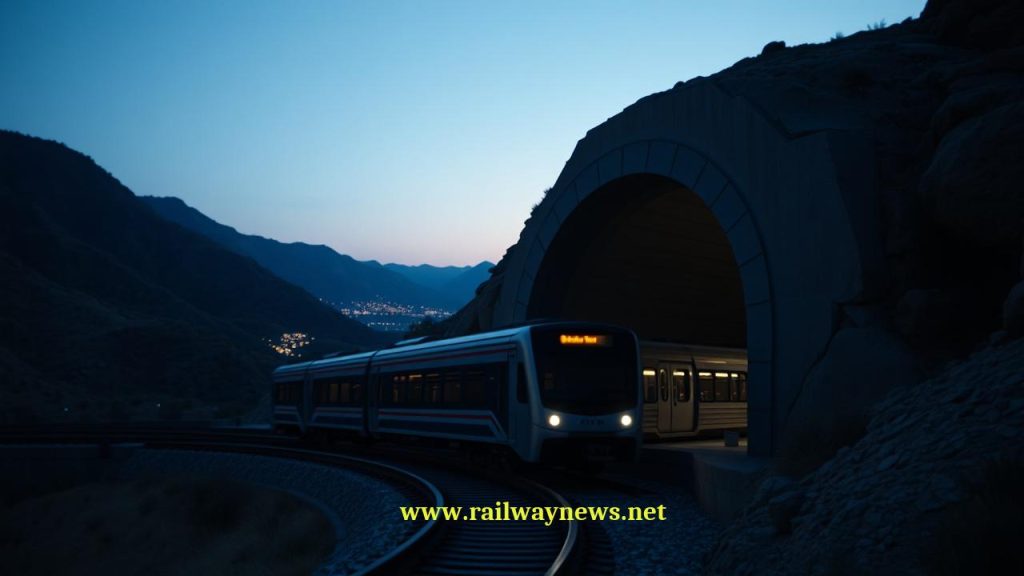
The board’s selection solidifies the project’s technical direction. The plan calls for an entirely underground alignment utilizing a single-bore tunnel to traverse the Santa Monica Mountains. This approach accommodates automated, driverless heavy-rail vehicles, enabling high-frequency service with trains planned to run every 2.5 minutes during peak travel times. The northern terminus will integrate with the Van Nuys Metrolink Station, the G Line (bus rapid transit), and a future East San Fernando Valley light-rail line. The southern terminus connects to the existing E Line, creating a crucial north-south link in the regional network.
Market Impact Analysis
Advancing the Sepulveda Transit Corridor to the environmental review stage unlocks one of the most significant public works projects in the United States. The decision creates a clear pipeline for large-scale contracts in tunneling, systems engineering, rolling stock procurement, and construction management. L.A. Metro has indicated a reliance on state, local, and federal funding, and has raised the possibility of public-private partnerships (P3) to address funding shortfalls. This P3 consideration opens the door for private consortiums to bid on financing, building, and potentially operating the line, mirroring models used for other global megaprojects. The project is critical to improving regional mobility ahead of the 2028 Olympic Games.
FAQ: Quick Facts
What is the estimated cost of this project?
The project is described as a “multibillion-dollar” initiative. A precise budget has not been finalized as it enters the design and environmental review phase.
When is the expected completion date?
The source materials do not provide an expected completion date. The project is now entering the next stage of planning and environmental reviews.

Railway infrastructure, rolling stock and transport technologies specialist focused on global rail industry developments, high-speed rail systems, signaling technologies and freight transportation. Covering railway investments, public transport modernization, rail operations and international mobility projects across Europe, Asia and North America.
RELATED POSTS
September 6, 2026 5:19 am
Hitachi delivered Taiwan's first N700ST high-speed train from Japan in...

September 5, 2026 4:19 pm
CPK launched formal tender talks with four consortia to design...
September 6, 2026 1:17 am
Hitachi Toshiba Supreme Consortium confirmed the first of 12 N700ST...
September 6, 2026 6:17 am
Hungary ordered a national ban on most freight trains from...

September 6, 2026 8:17 am
DB InfraGO reopened the Nuremberg-Regensburg line in Bavaria on 31...
September 7, 2026 8:16 am
Midea, Gree and TCL shipped air conditioners via China Railway...