
Hungary Eyes 100-Train Deal: China to Revamp Rail Fleet
Hungary eyes 100 new trains from China to modernize its fleet, addressing record passenger demand and signaling a shift in rail supply.
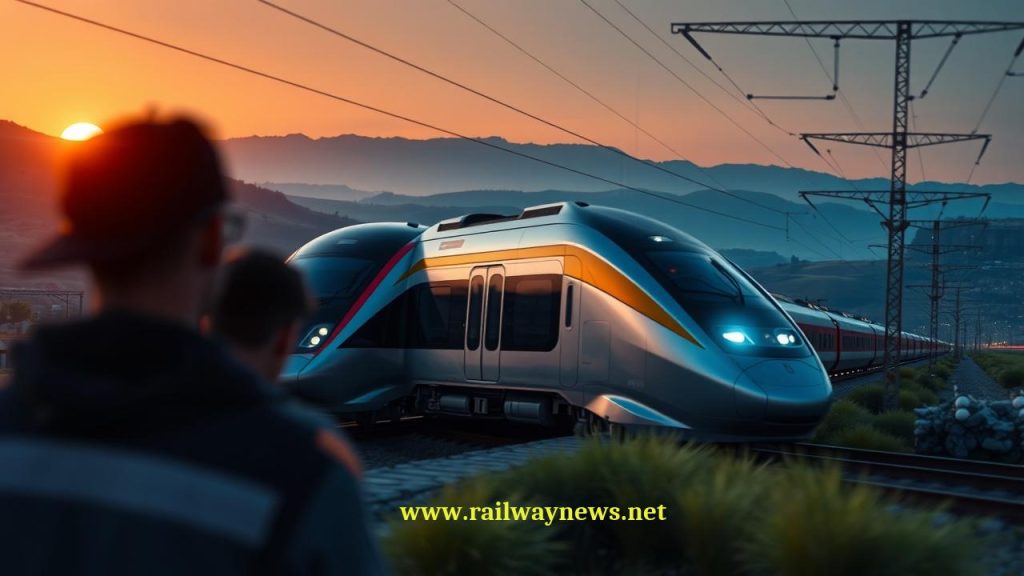
BUDAPEST, HUNGARY – The Hungarian government is exploring a landmark procurement of 100 new trains from China, a strategic move aimed at overhauling the national MÁV-Volán group’s aging rolling stock. This potential acquisition comes as the operator grapples with record passenger demand, with 1.1 billion journeys recorded in 2025, and significant infrastructure challenges across its network.
| Category | Details |
|---|---|
| Proposed Procurement | 100 new trains for medium and long-term needs |
| Potential Supplier | Unspecified Chinese manufacturer(s) |
| Contextual Fleet Renewal | 93 second-hand Swiss EMUs (EUR 230 million) for regional services |
| Passenger Demand (2025) | 1.1 billion journeys recorded by MÁV-Volán group |
| Related Project | Budapest-Belgrade line modernization, accommodating Chinese-built CRRC trains |
Main Body:
In a significant announcement addressing the country’s urgent rail transport needs, the Hungarian government revealed it is considering a large-scale purchase of 100 new trains from China. This initiative is a core component of a broader strategy to modernize the MÁV-Volán fleet and infrastructure. The move is a direct response to the severe wear and tear on existing assets and a record surge in ridership, which has placed immense pressure on daily operations, leading to persistent issues with delays and passenger comfort.
While specific technical details of the proposed 100-train fleet—such as train type, configuration, and financial terms—remain undisclosed, the context of Chinese rolling stock integration is already taking shape in Hungary. On the recently modernized Budapest–Belgrade line, Serbian operator Srbija Voz is set to deploy multiple units manufactured by China’s CRRC Changchun. In preparation, Hungarian state railway MÁV has initiated a 300 million forint project at Budapest Keleti station to raise two platforms by 250 mm, a necessary adaptation to accommodate the specifications of these new trains. This ongoing work provides a tangible example of the infrastructure adjustments required to integrate non-European rolling stock into the national network.
The potential Chinese procurement is part of a dual-pronged fleet renewal strategy. It complements the recent acquisition of 93 second-hand electric multiple units from Switzerland for EUR 230 million. These 15-20 year-old vehicles are slated for modernization and deployment on suburban and regional routes. This approach—combining refurbished European stock for immediate regional gaps with new, potentially high-capacity Asian trains for main lines—highlights a pragmatic effort to stabilize services amid what the government calls a “severely strained” European rolling stock market. The decision reflects a growing orientation toward Asian suppliers to meet long-term capacity and modernization goals.
Key Takeaways
- Strategic Pivot: Hungary is considering a major purchase of 100 new trains from China, indicating a strategic turn to Asian suppliers for its long-term fleet renewal.
- Demand-Driven Modernization: The plan is a direct response to a record 1.1 billion passenger journeys in 2025 and the urgent need to replace an aging fleet on a network where over a third of the track is in poor condition.
- Dual-Pronged Strategy: The new train procurement complements a recent purchase of 93 second-hand Swiss EMUs, creating a mixed fleet solution for both regional and mainline services.
Editor’s Analysis
Hungary’s consideration of a 100-train deal with China is more than a simple procurement; it is a significant geopolitical and industrial development in the European rail sector. This move underscores the growing presence of Chinese manufacturers, particularly CRRC, within the EU’s sphere of influence, often linked to Belt and Road Initiative projects like the Budapest-Belgrade line. For the global rail market, it signals that cost, availability, and tailored financing packages from Chinese suppliers are becoming increasingly compelling alternatives for nations facing budget constraints and an over-strained European supply chain. If finalized, this deal could set a powerful precedent, encouraging other Central and Eastern European countries to look beyond traditional suppliers and accelerating the integration of Chinese technology and standards into the continent’s complex railway ecosystem.
Frequently Asked Questions
- Why is Hungary considering buying 100 trains from China?
- The Hungarian government is exploring this large purchase to address several critical issues: an aging national train fleet, record-high passenger demand that is straining existing capacity, and a European rolling stock market that is reportedly under severe strain, making it difficult to source new vehicles quickly.
- What other actions is MÁV taking to update its fleet?
- In addition to this potential purchase, MÁV recently acquired 93 second-hand electric multiple units (EMUs) from Switzerland. These vehicles are being modernized and will be used primarily for regional and suburban services to provide more immediate relief.
- Are Chinese-made trains already scheduled to operate in Hungary?
- Yes. While the 100-train deal is still under consideration, Chinese-built trains are already set to run on the modernized Budapest-Belgrade railway line. The Serbian national operator, Srbija Voz, will use CRRC Changchun multiple units, and MÁV is currently adapting infrastructure at Budapest’s Keleti station to accommodate them.

Railway infrastructure, rolling stock and transport technologies specialist focused on global rail industry developments, high-speed rail systems, signaling technologies and freight transportation. Covering railway investments, public transport modernization, rail operations and international mobility projects across Europe, Asia and North America.
RELATED POSTS

October 1, 2026 7:09 am
United States regulators confirmed a September 30 deadline for the...

October 1, 2026 12:13 am
Illinois approved $1.5 billion annually for the Northern Illinois Transit...

October 1, 2026 6:10 am
Amtrak approved a System Expansion Committee on July 30 to...

October 4, 2026 5:14 pm
Alstom secured a CA$4.7 billion order from VIA Rail Canada...

October 1, 2026 3:12 am
Greenbrier confirmed Brian Comstock as new president and CEO effective...

October 6, 2026 2:14 am
Union Pacific launched export rail shipments with Ferromex to deliver...