
EN 16494: Europe’s Key to Unified ERTMS Trackside Safety
EN 16494 standardizes ERTMS trackside boards, ensuring critical interoperability, driver safety, and consistent visual communication across European rail networks. Discover its vital role in modern rail.
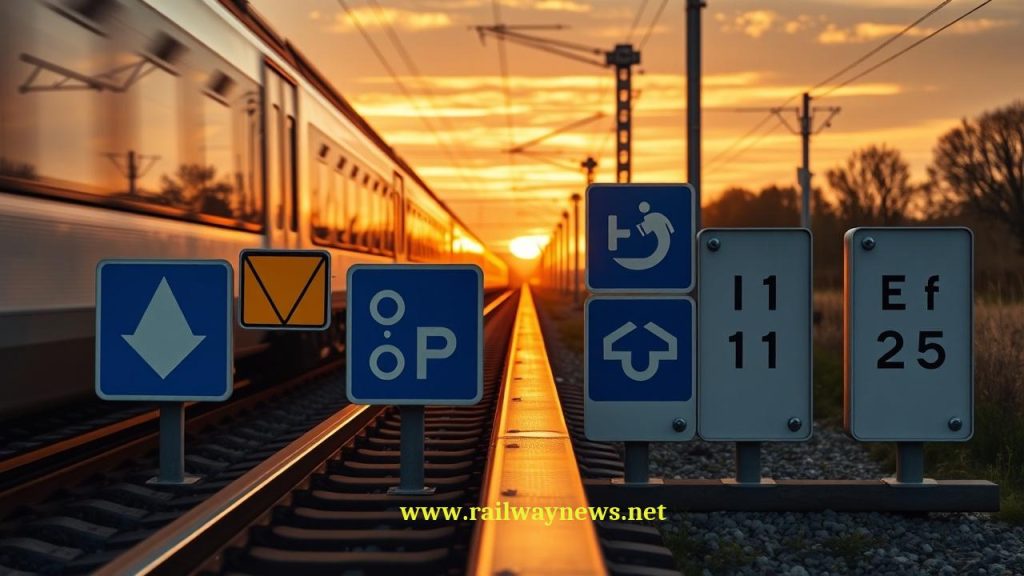
Understanding EN 16494: Technical Requirements for ERTMS Trackside Boards
EN 16494 is a critical European Standard that specifies the design, physical characteristics, and information content for trackside boards used within the European Rail Traffic Management System (ERTMS). Its primary purpose is to ensure interoperability and consistent visual communication for train drivers across different national railway networks, which is a cornerstone of the ERTMS philosophy.
These trackside boards serve as physical markers and information providers that complement the digital information displayed on the Driver-Machine Interface (DMI) in the train cab. They are essential for operational safety, providing unambiguous location references, signalling transitions between different ERTMS levels, and indicating specific operational points on the track.
Scope and Core Objectives of EN 16494
The standard was developed to harmonize the visual aids associated with ERTMS/ETCS (European Train Control System) operations. Before its introduction, different railway undertakings used various national signs, creating potential for confusion and error when trains crossed borders. The key objectives of EN 16494 are:
- Interoperability: To provide a single, unified set of trackside boards that are recognized and understood by any train driver operating an ERTMS-equipped train, regardless of their nationality or home network.
- Safety: To eliminate ambiguity by defining precise symbols, colors, and dimensions, ensuring that critical information is conveyed clearly and without misinterpretation, even in adverse weather conditions or at high speeds.
- Consistency: To standardize the materials, retro-reflective properties, and placement of boards, guaranteeing a consistent level of visibility and durability across the entire trans-European rail network.
- System Reference: To act as fixed physical reference points for the train’s positioning system and for the driver, correlating the train’s digital position with the physical infrastructure.
Key Types of ERTMS Trackside Boards Defined in the Standard
EN 16494 defines several specific types of boards, each with a distinct function. The most common and critical ones include:
- ERTMS Marker Board: A yellow, triangular board with a black border. It is the primary marker used to indicate the location of a Eurobalise group that is not associated with a national signalling system. It serves as a crucial positioning reference for the ETCS onboard unit.
- Location Marker Board: A rectangular white board with a black border, typically displaying a number or code. It provides a unique identifier for a specific location on the track, used for operational communication and referencing.
- Level Transition Board: This board indicates the upcoming transition from one ETCS level to another (e.g., from Level 1 to Level 2). It prepares the driver and the system for the change in supervision and control. It is typically a yellow square board with the destination level number (e.g., “L2”).
- Stop Marker Board: A blue square board with a white symbol, indicating the point at which a train in Staff Responsible (SR) mode must stop.
- End of Cab Signalling Authority Board: This board indicates the end of an area where ETCS provides movement authority via the DMI. It is often used in shunting areas or at the boundary of an ERTMS-equipped line.
Technical and Physical Specifications
The standard is highly detailed regarding the physical construction and visual properties of the boards to ensure they perform reliably in the harsh railway environment. Key technical requirements include:
- Materials and Durability: Boards must be constructed from materials resistant to corrosion, UV radiation, extreme temperatures, and mechanical impact from debris. Aluminum or similar robust composites are commonly used.
- Retro-reflectivity: To ensure high visibility at night and in low-light conditions, the standard specifies minimum retro-reflectivity classes for the board materials, in accordance with other relevant EN standards. This ensures that the train’s headlights effectively illuminate the symbols.
- Dimensions and Tolerances: The exact dimensions of the boards and the symbols on them are strictly defined to guarantee legibility from a distance. The standard provides precise measurements and acceptable manufacturing tolerances.
- Colors: The specific colors (e.g., yellow, blue, white, black) are defined using colorimetric coordinates (e.g., from the CIE color space) to ensure uniformity across all manufacturers and networks.
- Mounting and Positioning: While the exact placement is determined by national rules, the standard provides guidelines on clearance, height, and orientation relative to the track to ensure the boards are not obstructed and are within the driver’s normal field of view.
Comparison of Major ERTMS Trackside Boards
The following table provides a clear comparison of the primary boards defined under EN 16494, highlighting their function and appearance for easy identification.
| Board Type | Primary Function | Key Visual Characteristics |
|---|---|---|
| ERTMS Marker Board | Indicates the location of a Eurobalise group. Primary positioning reference. | Yellow equilateral triangle with a black border, point facing downwards. |
| Level Transition Board | Announces an upcoming transition to a different ETCS operational level. | Yellow square with a black border, displaying the abbreviation of the target level (e.g., L1, L2, L0). |
| Stop Marker Board | Defines the stopping point for a train operating in Staff Responsible (SR) mode. | Blue square with a white horizontal bar and two vertical dots below it (symbolizing a buffer stop). |
| Location Marker Board | Provides a unique identification for a specific trackside location. | White rectangle with a black border, displaying alphanumeric characters. |
The Role of EN 16494 in the Greater ERTMS Ecosystem
In a highly digitized system like ERTMS, the need for physical, standardized trackside boards might seem counterintuitive. However, they play an indispensable role. They provide a vital layer of redundancy and a constant physical reference that grounds the digital system in the real world. For the driver, they offer visual confirmation of system states and locations shown on the DMI, increasing situational awareness. In fallback situations or during certain operational modes (like Staff Responsible), these boards become the primary source of operational instructions, making their clarity and standardization a matter of utmost safety.
Frequently Asked Questions (FAQ) about EN 16494
What is the primary purpose of EN 16494?
The primary purpose of EN 16494 is to standardize the design, materials, and visual information of trackside boards for the European Rail Traffic Management System (ERTMS). This ensures interoperability, safety, and consistent communication for train drivers across all European railways implementing ERTMS.
Are EN 16494 boards mandatory for all ERTMS-equipped lines?
Yes, for railway lines to be considered fully compliant with the Technical Specifications for Interoperability (TSIs) for Control-Command and Signalling, any new or upgraded ERTMS trackside infrastructure must use boards that conform to the EN 16494 standard.
Why are physical boards needed in a digital system like ERTMS?
Physical boards provide essential functions even in a digital system. They serve as fixed physical reference points for the train’s positioning system, offer visual confirmation for the driver of information shown on the in-cab display (DMI), and provide critical instructions during specific operational modes or in the event of a system failure (fallback scenarios).
What is the most common ERTMS board and what does it signify?
The most common and recognizable board is the ERTMS Marker Board. It is a yellow, downward-pointing triangle that marks the location of a Eurobalise group. It is a fundamental component for the ETCS system to accurately determine the train’s position on the track.

Railway infrastructure, rolling stock and transport technologies specialist focused on global rail industry developments, high-speed rail systems, signaling technologies and freight transportation. Covering railway investments, public transport modernization, rail operations and international mobility projects across Europe, Asia and North America.