
Europe Defines: EN 16207 For Safer Rail Brakes
Discover EN 16207: The vital standard for Magnetic Track Brakes. Learn how these adhesion-independent systems ensure unparalleled railway safety and interoperability in all conditions.
What is EN 16207? A Detailed Technical Overview
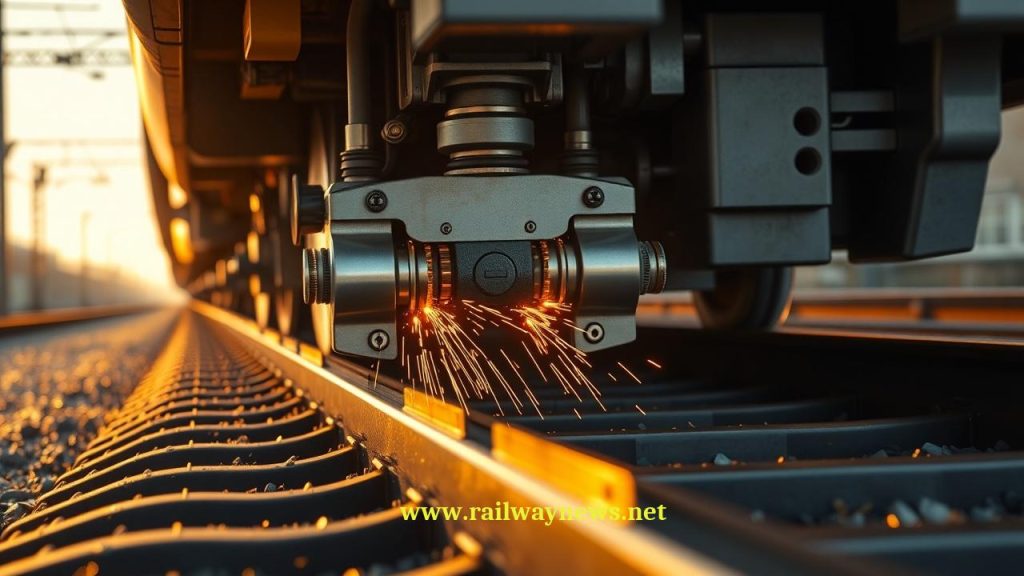
EN 16207 is a European Standard that specifies the functional and performance criteria for Magnetic Track Brake (MTB) systems used in railway rolling stock. This standard establishes a unified technical framework for the design, manufacturing, testing, and integration of these critical safety components, ensuring their reliability, interoperability, and effectiveness across different railway networks and vehicle types.
The primary goal of EN 16207 is to define the requirements that an MTB system must meet to be considered safe and fit for purpose. It covers everything from the force generated by the brake to its response times and its ability to withstand the harsh environmental conditions of railway operation.
The Role and Importance of Magnetic Track Brakes (MTBs)
A Magnetic Track Brake is a supplementary braking system that operates independently of the wheel-rail adhesion. Unlike conventional friction brakes that act on the wheels or discs, the MTB applies a braking force directly to the railhead. This is achieved by using powerful electromagnets to press a friction shoe onto the rail, generating significant deceleration through direct mechanical friction.
The key advantage of this system is its adhesion-independent nature. In conditions of poor rail adhesion (e.g., due to wet leaves, ice, or contamination), traditional wheel-based braking systems can lose effectiveness, leading to wheel slide and significantly increased stopping distances. MTBs provide a consistent and reliable braking force regardless of these conditions, making them an essential component for emergency braking and for enhancing the overall safety performance of a train.
Core Technical Requirements of EN 16207
EN 16207 is a technically dense document that outlines numerous specific requirements. These can be categorized into several key areas:
1. Functional and System Requirements
This section defines how the MTB system must behave as part of the overall vehicle. Key stipulations include:
- Activation and Deactivation: The standard specifies the logic for brake activation, which can be triggered during emergency braking, or in some cases, blended with service braking. It also defines the required timeframes for the brake to apply (lower) and release (raise).
- Failsafe Operation: The system must be designed to be failsafe. In the event of a power loss or control system failure, the brake must not deploy unintentionally. Conversely, it must return to a safe, raised position when deactivated.
- System Integration: Clear requirements are set for how the MTB control unit interfaces with the vehicle’s train control and management system (TCMS) and the primary brake control unit (BCU). This ensures seamless and logical operation with other braking systems like pneumatic and electro-pneumatic brakes.
- Status Monitoring: The system must provide feedback on its status (e.g., raised, lowered, fault) to the train’s diagnostic system.
2. Performance Criteria
Performance is at the heart of the standard. It quantifies how effective the brake must be:
- Braking Force: The standard defines the minimum required magnetic attraction force and resulting frictional braking force that the MTB must generate. This is often specified as a function of the vehicle’s axle load and is a critical parameter for brake performance calculations.
- Operational Speed Range: It defines the speed range within which the MTB must be fully effective. For high-speed applications, this can be up to the maximum operating speed of the vehicle.
- Thermal Capacity: During application, the friction between the shoe and the rail generates immense heat. The standard sets requirements for the materials and design to ensure the brake can withstand the thermal loads of repeated or prolonged applications without failure or significant performance degradation.
- Response Time: The time from the command being issued to the brake shoes making full contact with the rail and generating the required force is strictly defined to ensure predictable braking performance.
3. Design and Construction
This covers the physical and mechanical aspects of the MTB unit:
- Mechanical Strength: The entire assembly, including the magnets, suspension, and actuation mechanism, must be robust enough to withstand the high mechanical shocks and vibrations encountered during railway operation.
- Clearances and Gauging: The standard mandates specific minimum clearances between the brake unit and the railhead when in the raised position, and also its position relative to the track gauge, to prevent accidental contact with track infrastructure like points and crossings.
- Materials and Environmental Protection: Materials used must be resistant to corrosion, UV radiation, and fluids commonly found in the railway environment. The electrical components are typically required to have a specific Ingress Protection (IP) rating to protect against water and dust.
- Wear: Requirements are placed on the wear characteristics of the friction shoes to ensure a reasonable service life and predictable performance over time.
4. Testing and Validation Procedures
To prove compliance with EN 16207, a rigorous testing regime is required. The standard details the methodology for these tests:
- Type Tests: These are detailed tests performed on a new design to validate its performance against all requirements of the standard. This includes dynamometer testing to measure braking force and thermal capacity, as well as on-track tests to verify performance in a real-world environment.
- Routine Tests: These are tests performed on every manufactured unit to ensure consistent quality and performance. This typically includes checks of electrical properties (e.g., coil resistance, insulation) and functional tests of the actuation mechanism.
Comparison of MTB Systems under EN 16207
While EN 16207 provides a common framework, the specific design of an MTB can vary significantly depending on its application. The most common distinction is between systems for high-speed/mainline trains and those for urban transport like trams and Light Rail Vehicles (LRVs).
| Feature | High-Speed / Mainline Train MTB | Tram / Light Rail Vehicle (LRV) MTB |
|---|---|---|
| Primary Application | High-speed and intercity trains | Urban trams, streetcars, and LRVs |
| Typical Speed Range | Effective from very high speeds (e.g., >250 km/h) down to medium speeds (e.g., 50 km/h) | Effective from typical city speeds (e.g., 70 km/h) down to a complete stop |
| Braking Force | Very high attraction and braking forces, often articulated in multiple segments to follow track geometry. | Moderate to high braking forces, typically in a single rigid or slightly articulated unit per bogie. |
| Actuation Method | Typically pneumatic or hydraulic cylinders to lower the magnet assembly towards the rail before energizing. | Often held in the raised position by springs and lowered purely by the magnetic force when the coils are energized. |
| Primary Use Case | Primarily for emergency braking to drastically reduce stopping distance from high speeds. Not typically used in service braking. | Used for emergency braking, but also often as a parking brake and sometimes to supplement service braking in low-adhesion conditions. |
Conclusion: Ensuring Safety and Interoperability
EN 16207 is a cornerstone standard for railway braking safety. By providing a clear, detailed, and verifiable set of requirements, it ensures that Magnetic Track Brake systems from any manufacturer perform predictably and reliably. This standardization is crucial for the safe operation of modern railways, especially as train speeds increase and networks become more integrated. For railway engineers, vehicle manufacturers, and operators, compliance with EN 16207 is not just a regulatory hurdle, but a fundamental assurance of braking performance and passenger safety, especially when it matters most.

Railway infrastructure, rolling stock and transport technologies specialist focused on global rail industry developments, high-speed rail systems, signaling technologies and freight transportation. Covering railway investments, public transport modernization, rail operations and international mobility projects across Europe, Asia and North America.