
Europe’s EN 15153-1: The Standard for Train Safety & Visibility
Discover EN 15153-1, the vital standard ensuring train head, marker, and tail lamps provide critical visibility, safety, and interoperability across European railways.
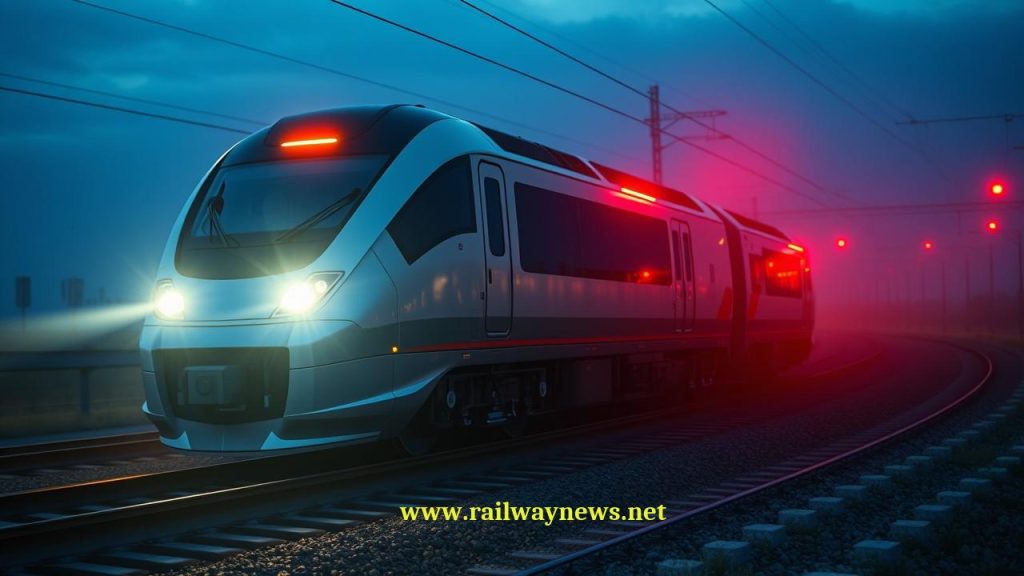
Understanding EN 15153-1: The Standard for Train Head, Marker, and Tail Lamps
EN 15153-1 is a key European standard that specifies the functional and technical requirements for external visible warning devices on trains. Part 1 of this standard is exclusively dedicated to head, marker, and tail lamps, which are critical for ensuring the safe operation, visibility, and interoperability of rolling stock across the European railway network.
The primary purpose of this standard is to define a unified set of photometric, colorimetric, electrical, and mechanical characteristics for these lighting systems. By adhering to EN 15153-1, manufacturers and operators ensure that trains are clearly visible to trackside workers, other trains, and the public at level crossings, and that the signals they display (e.g., front of train, end of train) are unambiguous day and night, and in various weather conditions.
Core Objectives of EN 15153-1
The standard is built around several fundamental safety and operational objectives:
- Enhanced Visibility: To define minimum luminous intensity values to ensure a train can be seen from a safe distance, preventing collisions and accidents.
- Unambiguous Signaling: To standardize the color and configuration of lights to clearly communicate the train’s status, such as its direction of travel and the location of its front and rear.
- Interoperability: To allow trains from different operators and countries to run on shared networks without causing confusion, which is a cornerstone of the Technical Specifications for Interoperability (TSI).
- Reliability and Durability: To set requirements for resistance to environmental factors common in railway operations, including vibration, shock, temperature extremes, and moisture ingress.
Key Technical Requirements and Specifications
EN 15153-1 delves deep into the technical aspects of lamp design and performance. These requirements are grouped into several key categories.
Photometric Requirements
This is the most critical section, defining the performance of the light output itself.
- Luminous Intensity: The standard specifies the minimum and maximum luminous intensity values, measured in candelas (cd), at various angles from the central axis. This ensures the lamp is bright enough to be seen without causing excessive glare. For example, head lamps have much higher intensity requirements than marker lamps.
- Chromaticity (Colour): To ensure consistent and correct signaling, the standard defines the exact color coordinates for each lamp type using the CIE 1931 color space. Head and marker lamps must be “white,” while tail lamps must be “red,” with their colors falling within precisely defined polygons on the chromaticity diagram.
- Light Distribution: The standard dictates the beam pattern for each lamp. Head lamps require a focused, long-range beam, while marker and tail lamps need a wider angle of visibility to be seen from the side.
Electrical and Mechanical Requirements
Lamps on a train must be robust enough to withstand the harsh railway environment.
- Voltage and Power: Lamps must operate reliably within the specified voltage ranges found on rolling stock.
- Environmental Resistance: The standard mandates testing for resistance to shock and vibration, which are constant factors during train operation. It also specifies a range of operating temperatures and requirements for humidity resistance.
- Ingress Protection (IP Rating): The enclosures of the lamps must have a minimum IP rating (e.g., IP65) to protect against the ingress of dust and water, ensuring long-term reliability.
Lamp Configurations and Functions
EN 15153-1 clearly defines the role of each lamp type:
- Head Lamps: These are the primary forward-facing lights, used to illuminate the track ahead and make the train highly conspicuous. The standard often specifies requirements for both main and dipped beam settings to manage glare in different operational scenarios.
- Marker Lamps: These are lower-intensity white lights located at the front of the train. Their function is to define the width of the train and indicate that it is the front of the consist. They are a crucial component of the train’s “visual signature.”
- Tail Lamps: These are two fixed red lights at the rear of the train. Their presence provides a clear and universally understood signal that this is the end of the train, which is vital information for signallers and drivers of following trains to ensure the entire train has passed a certain point.
Comparison of Lamp Types under EN 15153-1
The following table provides a clear comparison of the primary lighting systems covered by the standard.
| Parameter | Head Lamps | Marker Lamps | Tail Lamps |
|---|---|---|---|
| Primary Function | Illuminate track ahead; high-visibility warning | Indicate the front of the train; define vehicle width | Indicate the rear of the train |
| Specified Colour | White | White | Red |
| Luminous Intensity | Very High (specified in thousands of candelas) | Moderate (sufficient for conspicuity) | Moderate (visible from a distance without being dazzling) |
| Beam Pattern | Focused, long-range beam (symmetrical or asymmetrical) | Wide viewing angle | Wide viewing angle |
| Operational Use | Always on when the train is leading | Used in pairs at the front of the train | Used in pairs at the very end of the train consist |
Conformity and Testing
To comply with EN 15153-1, lighting products must undergo a rigorous series of type tests conducted by accredited laboratories. These tests validate every aspect of the standard, including:
- Photometric Testing: Using a goniophotometer to measure light intensity, distribution, and color at all specified angles.
- Environmental Testing: Placing the lamps in climatic chambers to test performance at extreme temperatures and subjecting them to vibration and shock tests on specialized rigs.
- Durability Testing: Assessing the IP rating and overall resilience of the mechanical construction.
Successful completion of these tests allows the manufacturer to issue a declaration of conformity, a necessary step for integrating the component into TSI-compliant rolling stock.
Conclusion: A Standard for Safety and Clarity
EN 15153-1 is more than just a technical document; it is a foundational element of modern railway safety. By standardizing the most basic form of railway communication—visual lighting signals—it eliminates ambiguity and enhances situational awareness for everyone on and around the railway network. Its detailed requirements for performance, durability, and function ensure that head, marker, and tail lamps perform their critical safety roles reliably under all conditions, contributing directly to the efficiency and security of European rail transport.

Railway infrastructure, rolling stock and transport technologies specialist focused on global rail industry developments, high-speed rail systems, signaling technologies and freight transportation. Covering railway investments, public transport modernization, rail operations and international mobility projects across Europe, Asia and North America.