
Alstom Signs €920M Deal for Mexico’s Rail Revival
Alstom wins a €920M contract to supply 47 Adessia Stream DMUs for Mexico’s “Trenes del Norte,” boosting passenger rail amid safety concerns.
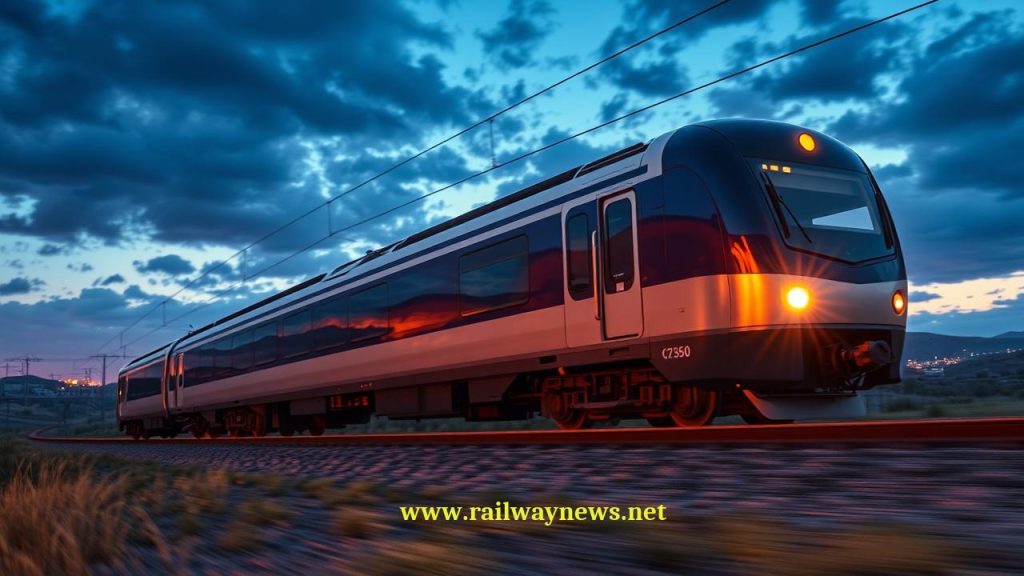
Alstom has secured a landmark EUR 920 million contract to supply 47 Adessia Stream diesel-multiple units (DMUs) for Mexico’s ambitious “Trenes del Norte” project, marking a major step in the nation’s passenger rail revival. The deal comes as Mexico’s rail expansion strategy faces heightened scrutiny following a recent fatal derailment on a separate, newly inaugurated line in the south of the country.
| Category | Details |
|---|---|
| Contract Value | EUR 920 Million |
| Supplier | Alstom |
| Rolling Stock | 47 Adessia Stream DMUs (33 long-distance, 14 short-distance) |
| Top Speed | Approximately 165 km/h |
| Key Corridors | Mexico City–Querétaro–Irapuato and Saltillo–Monterrey–Nuevo Laredo |
| Manufacturing Location | Alstom’s Ciudad Sahagún Plant, Hidalgo, Mexico |
Main Body:
The Mexican Rail Transport Regulatory Agency (ARTF) has formally awarded Alstom the detailed contract to revitalise passenger services in the country’s central and northern regions. In addition to the production of the 47 diesel units, the agreement includes a five-year full maintenance package, the equipping of maintenance depots, and the establishment of inspection and refuelling stations. The deal also covers extensive technical training for local staff and the full commissioning of the fleet, ensuring a turnkey solution for the new corridors.
The Adessia Stream trains are designed to meet modern international mobility standards. Each standard unit will measure approximately 100 metres and can be coupled to form eight-car consists, providing significant operational flexibility. The interiors will be configured for different service types, with long-distance trains accommodating around 300 passengers and high-capacity short-distance versions carrying up to 600. The fleet will feature a maximum operating speed of 165 km/h, full accessibility for passengers with reduced mobility (PRM), and real-time passenger information systems. Crucially, the entire order will be manufactured at Alstom’s state-of-the-art facility in Ciudad Sahagún, Hidalgo, a plant with advanced capabilities in stainless steel and aluminium fabrication that will anchor the project within Mexico’s domestic industrial base.
This major investment in the “Trenes del Norte” project is a cornerstone of the government’s strategy to expand passenger rail beyond the heavily publicized southern routes. However, the announcement arrives at a sensitive time for Mexico’s rail sector. The industry is under a microscope following a recent tragic derailment on the Interoceanic Train line in Oaxaca, which resulted in multiple fatalities and injuries. That incident has placed immense pressure on authorities and operators to guarantee the highest safety and operational standards across all new and existing railway projects, making the successful implementation of this Alstom contract a critical test for the country’s rail ambitions.
Key Takeaways
- Major Investment: The EUR 920 million contract signals a firm commitment to re-establishing passenger rail as a key mode of transport in Mexico’s economic heartland.
- Local Production: Manufacturing the fleet at Alstom’s Ciudad Sahagún plant will generate significant local employment and enhance Mexico’s domestic rail manufacturing capabilities.
- Heightened Scrutiny: The project will be closely watched to ensure it meets the highest international safety standards, particularly in light of recent safety failures on other new rail lines in the country.
Editor’s Analysis
This contract is more than just a rolling stock order; it’s a pivotal moment for Mexico’s national infrastructure strategy and a significant competitive win for Alstom. For Mexico, the “Trenes del Norte” project represents a chance to demonstrate it can deliver complex, modern railway systems safely and efficiently, a narrative it urgently needs following the tragic Interoceanic Train derailment. The success of these central and northern corridors could build public confidence and pave the way for further network expansion. For Alstom, this solidifies its position as a key partner in Latin America’s railway development, leveraging its local manufacturing footprint in Hidalgo as a major strategic advantage. The pressure is now on both parties to deliver a flawless, world-class service that can become a benchmark for safety and reliability in the region.
Frequently Asked Questions
- What is the “Trenes del Norte” project?
- It is a new railway initiative in Mexico aimed at reintroducing passenger services on key economic corridors, including Mexico City–Querétaro–Irapuato and Saltillo–Monterrey–Nuevo Laredo, connecting central and northern Mexico.
- What kind of trains will be used for the new services?
- The services will use Alstom’s Adessia Stream DMUs (diesel-multiple units), which are modern trains capable of speeds up to 165 km/h and feature flexible seating capacities for both long and short-distance routes.
- Where will the new Alstom trains be built?
- The entire fleet of 47 trains will be manufactured locally at Alstom’s advanced production facility in Ciudad Sahagún, located in the state of Hidalgo, Mexico.

Railway infrastructure, rolling stock and transport technologies specialist focused on global rail industry developments, high-speed rail systems, signaling technologies and freight transportation. Covering railway investments, public transport modernization, rail operations and international mobility projects across Europe, Asia and North America.
RELATED POSTS

October 1, 2026 7:09 am
United States regulators confirmed a September 30 deadline for the...

October 8, 2026 1:15 pm
Alstom secured a €1bn contract to build 13 automated trains,...

October 4, 2026 5:14 pm
Alstom secured a CA$4.7 billion order from VIA Rail Canada...

October 1, 2026 10:14 am
HS2 installed a 55-metre steel span in Birmingham, completing phase...

October 5, 2026 6:12 pm
AECOM and Jacobs secured a contract in September 2026 to...

October 8, 2026 12:18 pm
Siemens Mobility signed an agreement with VinSpeed to supply 350...