
Swiss Line Gets Stadler Railcars: Future-Proofing for Automation
Stadler to supply Appenzeller Bahnen with new cogwheel railcars for CHF 17.5M, modernizing the historic line and preparing for future automation.
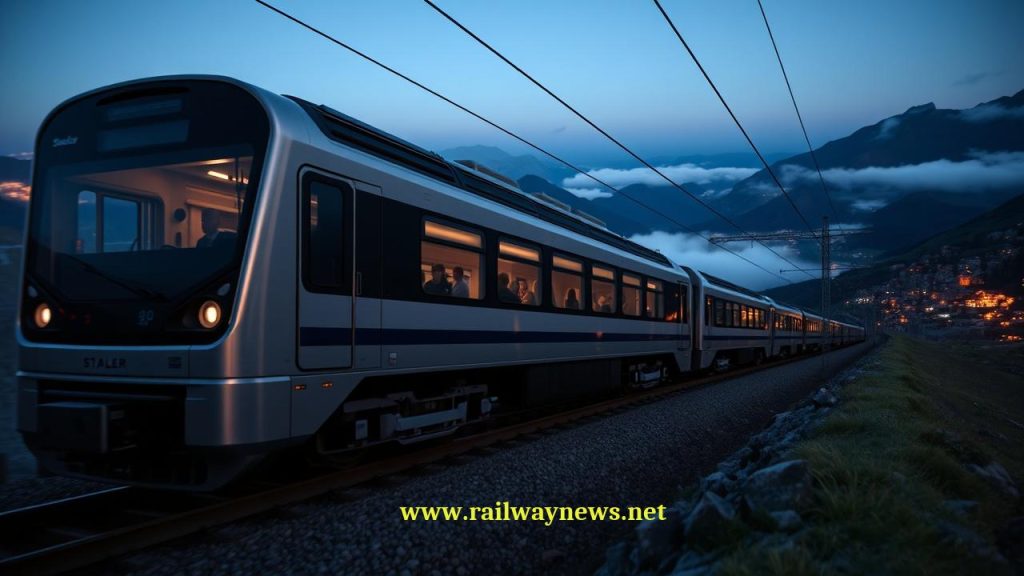
Appenzeller Bahnen has awarded Stadler a contract worth 17.5 million Swiss francs to supply two new adhesion cogwheel railcars for the historic Rorschach–Heiden line. This strategic procurement will modernize the fleet for the 150-year-old route, introducing fully accessible, energy-efficient vehicles that are prepared for future automated operation.
| Category | Details |
|---|---|
| Investment Volume | 17.5 million Swiss francs |
| Operator | Appenzeller Bahnen (AB) |
| Manufacturer | Stadler |
| Vehicle Type | 21-metre adhesion and rack-and-pinion railcar |
| Delivery Schedule | By the end of 2028 |
| Key Feature | Future-ready for Grade of Automation 4 (GoA4) |
Main Body:
In a significant move to upgrade its rolling stock, Swiss operator Appenzeller Bahnen (AB) has officially signed a contract with domestic manufacturer Stadler for two new-generation railcars. The vehicles are destined for the scenic Rorschach–Heiden mountain railway, a line celebrating its 150th anniversary. Scheduled for delivery by the end of 2028, these new units will replace a 1998-built vehicle and two much older reserve units from 1953 and 1967, whose operating licenses from the Federal Office of Transport are set to expire.
The 21-metre-long railcars are engineered with dual-mode adhesion and rack-and-pinion (cogwheel) technology, essential for navigating the steep gradients of the route. Designed for operational flexibility, the two identical units can be coupled in double traction to double capacity during peak demand. Stadler will incorporate the latest lightweight construction and drive technologies to significantly reduce energy consumption and maintenance costs. A standout feature is the reintroduction of a first-class cabin, which will be integrated with the driver’s cab, offering passengers a unique forward-facing view of the line and the train’s controls. The new fleet will also be fully compliant with Switzerland’s Disability Discrimination Act (BehiG), featuring low-floor access, two wheelchair spaces, and ample room for bicycles and prams.
This procurement is not just a replacement but a strategic investment in the future of the line. The decision was driven by the technical and economic impracticality of retrofitting the aging fleet, which has surpassed its service life and fails to meet modern accessibility standards. Crucially, the new railcars are being built with the hardware and systems architecture required for future unattended train operation (UTO) at Grade of Automation 4 (GoA4). Appenzeller Bahnen anticipates a transition to fully automated services on the line from around 2035, positioning the Rorschach–Heiden railway at the forefront of technological adoption in regional transport.
Key Takeaways
- Fleet Modernization: Two new Stadler railcars will replace three aging vehicles, improving reliability and operational efficiency on the 150-year-old Rorschach–Heiden line.
- Enhanced Passenger Experience: The vehicles will be fully accessible, air-conditioned, and feature a unique first-class cabin integrated with the driver’s cab for unparalleled views of Lake Constance.
- Automation-Ready Investment: The railcars are being prepared for future GoA4 automated operation, demonstrating a long-term strategic vision for the route beyond 2035.
Editor’s Analysis
This contract between Appenzeller Bahnen and Stadler, while modest in scale, is a microcosm of key trends shaping the global rail industry. It highlights the critical challenge of modernizing heritage and tourist-oriented lines that often operate in difficult terrain. The choice of a specialized adhesion/cogwheel vehicle from a market leader like Stadler underscores the importance of bespoke engineering for non-standard networks. Additionally, the decision to invest in GoA4-ready technology from the outset is a forward-thinking move that de-risks future upgrades and signals a clear pathway to full automation, even for regional and mountain railways. This project serves as a compelling case study on balancing historical preservation with the adoption of cutting-edge accessibility, efficiency, and automation technologies.
Frequently Asked Questions
- What is the total investment for the new railcars?
- The total investment volume for the two new Stadler railcars is 17.5 million Swiss francs.
- When will the new railcars enter service?
- The new vehicles are scheduled to be delivered and enter service on the Rorschach–Heiden line by the end of 2028.
- What is a unique feature of the new first class?
- The first-class section is combined with the driver’s cab, allowing passengers to sit next to the train driver and experience the journey from a unique forward-looking perspective, observing the train’s control systems in action.

Railway infrastructure, rolling stock and transport technologies specialist focused on global rail industry developments, high-speed rail systems, signaling technologies and freight transportation. Covering railway investments, public transport modernization, rail operations and international mobility projects across Europe, Asia and North America.
RELATED POSTS

October 1, 2026 7:09 am
United States regulators confirmed a September 30 deadline for the...

October 8, 2026 1:15 pm
Alstom secured a €1bn contract to build 13 automated trains,...

October 4, 2026 5:14 pm
Alstom secured a CA$4.7 billion order from VIA Rail Canada...

October 1, 2026 12:13 am
Illinois approved $1.5 billion annually for the Northern Illinois Transit...

October 6, 2026 2:14 am
Union Pacific launched export rail shipments with Ferromex to deliver...

October 1, 2026 6:10 am
Amtrak approved a System Expansion Committee on July 30 to...