
UP, NS Seeking $85B Transcontinental Rail Mergers Approval
Union Pacific and Norfolk Southern seek approval for an $85 billion merger, aiming to create the first U.S. transcontinental railroad, reshaping freight.
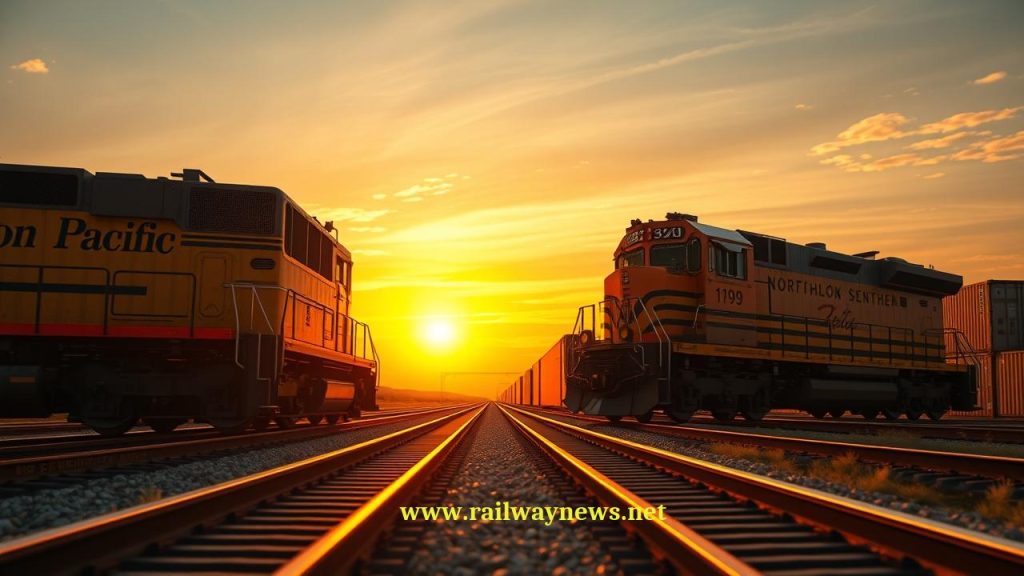
WASHINGTON D.C. – Union Pacific Corp. and Norfolk Southern Corp. have formally submitted their application to the Surface Transportation Board (STB), seeking regulatory approval for a historic $85 billion merger. The proposed combination aims to create the first U.S. transcontinental railroad, a move the companies argue will significantly enhance competition and fortify the national supply chain.
| Category | Details |
|---|---|
| Proposed Merger | Union Pacific Corp. & Norfolk Southern Corp. |
| Merger Valuation | $85 billion |
| Regulatory Body | Surface Transportation Board (STB) |
| Application Size | Nearly 7,000 pages |
| Stakeholder Support | 99% shareholder approval, 2,000+ letters of support |
Main Body:
In a landmark move for the North American rail industry, Union Pacific (UP) and Norfolk Southern (NS) today filed a nearly 7,000-page application with the Surface Transportation Board, formalizing their merger agreement first announced on July 29. The extensive documentation outlines a detailed plan to combine the two Class I railroads, creating a seamless coast-to-coast network. The application is bolstered by significant backing, including over 2,000 letters of support from various stakeholders and a near-unanimous 99% approval from shareholders at both companies. “As time and technology continue to transform how freight is delivered, our industry must keep pace and move forward, reaching underserved markets with new rail solutions and strengthening the U.S. supply chain,” a joint statement from the CEOs noted.
The core of the proposal centers on the operational advantages of creating a single-line service across the continent. According to Norfolk Southern CEO Mark George, this integrated network will be more reliable and streamlined for customers than existing interchange partnerships. Proponents argue the merger will not only accelerate freight movement but also allow the combined entity to compete more effectively with the long-haul trucking industry, providing shippers with more robust and environmentally friendly options. The benefits are expected to extend beyond the mainline, with improved connectivity for short-line operators who often handle the critical “last mile” of track for customers.
The creation of a true U.S. transcontinental railroad would be a historic shift, fundamentally altering a landscape traditionally divided between eastern and western carriers. The STB, which has already established a dedicated section on its website for all merger-related information, now begins a rigorous review process that will be closely watched by shippers, competitors, and labor unions. The board will weigh the applicants’ claims of enhanced competition and public benefits against potential concerns about market concentration and service impacts. The success of this application could set a new precedent for the structure of the American freight network for decades to come.
Key Takeaways
- Historic Consolidation: The $85 billion merger would create the first single-line transcontinental railroad in the United States, connecting major ports and markets from coast to coast.
- Enhanced Shipper Options: The companies claim the merger will offer more reliable single-line service, accelerating freight and providing a stronger competitive alternative to long-haul trucking.
- Intense Regulatory Scrutiny: The Surface Transportation Board has begun its official review, which will be a complex and lengthy process involving input from a wide range of industry stakeholders.
Editor’s Analysis
This proposed merger represents the most significant strategic realignment in the U.S. rail sector in over two decades. While the promise of a single, fluid transcontinental network offers undeniable potential for efficiency gains and supply chain resilience, it also raises critical questions about competition. The STB faces the monumental task of balancing these potential benefits against the risks of creating a carrier with unprecedented market power. The board’s decision will not only determine the fate of UP and NS but will also signal the future of rail consolidation and its role in the broader North American logistics ecosystem. For global shippers and logistics providers, the outcome will be a defining moment that could reshape freight flows and pricing power across the continent.
Frequently Asked Questions
What is the main goal of the Union Pacific and Norfolk Southern merger?
The primary goal is to create the first single-line transcontinental railroad in the U.S., which the companies state will enhance competition, improve service reliability for shippers, and strengthen the national supply chain.
How much is the proposed merger worth?
The merger is valued at approximately $85 billion.
Who will approve or deny the merger?
The Surface Transportation Board (STB), an independent federal agency responsible for the economic regulation of freight rail, will conduct a detailed review and ultimately approve or deny the merger application.

Railway infrastructure, rolling stock and transport technologies specialist focused on global rail industry developments, high-speed rail systems, signaling technologies and freight transportation. Covering railway investments, public transport modernization, rail operations and international mobility projects across Europe, Asia and North America.
RELATED POSTS
September 6, 2026 5:19 am
Hitachi delivered Taiwan's first N700ST high-speed train from Japan in...

September 5, 2026 4:19 pm
CPK launched formal tender talks with four consortia to design...

September 5, 2026 7:14 pm
HS2 Ltd signed renegotiated civils contracts with EKFB and Align...

September 6, 2026 4:12 am
Alstom delivered the first of 100 new G Class trams...
September 6, 2026 1:17 am
Hitachi Toshiba Supreme Consortium confirmed the first of 12 N700ST...
September 6, 2026 6:17 am
Hungary ordered a national ban on most freight trains from...