
How Cloud, AI & ECRL/Astana LRT Shape Rail Innovation
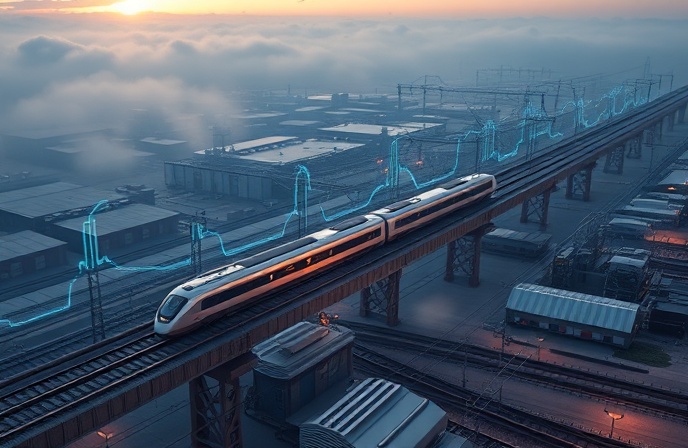
The rail industry is increasingly adopting cloud-first strategies, integrating technologies like AI planning and mission-critical wireless to reshape operations.
Introduction
The rail industry is increasingly adopting cloud-first strategies, integrating technologies like AI planning and mission-critical wireless to reshape operations. Malaysia’s ECRL project and China’s 12306 ticketing platform exemplify this trend, highlighting the industry’s shift towards broadband connectivity, cloud-based operations, and practical AI.
Cloud moves into the operational core
Cloud technology is evolving beyond dashboards to become the central orchestration plane for day-to-day operations. One application, the SMART Logistics & Warehousing Solution, uses a “1+N” model to coordinate yards, depots, and parks through a smart operations cloud. This model provides a trustworthy data space for multi‑party data sharing, an AI planning and scheduling engine for allocating resources, and automation for repetitive tasks. This architecture supports standardized interfaces, API‑first design for passenger operators and integrated supply chain models for freight and intermodal transport.
Reliability first, then scale
Safety and availability are paramount in the rail industry. The Astana LRT design prioritizes keeping safety‑critical communications on a dedicated network, while cloud solutions augment planning, analytics, and customer experience. An LTE‑M approach offers end-to-end coverage, minimizing handover failures and enabling phased capacity upgrades.
Applied AI, not AI for its own sake
AI is being implemented to save time and increase utilization. The Wukong intelligent recognition model accelerates document‑heavy workflows, while AI‑driven planning and scheduling engines improve depot operations, maintenance windows, and rolling-stock balancing. These improvements contribute to increased capacity.
Intermodal lessons that benefit rail
Intermodal transport, particularly at ports and airports, offers valuable lessons for rail applications. Securely sharing data with terminals, customs, and road partners enhances performance in time-sensitive cargo transport. Cloud platforms enforce data trust, provide access control, and coordinate plans across organizations. The desired outcomes, such as fewer switching errors and faster turnarounds, align with rail operators’ goals.
Last June 2025, we published an article about Renfe’s cutting-edge Aranjuez maintenance hub. Click here to read –
Future of Rail: Renfe’s Railway Technology Hub, Aranjuez: Essential Guide
Future of Rail: Renfe’s Railway Technology Hub, Aranjuez: Essential Guide
Conclusion
Cloud infrastructure is becoming increasingly vital in the rail industry, centralizing data and enabling real-time analytics to provide flexibility and scalability. This shift enables innovations like AI-driven maintenance, dynamic passenger flow modeling, and energy optimization.
Company Summary
ECRL: Highlighted as a flagship FRMCS project.
Astana LRT: The design prioritizes keeping safety-critical communications on a dedicated network.
12306: China’s ticketing platform, showcased for efficiency and improved passenger experience.
SMART Logistics & Warehousing Solution: Uses a “1+N” model with a smart operations cloud coordinating yards, depots, and parks.
Wukong: Intelligent recognition model used to accelerate document‑heavy workflows.
Technology
AI: AI planning, AI-driven maintenance, and dynamic passenger flow modeling.
FRMCS: Flagship project of ECRL.
LTE-M: Provides end-to-end coverage from tunnels to depots.

Railway infrastructure, rolling stock and transport technologies specialist focused on global rail industry developments, high-speed rail systems, signaling technologies and freight transportation. Covering railway investments, public transport modernization, rail operations and international mobility projects across Europe, Asia and North America.
RELATED POSTS
September 6, 2026 5:19 am
Hitachi delivered Taiwan's first N700ST high-speed train from Japan in...

September 5, 2026 4:19 pm
CPK launched formal tender talks with four consortia to design...
September 6, 2026 6:17 am
Hungary ordered a national ban on most freight trains from...
September 6, 2026 1:17 am
Hitachi Toshiba Supreme Consortium confirmed the first of 12 N700ST...
September 6, 2026 8:17 am
DB InfraGO reopened the Nuremberg-Regensburg line in Bavaria on 31...
September 7, 2026 8:16 am
Midea, Gree and TCL shipped air conditioners via China Railway...