
A Story of Driving a Train Or Driving a Change?
A journey of a thousand miles begins with a single step.
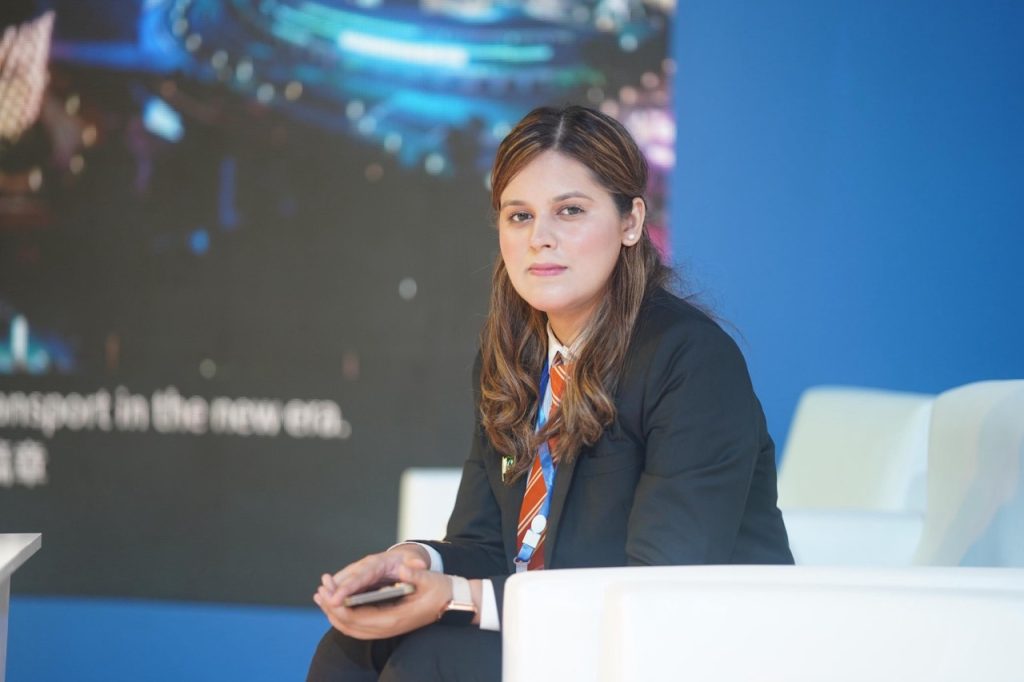
A journey of a thousand miles begins with a single step.
In Pakistan, women face significant restrictions in accessing education and employment due to deeply rooted patriarchal norms and cultural traditions. In many rural areas, girls are even discouraged from attending school beyond the primary level, often due to beliefs that their role should be confined to domestic responsibilities. Despite of these challenges, my mother, always dreamed of raising a daughter who would stand on her own and contribute positively in society. “The wind doesn’t break a strong tree,” she used to say me and she wanted me to be that tree- grounded, yet reaching upward.
I entered into the rail industry as a Transportation Engineer. When Lahore announced the project of Orange Line Metro, there was a feeling that the city went beyond improvement. There was a feeling that something change, will be turning the corner, that city is entering a new phase. I started working as a Transportation Engineer and was the only female in Rolling Stock Department. Once I came to know that the project is offering training program of local operators and engineers, I applied for the training of Train Driver.
This decision itself was rather strange even to me a person with ambitions, because I saw women in the roles requiring technical knowledge and combining publicity very rarely in Pakistan. The society, to which I was familiar, had a few roles to choose in terms of becoming successful: a teacher, a doctor, or a homemaker. Engineer? Train driver? Those were names, which were commonly uttered in masculine.
But I have never been the sort of person who fits into a box.
I faced a road filled with resistance. The concept of a woman driving a train was unheard in Pakistan. People questioned my abilities, doubted my strength, and said it was too difficult for a woman. But I didn’t let that stop me. With persistence and belief in my capabilities, I pushed through. My mentors form China helped me throughout this journey. They supported me that women and men both have same intellectual levels. They told me that “Equal education ignites equal opportunities empowering women and men to shine together for country’s brighter future”. In the course of action led by Chinese engineers, I got to know all the details about the train operations, safety systems, and emergency procedures. Mistakes were not an option. I was the only female in my group and my group fellow felt that I might not be able to keep up with the pace. But every day I tell myself I need to prove them wrong but because gender cannot limit my dreams.
After training, when I went into the driver cabin first-time in uniform, I felt pound. When I glanced out the broad front window of the Orange Line train, I did not see only a train track, but a trail ahead of me, but also the trail of the many young girls who want to dream big. Days since have not been easy, yet highly fulfilled. Occasionally passengers question themselves doubly a second time when they find out that it is a woman who is driving the train. There are those smiling in admiration and there are those who are just surprised. However, with the course of time, people started to respond not with shock but with support.
Being the first woman to drive a metro train in Pakistan, have made me a symbol of change, an aspect that I welcome in mind with an attitude of responsibility and a respectful stature. This is not to say I but it is to get more women in transportation, engineering and the world of public service. It is about normalising and making it more acceptable that women in general are taking up professions that were never meant to be like that, and that young girls dream without putting boundaries on it.
I think that the real gender equality does not appear with the policy, it appears with the visibility. From seeing women in unforeseeable places and thinking, “If she can do it, so can I”. Moreover, the barriers are meant to be broken, and that change begins when one woman dares to say, “Why not me?”
The role of women train drivers in Pakistan marks a significant shift in both gender roles and the workforce dynamics of a traditionally male-dominated industry. Females in the workforce supports Pakistan’s efforts toward inclusive economic development and displays a commitment to women’s empowerment in line with global progress. Overall, female metro train drivers are not just steering trains in Pakistan—they are steering society towards greater gender balance, opportunity, and progress.

Railway infrastructure, rolling stock and transport technologies specialist focused on global rail industry developments, high-speed rail systems, signaling technologies and freight transportation. Covering railway investments, public transport modernization, rail operations and international mobility projects across Europe, Asia and North America.
COMMENTS