
Costa Rica Electric Train: EIB Loan Fuels Sustainable Urban Mobility
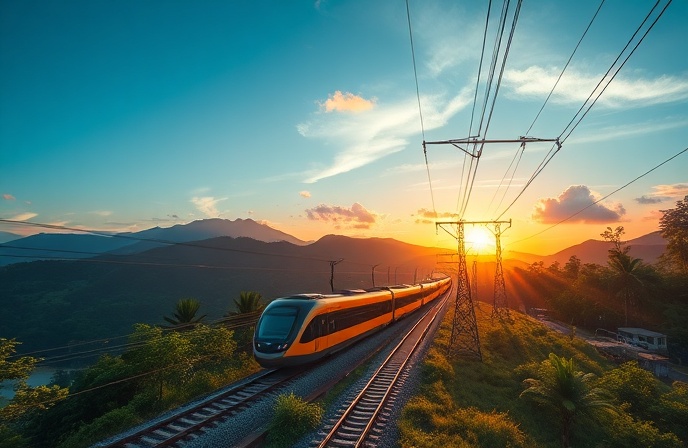
EIB invests $250M in Costa Rica’s first **electric train** system. This crucial **railway** project aims to enhance urban mobility, benefiting accessibility and reducing emissions.
Introduction
The European Investment Bank (EIB), through EIB Global, has approved a USD 250 million loan to support the construction of Costa Rica’s first electric train system. This marks the EIB’s first loan to the Republic of Costa Rica and the first operation in the country in over a decade.
Project Overview
The project, implemented by INCOFER, Costa Rica’s national railway authority, is part of the EU’s Global Gateway initiative. It is co-financed with the Central American Bank for Economic Integration (CABEI) and the Green Climate Fund (GCF). The new network will feature two double-track lines totaling over 51 kilometres, linking Paraíso to San José and San José to central Alajuela. It will include 28 electric train units, 30 stations, two new terminals and nine crossings.
Operational Details
The electric train system is designed to provide frequent, reliable service every ten minutes throughout the week. The system aims to improve connectivity and reduce travel times. It is expected to benefit women, who constitute the majority of public transport users and have less access to private vehicles. Once operational, the electric train will become the backbone of Costa Rica’s urban mobility network, offering better access to jobs, education, and essential services.
Environmental Impact
The project is projected to reduce annual CO₂ emissions by approximately 18,000 tonnes. The system will leverage Costa Rica’s nearly 100% renewable energy mix to power the electric train, contributing to the country’s climate goals.
Statements
Rodrigo Chaves, President of the Republic of Costa Rica, stated that the project is a “concrete and viable decision” backed by international entities. Ioannis Tsakiris, EIB Vice-President, highlighted the project as an example of strategic cooperation, emphasizing the provision of an affordable mobility solution to enhance accessibility, while addressing congestion, pollution, and emissions.
Last June 2025, we published an article about Renfe’s Aranjuez maintenance hub. Click here to read – Future of Rail: Renfe’s Railway Technology Hub, Aranjuez: Essential Guide
Conclusion
The European Investment Bank (EIB) has provided a USD 250 million loan to Costa Rica for its first electric train system. This project, co-financed with the Central American Bank for Economic Integration (CABEI) and the Green Climate Fund (GCF), is expected to improve urban mobility and reduce emissions.
Company Summary
European Investment Bank (EIB): The European Investment Bank (EIB), through its development arm EIB Global, is a financial institution that provides loans to support various projects.
INCOFER: INCOFER is Costa Rica’s national railway authority, responsible for implementing the electric train project.
Central American Bank for Economic Integration (CABEI): The Central American Bank for Economic Integration (CABEI) is a financial institution involved in co-financing the electric train project.
Green Climate Fund (GCF): The Green Climate Fund (GCF) is a financial mechanism that supports projects addressing climate change.

Railway infrastructure, rolling stock and transport technologies specialist focused on global rail industry developments, high-speed rail systems, signaling technologies and freight transportation. Covering railway investments, public transport modernization, rail operations and international mobility projects across Europe, Asia and North America.
RELATED POSTS

September 5, 2026 4:19 pm
CPK launched formal tender talks with four consortia to design...
September 6, 2026 8:17 am
DB InfraGO reopened the Nuremberg-Regensburg line in Bavaria on 31...
September 5, 2026 6:17 pm
Universal Signalling won a deal to install its U-Cross system...
September 6, 2026 12:20 pm
Indian Railways ordered a probe after a fire destroyed 2...
September 7, 2026 11:16 pm
China Railway Tunnel Group completed the 11.3-km underwater Yangtze tunnel...
September 8, 2026 5:14 am
STB ordered Belt Railway Co. of Chicago on Aug. 3,...