
Croatia’s Battery Trains: Rail Modernization & NRRP Funding
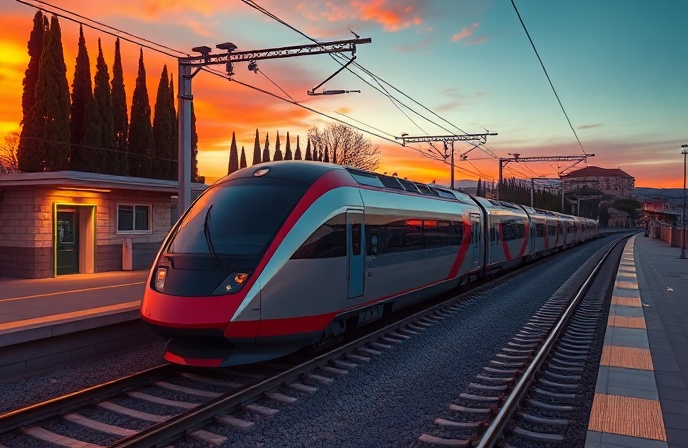
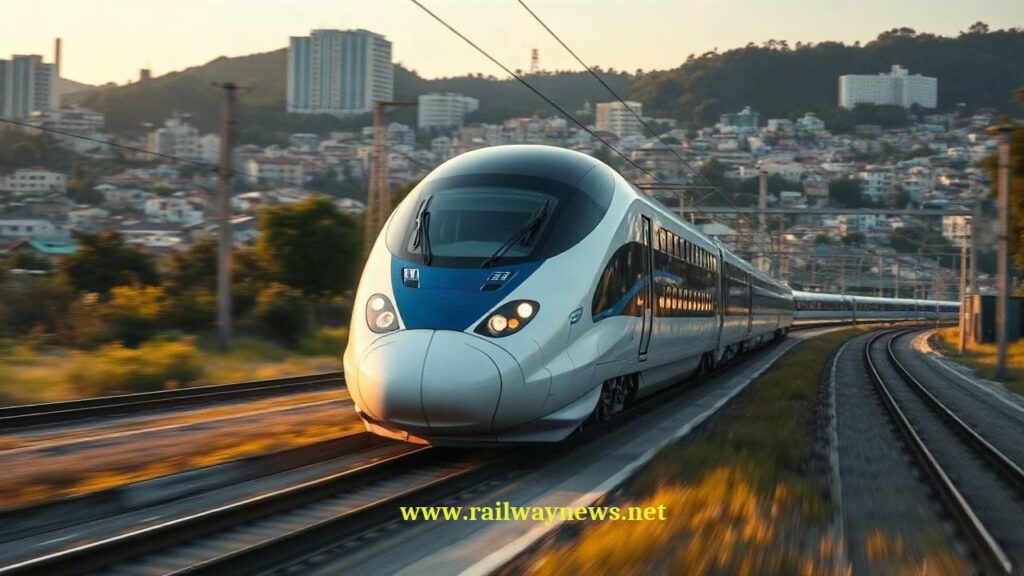
Croatia launched its first **battery train**, a key step in modernizing passenger rail transport. This innovative **rolling stock** is part of a significant infrastructure investment.
Introduction
On September 29, 2025, the first battery train in Croatia commenced passenger service. This train is part of the Implementation of Green Technologies in Passenger Rail Transport project, which is funded through the National Recovery and Resilience Plan 2021–2026 (NRRP).
Battery Train Deployment
The battery-powered train has a range of 200 kilometers and will be utilized on non-electrified lines operating in Split and its surrounding areas starting in December. Following its inaugural journey, the train will operate on the Virovitica–Bjelovar–Virovitica route. It will also be used to test the charging infrastructure, which is currently in the final stages of construction. Once the charging station at Split Predgrađe is commissioned—expected by mid-December 2025—the train will begin serving the Split–Kaštel Stari–Split route.
Project Details and Funding
The total value of the Implementation of Green Technologies in Passenger Rail Transport project is EUR 17.1 million, with EUR 13.3 million provided through NRRP funding. The project also includes the construction of six charging stations in Bjelovar, Virovitica, Osijek, Varaždin, Pula, and Split Predgrađe.
Train Features and Capacity
The battery train is a two-car, low-floor unit equipped with ramps for wheelchair access, space for bicycles, and accessible toilets. The interior and exterior are under video surveillance, and passenger areas feature screens for video content. Passengers benefit from audio and visual station announcements and free onboard Wi-Fi. It offers 113 seated and 114 standing places, and can be coupled with next-generation low-floor trains to increase capacity. The train is designed to operate on non-electrified sections of the Croatian rail network, with a maximum speed of 120 km/h. It runs solely on batteries, charged exclusively at dedicated charging stations, with full charging taking up to 30 minutes.
Rolling Stock Modernization and Future Plans
This project is part of an ongoing rolling stock modernization program aimed at enhancing local and regional mobility and ensuring a more efficient, competitive, and sustainable railway passenger transport system in Croatia. By the end of this year, two more new diesel multiple units will be introduced. In 2026, six new comfortable hybrid trains will serve the Zagreb–Split route. In June, a contract was signed for the supply of 13 additional trains, including diesel-electric units, BEMUs, and battery units. The introduction of Croatia’s first battery train follows another event, held on October 2, marking the deployment of a new diesel-electric train operating on the Zabok–Krapina–Đurmanec route, which also extends across the border to Rogatec in Slovenia.
The new diesel-electric train of series 7023 has 167 seated and 175 standing places. It is equipped with four pairs of double-leaf doors, ramps for wheelchair access, space for bicycles, an audio-visual passenger information system, and video surveillance. Passengers have access to free onboard Wi-Fi. The train can reach a maximum speed of 120 km/h. By the end of this year, a seventh train of this type will be delivered, completing the delivery of diesel-electric multiple units financed by a EUROFIMA loan of EUR 31 million.
Overall Investment
Currently, 68 new trains are in operation, with 40 delivered in the past four years. The procurement of 21 more trains, including additional battery and battery-electric trains, is underway. These projects are part of broader investments in the rail system worth EUR 1.5 billion. Investments in railway infrastructure, including the renewal of local and regional lines, are supported by a loan from the European Investment Bank. Among the largest investments is a project, with the Zagreb–Hungarian border line scheduled for completion by the end of the year, resulting in a fully renovated and modernized railway section.
Last June 2025, we published an article about Renfe’s Aranjuez maintenance hub. Click here to read – Future of Rail: Renfe’s Railway Technology Hub, Aranjuez: Essential Guide
Conclusion
Croatia’s railway network is undergoing a modernization program that includes the introduction of battery trains, diesel-electric trains, and hybrid trains. These initiatives are part of a larger investment to improve railway infrastructure and passenger transport, supported by NRRP funding and European Investment Bank loans.
Company Summary
EUROFIMA: Provided a loan of EUR 31 million for the financing of diesel-electric multiple units.

Railway infrastructure, rolling stock and transport technologies specialist focused on global rail industry developments, high-speed rail systems, signaling technologies and freight transportation. Covering railway investments, public transport modernization, rail operations and international mobility projects across Europe, Asia and North America.
RELATED POSTS
September 6, 2026 5:19 am
Hitachi delivered Taiwan's first N700ST high-speed train from Japan in...

September 5, 2026 4:19 pm
CPK launched formal tender talks with four consortia to design...
September 6, 2026 4:12 am
Alstom delivered the first of 100 new G Class trams...

September 5, 2026 7:14 pm
HS2 Ltd signed renegotiated civils contracts with EKFB and Align...
September 6, 2026 6:17 am
Hungary ordered a national ban on most freight trains from...
September 6, 2026 1:17 am
Hitachi Toshiba Supreme Consortium confirmed the first of 12 N700ST...