
High-Altitude Railways: Challenges & Opportunities
Here are a few options for a voiceover-friendly excerpt, keeping your guidelines in mind:
**Option 1 (Focus on Challenges):**
> High-altitude railway construction: Mastering extreme terrains demands innovative engineering and meticulous planning. Explore the challenges, from harsh weather to geological instability.
**Option 2 (Focus on Opportunities):**
> Building high-altitude railways unlocks new connectivity. Discover how advanced engineering tackles tough conditions, paving the way for economic growth.
**Option 3 (Focus on Innovation):**
> Face extreme altitudes! Learn how railway professionals are innovating to overcome tough challenges in high-altitude railway construction and operational efficiency.
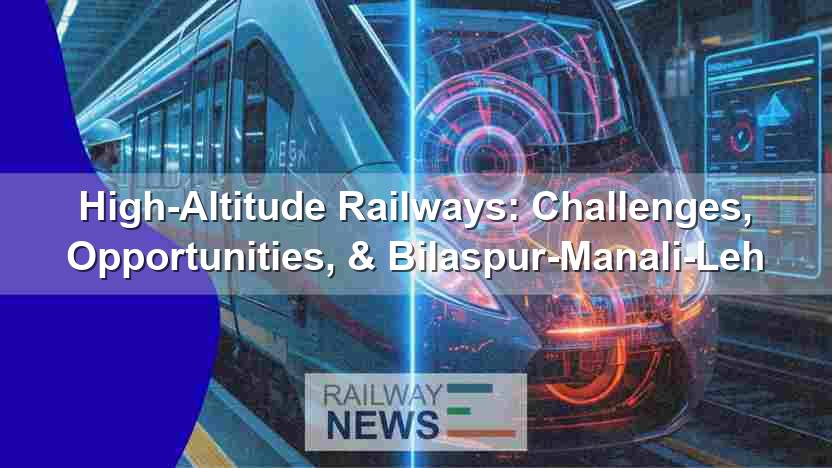
Enhancing Connectivity: Exploring the Challenges and Opportunities in High-Altitude Railway Construction
Introduction
Railway infrastructure, a cornerstone of modern transportation, faces unique and formidable challenges when traversing mountainous terrains. This article explores the complexities of high-altitude railway construction, exploring the engineering feats, operational considerations, and environmental impacts inherent in such projects. Building railways in regions characterized by extreme altitudes, rugged landscapes, and harsh climates presents a multifaceted problem requiring innovative solutions and meticulous planning. We will examine the specific challenges of constructing and maintaining railways in these demanding environments, considering factors such as altitude sickness, extreme weather conditions, and the geological instability often associated with mountainous regions. Additionally, the operational aspects, including rolling stock design, signaling systems, and safety protocols will be investigated. Finally, we will discuss the environmental considerations and the importance of sustainable practices in railway development, especially in ecologically sensitive areas. The ultimate goal is to provide a detailed understanding of the intricacies involved in building and operating high-altitude railways, highlighting both the obstacles and the opportunities for future advancements in railway engineering.
Construction Challenges in Elevated Terrains
_Building railways in mountainous regions presents a unique set of engineering hurdles. The topography itself dictates the need for complex civil engineering solutions._ This often involves extensive tunneling, bridge construction, and the creation of embankments and cuttings to navigate steep gradients and uneven terrain. In high-altitude environments, the reduced atmospheric pressure and extreme temperatures can significantly impact the performance of construction materials and equipment. Concrete, for instance, may require specialized admixtures and curing techniques to maintain its strength and durability in cold weather. Similarly, the performance of heavy machinery can be affected by the thinner air, potentially reducing engine efficiency and increasing the risk of mechanical failure. Additionally, geological instability, including the potential for landslides and seismic activity, poses significant risks. Thorough site investigations, including detailed geological surveys and risk assessments, are crucial to mitigate these hazards. This requires sophisticated monitoring systems and the implementation of preventative measures, such as retaining walls and slope stabilization techniques, to ensure the long-term safety and stability of the railway line.
Operational and Technological Considerations
_Operating railways at high altitudes demands specialized rolling stock and advanced signaling systems._ The reduced oxygen levels can impact engine performance, necessitating the use of powerful locomotives designed to operate efficiently in the thin air. Additionally, braking systems must be optimized to cope with the steep gradients and potential for icy conditions. Passenger comfort and safety are paramount concerns. This often means the incorporation of climate control systems, pressurized cabins, and emergency oxygen supplies. Signaling systems need to be robust and reliable, capable of operating in extreme temperatures and providing precise train control. Advanced technologies, such as satellite-based positioning systems (GPS) and remote monitoring, can play a crucial role in ensuring the safe and efficient operation of the railway. Regular maintenance and inspection are essential, as the harsh environmental conditions can accelerate wear and tear on the infrastructure and rolling stock.
Environmental Impact and Sustainable Practices
_The construction and operation of high-altitude railways can have significant environmental impacts, necessitating careful consideration of sustainable practices._ The disruption of natural habitats, soil erosion, and water pollution are potential concerns that must be addressed. Minimizing the environmental footprint requires the implementation of mitigation measures, such as the careful selection of construction routes, the use of environmentally friendly construction materials, and the implementation of erosion control measures. Preserving the natural landscape and protecting sensitive ecosystems is essential. This can involve the construction of wildlife crossings, the restoration of disturbed areas, and the implementation of noise reduction measures. Additionally, energy efficiency and the use of renewable energy sources can reduce the environmental impact of the railway’s operation. Conducting thorough environmental impact assessments (EIA) and engaging with local communities are crucial steps in ensuring that railway projects are developed in a responsible and sustainable manner.
_The proposed Bilaspur-Manali-Leh railway line presents an ambitious endeavor that would dramatically enhance connectivity to a remote region._ Such a project would require overcoming all the aforementioned challenges, potentially establishing new benchmarks in high-altitude railway engineering.
You might be interested in:
Last October 2018, we published an article about RailUSA’s investment revitalizing the US short-line railroad sector. Click here to read – RailUSA: US Short Line Railroad Investment
Conclusion
_In summary, constructing and operating high-altitude railways presents a complex array of engineering, operational, and environmental challenges, but also offers significant opportunities for enhancing connectivity and economic development._ The success of such projects hinges on the application of innovative engineering solutions, the implementation of robust operational protocols, and a steadfast commitment to sustainable practices. From the selection of materials and construction techniques to the design of rolling stock and signaling systems, every aspect of the project must be carefully considered to ensure safety, efficiency, and environmental responsibility. Additionally, thorough risk assessments, geological surveys, and environmental impact assessments are crucial to mitigating potential hazards and minimizing the environmental footprint. The integration of advanced technologies, such as remote monitoring and satellite-based positioning systems, can enhance the safety and efficiency of railway operations. Investing in research and development, particularly in areas such as cold-weather construction techniques, energy-efficient rolling stock, and sustainable infrastructure materials, is essential for advancing the field of high-altitude railway engineering. Ultimately, the successful construction and operation of high-altitude railways require a holistic approach that prioritizes safety, sustainability, and the long-term well-being of both the environment and the communities they serve. As technology advances and engineering expertise grows, we can expect to see even more ambitious railway projects undertaken in challenging terrains, further expanding the reach and impact of this vital mode of transportation.

Railway infrastructure, rolling stock and transport technologies specialist focused on global rail industry developments, high-speed rail systems, signaling technologies and freight transportation. Covering railway investments, public transport modernization, rail operations and international mobility projects across Europe, Asia and North America.
RELATED POSTS

October 1, 2026 7:09 am
United States regulators confirmed a September 30 deadline for the...
October 6, 2026 2:14 am
Union Pacific launched export rail shipments with Ferromex to deliver...

October 1, 2026 12:13 am
Illinois approved $1.5 billion annually for the Northern Illinois Transit...

October 1, 2026 6:10 am
Amtrak approved a System Expansion Committee on July 30 to...
October 1, 2026 3:12 am
Greenbrier confirmed Brian Comstock as new president and CEO effective...
October 1, 2026 10:14 am
HS2 installed a 55-metre steel span in Birmingham, completing phase...