
Melbourne Metro: Railway Tunneling Advancements & Future Trends
Here are a few voiceover-friendly excerpts for railway professionals, tailored to the prompt:
**Option 1 (Focus on Modern Infrastructure):**
> Railway tunneling: a deep dive into modern infrastructure. From TBMs to sustainable solutions, we’re shaping the future of railway networks.
**Option 2 (Focus on Benefits and Innovation):**
> Discover the power of railway tunneling! Building efficient railways with innovative techniques and sustainable practices.
**Option 3 (Focus on the Future):**
> The future of transport is underground. Railway tunneling is transforming cities, one tunnel at a time. Learn more.
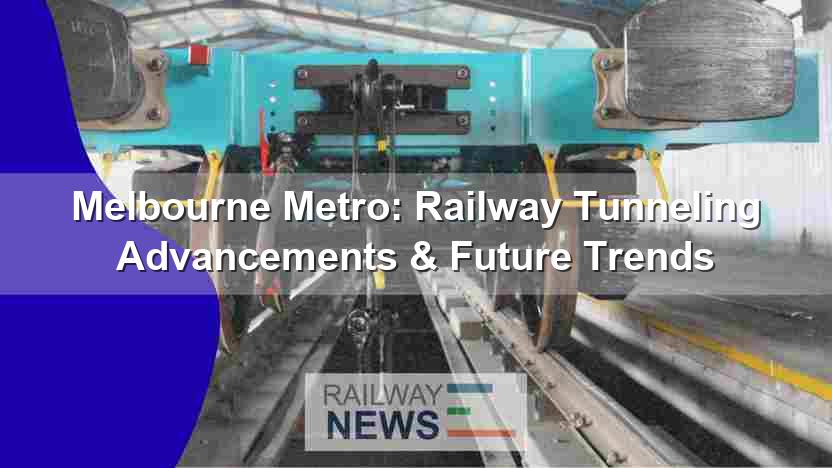
Railway Tunneling: A Deep Dive into Modern Infrastructure
Railway tunneling is a critical aspect of modern transportation infrastructure, enabling the creation of efficient and sustainable railway networks, especially in densely populated urban areas and challenging terrains. This article explores the multifaceted process of railway tunneling, from the initial planning stages to the final operational phase. We will delve into the various methods employed, the technological advancements that have revolutionized the industry, and the significant benefits that railway tunnels offer in terms of connectivity, environmental impact, and urban development. Additionally, we will examine the challenges faced during construction and the innovative solutions implemented to overcome them. The evolution of tunnel design and construction has been remarkable, leading to safer, more durable, and more cost-effective railway systems. This article will shed light on the complexities and triumphs of this essential engineering feat.
Railway Tunneling Techniques: A Methodological Overview
The construction of railway tunnels involves a range of techniques, each chosen based on geological conditions, project scale, and environmental considerations. The two primary methods are the *cut-and-cover* method and the *tunnel boring machine* (TBM) method. The cut-and-cover method, suitable for shallower tunnels, involves excavating a trench, constructing the tunnel within the trench, and then covering it over. This method is generally less expensive but can be disruptive to surface activities.
The TBM method, on the other hand, is used for deeper tunnels and involves using a specialized machine to bore through the earth. There are several types of TBMs, including those for hard rock and soft ground conditions. TBMs excavate the tunnel, remove the excavated material, and install tunnel lining segments simultaneously. This method minimizes surface disruption and is particularly well-suited for urban environments. Other techniques include the *New Austrian Tunnelling Method (NATM)*, which uses a sprayed concrete lining and ground support to stabilize the tunnel as it is excavated. The choice of the method significantly affects the project’s timeline, budget, and environmental impact.
You might be interested in:
Last November 2018, we published an article about Spain’s rail network getting a major upgrade. Click here to read – Sitra+: Revolutionizing Spain’s Rail Network
Technological Advancements in Tunnel Construction
Technological advancements have dramatically enhanced railway tunnel construction. *Tunnel boring machines* (TBMs) have evolved from basic excavators to sophisticated machines equipped with laser guidance systems, advanced excavation techniques, and automated segment installation. These innovations have increased tunneling efficiency and precision.
Moreover, the use of *geotechnical investigations* and *ground stabilization techniques* has improved our understanding of subsurface conditions, leading to safer and more stable tunnel designs. Sophisticated monitoring systems, including sensors and real-time data analysis, are used to monitor ground movement and tunnel stability during and after construction. Advances in *concrete technology* and *lining systems* have also improved the durability and lifespan of railway tunnels. The integration of *Building Information Modeling (BIM)* software allows for collaborative design, construction planning, and project management, improving efficiency and reducing errors.
Environmental and Urban Planning Considerations
Railway tunnels offer significant benefits in terms of environmental sustainability and urban planning. By going underground, tunnels reduce surface congestion, minimizing traffic and pollution. They provide a vital solution in densely populated urban areas where surface space is limited. Tunnels help to integrate railway lines into existing urban environments, improving connectivity and reducing the impact on communities. They can also help to preserve valuable green spaces and protect sensitive ecosystems.
The construction of railway tunnels, however, has potential environmental impacts, including ground disturbance, noise pollution, and the disposal of excavated materials. Therefore, environmental impact assessments and mitigation strategies are essential. These include careful site selection, the use of noise barriers, and recycling or reusing excavated materials. The integration of tunnels into urban planning can also contribute to the development of integrated transport networks, promoting public transportation and reducing reliance on private vehicles.
Melbourne Metro Tunnel: A Case Study
The *Melbourne Metro Tunnel* is a prime example of modern railway infrastructure development. This project, designed to improve the capacity and efficiency of Melbourne’s rail network, involves the construction of twin nine-kilometer tunnels and five new underground stations. The *Melbourne Metro Tunnel* project employs advanced TBM technology, showcasing the capability to navigate complex geological conditions under a bustling city. This project also integrates detailed environmental management plans, including measures to minimize noise, vibration, and ground movement during construction. Upon completion, the *Melbourne Metro Tunnel* will significantly improve connectivity, reduce travel times, and enhance the overall public transportation experience in the city. The project highlights the key role that railway tunnels play in addressing urban transportation challenges.
Conclusion: The Future of Railway Tunneling
To summarize, railway tunneling is a complex but essential undertaking for modern transportation infrastructure. The evolution of tunneling techniques, from the cut-and-cover method to advanced TBMs, demonstrates the advancements in engineering and technology. These improvements have led to safer, more efficient, and less disruptive construction processes. Additionally, the careful consideration of environmental factors and urban planning underscores the commitment to sustainable development.
Railway tunnels are essential for improving connectivity, reducing congestion, and promoting sustainable transportation in urban environments. Projects like the *Melbourne Metro Tunnel* are a testament to the transformative impact of tunneling on urban landscapes and transportation networks. As cities continue to grow and the demand for efficient transportation increases, railway tunneling will remain an integral part of infrastructure development. Innovation, sustainable practices, and integrated urban planning will play a key role in shaping the future of railway tunneling, ensuring safer, more efficient, and environmentally friendly transport systems for future generations.

Railway infrastructure, rolling stock and transport technologies specialist focused on global rail industry developments, high-speed rail systems, signaling technologies and freight transportation. Covering railway investments, public transport modernization, rail operations and international mobility projects across Europe, Asia and North America.
RELATED POSTS

September 5, 2026 4:19 pm
CPK launched formal tender talks with four consortia to design...

September 6, 2026 4:12 am
Alstom delivered the first of 100 new G Class trams...
September 6, 2026 8:17 am
DB InfraGO reopened the Nuremberg-Regensburg line in Bavaria on 31...
September 6, 2026 12:20 pm
Indian Railways ordered a probe after a fire destroyed 2...
September 5, 2026 6:17 pm
Universal Signalling won a deal to install its U-Cross system...
September 7, 2026 4:15 pm
Zimbabwe approved the EUR 3 billion Harare Light Rail project,...