
North American Freight Car Castings: Future Trends & Rail Innovations
Freight car castings are critical to North American rail efficiency. Discover how innovative solutions are improving their robustness and sustainability!
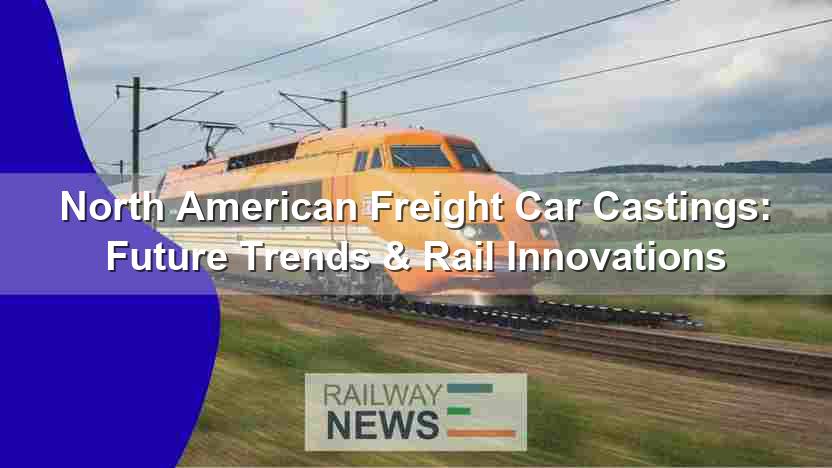
This article explores the intricacies of North American freight car castings, examining their crucial role in the rail industry, the challenges faced in their production and maintenance, and the innovative solutions emerging to address these issues. The escalating demand for robust and efficient freight transport in North America necessitates a detailed understanding of the components that underpin this vital sector. From material selection and casting techniques to the impact of technological advancements, this exploration will provide insights into the future of freight car castings and their contribution to the overall railway infrastructure.
The Significance of Freight Car Castings
Freight car castings, often overlooked, are fundamental to the operational efficiency and safety of North American rail networks. These components, typically found in critical areas such as freight car frames, undercarriages, and coupler housings, are responsible for the structural integrity and longevity of the rolling stock. Their design and manufacturing play a significant role in determining the load capacity, the resistance to wear and tear from frequent use, and the overall durability of the freight cars. Properly designed and manufactured castings ensure the safe and reliable movement of freight over long distances, playing a critical part in the economical and efficient transportation of goods across the nation.
Challenges in Casting Production and Maintenance
The production and maintenance of high-quality North American freight car castings face a multitude of challenges. The industry is grappling with fluctuating market demands, leading to inconsistencies in production schedules. Material costs and availability, alongside the rising labor costs, add to the financial pressure. Additionally, ensuring the castings meet stringent safety standards for impact resistance and fatigue is paramount. Maintaining quality control throughout the production process is critical to minimize defects and ensure the reliability of the finished products, thus protecting the railways’ asset value. The environmental impact of the casting process is another important concern, driving the search for more sustainable practices.
Innovation and Technological Advancements in North American Freight Car Castings
Recent years have witnessed a surge in innovative approaches to address the challenges in freight car casting. The integration of 3D modeling and simulation tools is revolutionizing the design process, leading to optimized designs with improved structural integrity and reduced material usage. This also results in significant cost savings in the long run. Advanced casting techniques, such as investment casting and sand casting, are being refined to meet the evolving needs of the industry. The development and application of high-strength alloys are enabling the creation of lighter and more durable castings, improving fuel efficiency and capacity for freight cars.
Conclusion: Forging a Future in Freight Car Castings
To summarize, North American freight car castings are essential to the nation’s rail freight system. The intricate interplay between design, material selection, manufacturing techniques, and ongoing maintenance significantly impacts the entire transportation network. The challenges facing the industry, from fluctuating demand to material costs and environmental concerns, are significant, yet advancements in casting technologies are mitigating these challenges. The adoption of 3D modeling, high-strength alloys, and environmentally friendly casting techniques is enhancing the quality, efficiency, and sustainability of freight car castings. These innovations, combined with continuous quality control measures, are paving the way for a future where North American freight car castings play an even greater role in supporting the nation’s freight transportation needs. The ability to maintain robust and reliable freight car castings is paramount to the overall efficiency and safety of the North American railway system.
Looking ahead, it is essential for stakeholders to invest in research and development to further refine casting processes and explore new materials. The successful integration of technology and sustainable practices will be crucial in ensuring the long-term viability and reliability of North American freight car castings, which directly impact the economies of the entire nation. This industry’s ability to navigate challenges and innovate is vital not only for its own success but also for the economic vitality of the United States. North American freight car castings are central to the continued performance of the entire rail freight system.
The successful production of high-quality, durable North American freight car castings will be crucial for the future of rail freight transport. A combination of robust design, advanced manufacturing techniques, and responsible environmental practices will be paramount in this endeavor. This complex endeavor, involving numerous stakeholders, demands significant investment in research and development to support continued advancement. The long-term health of the American rail freight system relies on these efforts.
You might be interested in:
Last January 2019, we looked at Senegal’s high-speed rail success. Click here to read – Dakar TER: Senegal’s High-Speed Rail Success

Railway infrastructure, rolling stock and transport technologies specialist focused on global rail industry developments, high-speed rail systems, signaling technologies and freight transportation. Covering railway investments, public transport modernization, rail operations and international mobility projects across Europe, Asia and North America.
RELATED POSTS
September 6, 2026 5:19 am
Hitachi delivered Taiwan's first N700ST high-speed train from Japan in...

September 5, 2026 4:19 pm
CPK launched formal tender talks with four consortia to design...
September 6, 2026 1:17 am
Hitachi Toshiba Supreme Consortium confirmed the first of 12 N700ST...

September 6, 2026 4:12 am
Alstom delivered the first of 100 new G Class trams...

September 5, 2026 7:14 pm
HS2 Ltd signed renegotiated civils contracts with EKFB and Align...
September 6, 2026 6:17 am
Hungary ordered a national ban on most freight trains from...