
Network Rail’s Climate-Resilient Rail Framework: UK
Network Rail partners with WSP to develop a standardized flood response framework, boosting railway resilience against climate change.
Introduction
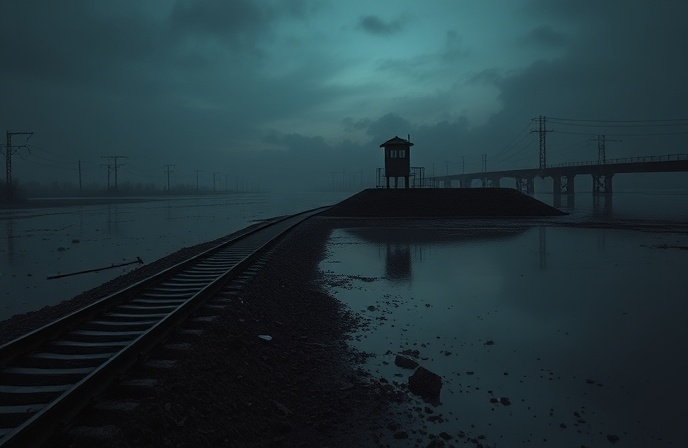
Network Rail and WSP are developing a framework to standardize flood and erosion response to enhance railway resilience to climate change impacts, with 2023/24 marking the worst year on record for flooding incidents. This collaborative effort aims to address the increasing disruption caused by extreme weather events.
Background and Challenges
Network Rail is collaborating with WSP to create a new framework aimed at strengthening the railway’s resilience to flooding and coastal erosion. Extreme weather associated with climate change has led to increased disruption in recent years, with 2023/24 being the most challenging year on record. Over 1,200 flooding incidents were reported, many of which were connected to Storm Bert, and this trend is anticipated to continue.
Lisa Angus, Network Rail’s industry weather response director, highlighted that the railway’s original construction often placed it in vulnerable locations, such as along rivers or near beaches, or with embankments that were not designed as flood defenses. These factors, combined with climate change, are exacerbating existing weaknesses.
Framework Development and Objectives
The new Flood and Coastal Risk Management Framework, developed in conjunction with WSP, seeks to standardize approaches and enhance the understanding of risks across the network. Currently, flood response is managed by regional teams, often relying on local knowledge, and there are varying rules for train operations during floods, resulting in inconsistent responses.
Dr. Kat Ibbotson, Strategic Advisory Director at WSP, stated that the partnership would enable a more consistent, data-driven approach to risk management across the network.
Key Features and Enhancements
The framework is designed to improve forecasting, decision-making, and emergency response. It also aims to define the railway’s broader role in national resilience. Additionally, Network Rail is working with MetDesk and the Met Office to improve forecasting and data sharing capabilities.
Expected Outcomes
The collaboration between Network Rail and WSP aims to create a standardized and improved approach to managing flood and coastal risks, enhancing the railway’s ability to withstand climate change impacts. The framework’s development is a response to the increasing frequency and severity of extreme weather events affecting the railway network.
Last June 2025, we published an article about Renfe’s cutting-edge Aranjuez maintenance hub and its impact on Cercanías efficiency. Click here to read – Future of Rail: Renfe’s Railway Technology Hub, Aranjuez: Essential Guide
Conclusion
Network Rail and WSP are working together to establish a new framework focused on flood and coastal risk management to enhance the railway’s resilience to climate change. This initiative addresses the increasing disruption from extreme weather events and aims to standardize responses across the network.
Company Summary
Network Rail: Network Rail is the owner and infrastructure manager of most of the railway network in Great Britain.
WSP: WSP is a professional services company providing engineering and design services.
MetDesk: MetDesk is a company specializing in weather forecasting services.
Met Office: The Met Office is the UK’s national weather service.

Railway infrastructure, rolling stock and transport technologies specialist focused on global rail industry developments, high-speed rail systems, signaling technologies and freight transportation. Covering railway investments, public transport modernization, rail operations and international mobility projects across Europe, Asia and North America.
RELATED POSTS

September 6, 2026 5:19 am
Hitachi delivered Taiwan's first N700ST high-speed train from Japan in...

September 5, 2026 7:14 pm
HS2 Ltd signed renegotiated civils contracts with EKFB and Align...

September 6, 2026 4:12 am
Alstom delivered the first of 100 new G Class trams...

September 6, 2026 1:17 am
Hitachi Toshiba Supreme Consortium confirmed the first of 12 N700ST...
September 5, 2026 6:17 pm
Universal Signalling won a deal to install its U-Cross system...
September 6, 2026 12:20 pm
Indian Railways ordered a probe after a fire destroyed 2...