
Czech High-Speed Rail: Modernizing Infrastructure & Connectivity
Czech Republic’s ambitious high-speed rail project modernizes transport, connecting major cities and boosting efficiency.
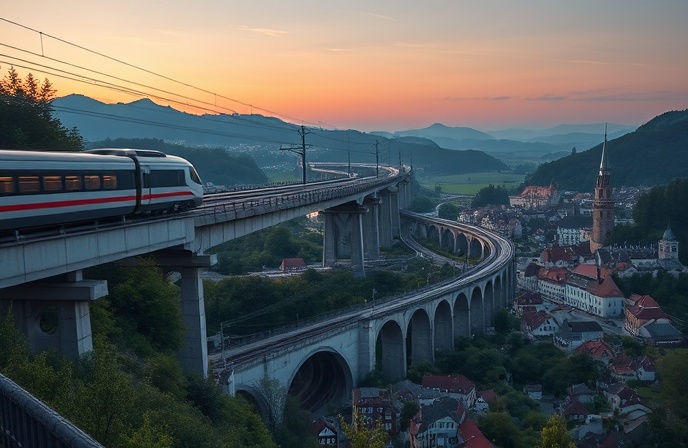
Czech High-Speed Rail: Charting a Course for Modern Connectivity
The Czech Republic is embarking on an ambitious project: the development of a modern high-speed rail network. This initiative, representing a significant leap forward for the country’s transport infrastructure, will connect major cities and regions, promising faster and more efficient travel for both passengers and freight. The project, spearheaded by the Czech government in collaboration with international partners, aims to revitalize the national railway system and enhance the country’s position within the European Union. This article explores the specifics of the Czech high-speed rail program, exploring its objectives, current progress, and projected impact on the industry. The primary focus will be to analyze the infrastructural investments, technological advancements and potential challenges associated with this transformative endeavor.
Strategic Alignment and Project Goals
The primary driver behind the Czech high-speed rail program is to modernize the country’s rail infrastructure, reducing travel times and increasing overall transportation efficiency. The planned network will connect major cities such as Prague, Brno, and Ostrava, with potential extensions to neighboring countries like Germany and Poland. This aligns with the European Union’s TEN-T (Trans-European Transport Network) initiative, promoting interoperability and cross-border connectivity. The stated goals also include improving passenger comfort, boosting economic activity in the regions, and reducing the environmental impact of transportation. High-speed rail, by its very nature, promotes a shift from road to rail, thus contributing to a decrease in carbon emissions. The project incorporates the latest advancements in signaling systems, such as ETCS (European Train Control System), to ensure safety and operational efficiency.
Infrastructure Development and Technological Integration
The Czech high-speed rail project encompasses the construction of new dedicated high-speed lines and the upgrading of existing railway infrastructure. This involves significant civil engineering efforts, including the construction of tunnels, bridges, and viaducts, designed to accommodate trains operating at speeds up to 320 km/h. Additionally, the project emphasizes the integration of cutting-edge technologies. This includes the implementation of advanced signaling systems, such as ETCS Level 2, and the use of modern rolling stock designed for high-speed operations. The incorporation of digital technologies, such as predictive maintenance systems and real-time passenger information systems, will optimize operational performance and passenger experience. The project also accounts for electrification efforts and power supply upgrades.
Financing, Procurement and Stakeholder Involvement
The Czech high-speed rail project involves substantial investment, with financing secured through a combination of public funds, EU grants, and potential private partnerships. The Czech railway infrastructure manager, Správa železnic (SŽ), is playing a crucial role in the development and oversight of the project. SŽ is responsible for planning, tendering, and management of the construction and operation of the high-speed lines. The procurement process is governed by EU regulations to ensure transparency and fair competition. The engagement of various stakeholders, including local communities, environmental groups, and private companies, is critical for project success. Regular consultations and public forums are conducted to address concerns and gather feedback.
Challenges and Mitigation Strategies
Despite the ambitious nature of the Czech high-speed rail project, several challenges must be addressed. These include the complexities associated with land acquisition, the need for environmental impact assessments and mitigation measures, and the management of potential cost overruns. To mitigate these risks, the Czech government and SŽ are implementing robust project management strategies, including rigorous cost control measures, detailed risk assessments, and proactive communication with stakeholders. Additionally, they are collaborating with international experts to ensure the project adheres to best practices in high-speed rail development and operation. Another challenge is the skilled labour required to construct and maintain the network. Addressing this by training the labour and investing in skill development will be key.
Conclusion
The Czech high-speed rail project represents a transformative undertaking, set to reshape the transportation landscape of the Czech Republic. By connecting major cities with high-speed links, the initiative promises to reduce travel times, boost economic growth, and enhance the country’s position within Europe. While the project faces significant challenges, the commitment of the Czech government and the implementation of robust project management strategies suggest that it is well-positioned for success. The focus on incorporating advanced technologies and stakeholder collaboration is also crucial for long-term viability. Looking ahead, the Czech high-speed rail network has the potential to become a model for sustainable and efficient transportation, contributing to a more integrated European railway network and setting the course for further innovation within the industry. Future developments may involve extending the network, introducing new technologies, and embracing smart mobility solutions.

Railway infrastructure, rolling stock and transport technologies specialist focused on global rail industry developments, high-speed rail systems, signaling technologies and freight transportation. Covering railway investments, public transport modernization, rail operations and international mobility projects across Europe, Asia and North America.
RELATED POSTS

October 1, 2026 7:09 am
United States regulators confirmed a September 30 deadline for the...

October 4, 2026 5:14 pm
Alstom secured a CA$4.7 billion order from VIA Rail Canada...

October 1, 2026 12:13 am
Illinois approved $1.5 billion annually for the Northern Illinois Transit...

October 6, 2026 2:14 am
Union Pacific launched export rail shipments with Ferromex to deliver...

October 1, 2026 6:10 am
Amtrak approved a System Expansion Committee on July 30 to...
October 1, 2026 3:12 am
Greenbrier confirmed Brian Comstock as new president and CEO effective...