
Germany’s Siemens Mireo: Hydrogen Rail Revolution
Germany’s investing €12 million in hydrogen fuel cell technology for trains! This innovative leap towards sustainable rail—powered by Siemens, Ballard, and RWTH Aachen—is changing the game. Discover how!
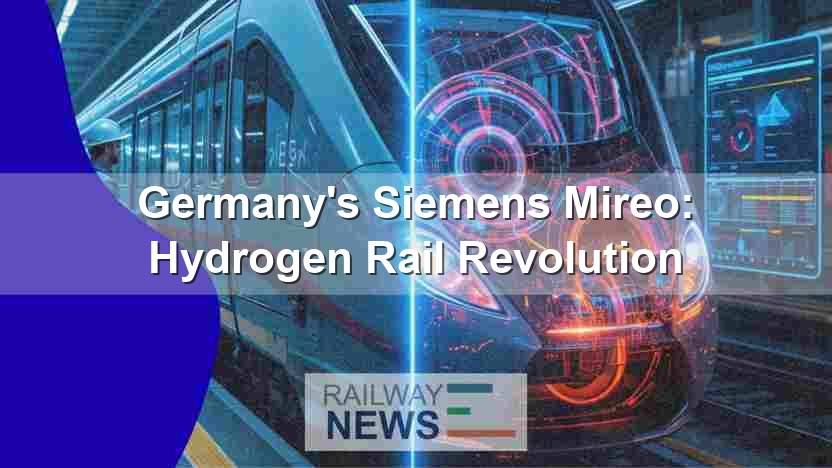
The German government’s commitment to sustainable transportation is evident in its recent investment of €12 million in the development of advanced hydrogen fuel cell technology for railway applications. This initiative, spearheaded by the German Ministry for Transport and Digital Infrastructure, represents a significant step towards decarbonizing the rail sector and achieving Germany’s ambitious climate goals. This article explores the specifics of this project, exploring the collaboration between Siemens, Ballard Power Systems, and RWTH Aachen University, and analyzing its implications for the future of railway technology and the broader hydrogen economy. The National Innovation Programme for Hydrogen and Fuel Cell Technology (NIP), a key driver behind this project, will also be examined, highlighting its crucial role in fostering innovation and market activation in this burgeoning field. The article will conclude by assessing the potential impact of this investment on Germany’s energy transition and its global implications for sustainable rail transport.
Fuel Cell Technology for Railway Applications
The core of the project focuses on enhancing the efficiency of hydrogen fuel cells for use in railway locomotives and trains. The collaborative effort between Siemens, a leading global engineering conglomerate, Ballard Power Systems, a renowned Canadian fuel cell manufacturer, and RWTH Aachen University, a prestigious German research institution, leverages their respective expertise in engineering, fuel cell technology, and academic research. The project’s objective is to develop a highly efficient 200kW modular fuel cell system, a significant improvement over existing technologies. This system’s scalability and modular design will enable its integration into various Siemens Mireo electric multiple unit (EMU) train platforms, facilitating widespread adoption across the German railway network. The hydrogen fuel cell’s electrochemical process involves the conversion of hydrogen and oxygen into electricity, producing only water as a byproduct, thus eliminating harmful emissions associated with traditional diesel-powered trains.
The Siemens Mireo Platform and its Role in the Transition
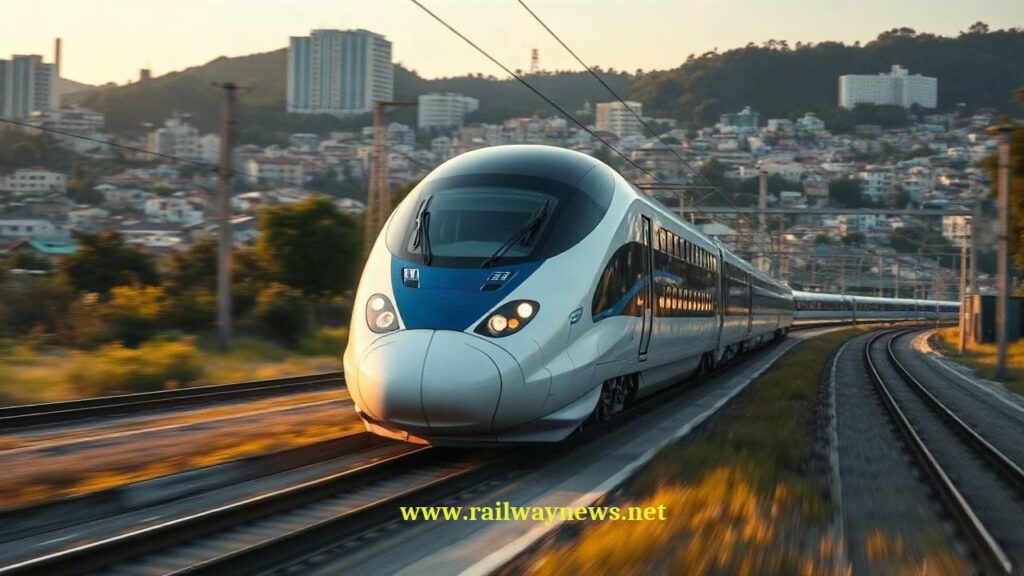
The selection of the Siemens Mireo platform as the recipient of this advanced fuel cell technology is strategic. The Mireo trains, known for their lightweight aluminum construction and energy-efficient design, represent a significant advance in rail technology. The integration of hydrogen fuel cells further enhances their sustainability credentials, making them ideal for achieving climate-friendly rail transportation. The 25% energy reduction already inherent in the Mireo design, compared to earlier Siemens models, complements the fuel cell’s zero-emission operation, resulting in a significantly lower overall environmental footprint. This synergy between existing advancements in rail technology and cutting-edge fuel cell technology positions Germany as a frontrunner in sustainable rail transportation.
National Innovation Programme for Hydrogen and Fuel Cell Technology (NIP)
The €12 million investment is part of the broader National Innovation Programme for Hydrogen and Fuel Cell Technology (NIP), an ambitious initiative organized by the National Organisation for Hydrogen and Fuel Cell Technology (NOW). The NIP aims to invest €250 million in hydrogen fuel cell technology by 2019, demonstrating a substantial commitment to the technology’s advancement and market penetration. The program’s dual focus on research and development alongside market activation reflects a holistic approach, ensuring both technological progress and the commercial viability of hydrogen fuel cell technology. This approach is vital to the program’s success, transitioning from research into mainstream adoption and driving cost reductions.
Broader Implications and Conclusion
The German government’s investment in hydrogen fuel cell technology for rail transportation carries far-reaching implications. The successful development and deployment of this technology will not only contribute to Germany’s ambitious emission reduction targets (a 40% reduction by 2020 and 95% by 2050 compared to 1990 levels, with renewable energy accounting for 60% of all energy consumption by 2050) but will also pave the way for the decarbonization of the broader transportation sector. The project’s success builds upon existing initiatives like the Alstom iLint hydrogen-powered trains, demonstrating a growing global trend toward sustainable rail solutions. The collaboration between industry leaders, research institutions, and government funding represents a robust model for technological innovation. The focus on modularity and scalability ensures the technology’s adaptability to different rail networks and operational contexts. By fostering a vibrant hydrogen economy, Germany demonstrates global leadership in sustainable transportation, creating opportunities for domestic industry while simultaneously addressing climate change. This project’s success will significantly influence the future of rail transport worldwide, making emission-free rail travel a tangible reality. The ongoing efforts to reduce reliance on fossil fuels and transition towards a cleaner energy future will heavily depend on the successful implementation of such innovative and forward-thinking initiatives.

Railway infrastructure, rolling stock and transport technologies specialist focused on global rail industry developments, high-speed rail systems, signaling technologies and freight transportation. Covering railway investments, public transport modernization, rail operations and international mobility projects across Europe, Asia and North America.
RELATED POSTS
September 6, 2026 5:19 am
Hitachi delivered Taiwan's first N700ST high-speed train from Japan in...

September 5, 2026 4:19 pm
CPK launched formal tender talks with four consortia to design...
September 5, 2026 7:14 pm
HS2 Ltd signed renegotiated civils contracts with EKFB and Align...
September 6, 2026 4:12 am
Alstom delivered the first of 100 new G Class trams...
September 6, 2026 6:17 am
Hungary ordered a national ban on most freight trains from...
September 6, 2026 1:17 am
Hitachi Toshiba Supreme Consortium confirmed the first of 12 N700ST...