
High-Speed Railway Projects: Tech, Challenges, & Future of Rail
High-speed rail project faces complex challenges, from route optimization to advanced construction and rolling stock design. Expert collaboration and meticulous planning are crucial for success.
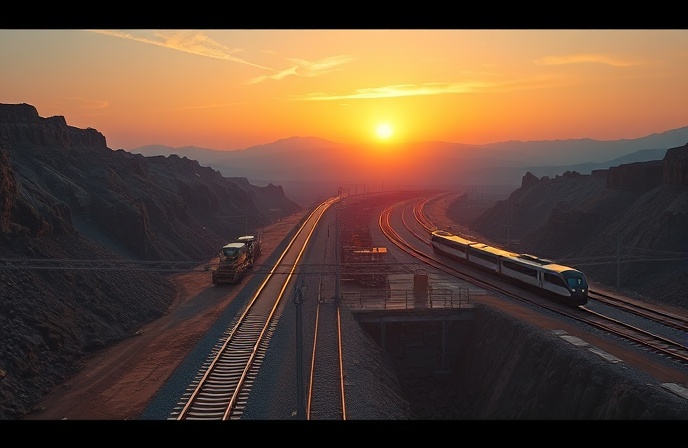
Boosting Capacity: Navigating the Complexities of a Modern High-Speed Railway Project
The relentless pursuit of efficient and sustainable transportation solutions has placed the spotlight firmly on the development of robust railway infrastructure. What was once a futuristic concept is now a reality: the planning and implementation of the world’s largest high-speed railway project continues to evolve rapidly, demanding innovative approaches and expert collaboration. This article will delve into the critical aspects of undertaking these large-scale undertakings, examining the technical and logistical challenges, and forecasting future developments. This analysis will examine the intricate processes involved in bringing these ambitious railway systems to life, with a focus on the considerations and strategies that define these monumental projects. The primary goal is to provide a practical understanding of the key facets of executing such an ambitious undertaking.
Strategic Planning and Route Optimization for High-Speed Rail
One of the earliest, most crucial phases of a high-speed railway project is route selection and detailed strategic planning. This process is far more complex than simply connecting two points on a map; it involves a holistic assessment of numerous influencing factors. Detailed geographical surveys are indispensable, scrutinizing topography, soil conditions, and environmental impact assessments to minimize disruptions. The utilization of advanced modelling software, including Geographical Information Systems (GIS), assists in simulating various route alternatives to find the most effective and least environmentally intrusive option. Additionally, assessing the long-term operational costs, factoring in maintenance and energy consumption, guides decisions early on. The integration of passenger demand forecasts, population density projections, and economic impact studies further refines the route, guaranteeing a railway line that meets the immediate and future needs of passengers and businesses alike.
Advanced Construction Techniques for High-Speed Track Laying
The engineering methodologies employed during the construction phase of a high-speed railway project are significantly more advanced than those used for conventional rail infrastructure. One of the primary areas of focus is the track itself, built for stability and minimal vibration. The use of Continuously Welded Rail (CWR) eliminates the numerous gaps present in traditional rail, providing for a smoother and quieter ride and significantly reducing wear. Specialised ballasted tracks are common, utilizing high-quality ballast materials and advanced tamping techniques to ensure track alignment and stability. The installation of advanced signaling systems, such as the European Train Control System (ETCS), allows for more precise train control, reduced headway, and improved safety, further emphasizing the complexity involved in this type of project. These systems will work hand-in-hand with Automated Train Operation (ATO) to optimize operational performance and efficiencies.
Rolling Stock Design and Technological Integration
The design and integration of the rolling stock play a crucial role in the success of any high-speed railway project. Trainsets must be engineered for high speeds, optimized for aerodynamics, and built for extreme passenger comfort. Materials such as lightweight aluminium alloys and carbon fibre composites are frequently used to reduce weight and energy consumption. The incorporation of advanced suspension systems minimizes vibrations, ensuring a smooth and comfortable journey at high speeds. Additionally, passenger safety and comfort must remain the priority. Cutting-edge interior design, including noise reduction, comfortable seating, in-carriage entertainment, and Wi-Fi connectivity, are vital elements. The integration of real-time data transmission systems, advanced diagnostics, and predictive maintenance programs also allows for proactive system upkeep, greatly reducing downtime and increasing operational efficiency.
Meeting the Challenges of a High-Speed Railway Project in a Complex Regulatory Environment
Navigating the regulatory landscape is another key factor for any high-speed railway project. Each phase, from planning and construction to operation, will be regulated by a number of different safety, environmental and other regulatory bodies. This requires stringent adherence to national and international standards, environmental impact assessments, and public consultations, which must be carefully navigated. Gaining the necessary approvals, often involves extensive documentation, inspections, and audits. Effective project management skills and a strong working relationship with the regulatory bodies are critical for a successful project. In addition to the regulatory landscape, effective risk management strategies are also crucial. These include extensive contingency planning for issues such as cost overruns, supply chain disruptions, and unforeseen geological challenges. Successful projects always have a well-defined risk management plan.
Conclusion
The expansion of high-speed railway project across the globe represents a watershed moment for the rail industry. From initial planning and route optimization to the integration of innovative rolling stock and advanced construction techniques, these projects are pushing the boundaries of engineering, technology, and logistics. The industry implications are far-reaching, impacting not only passenger transportation but also freight logistics, urban development, and environmental sustainability. We can anticipate a future characterized by even faster speeds, increased automation, and more sophisticated integration of data and digital technologies. These advancements will reshape the landscape of global transport, and railway professionals will play a critical role in shaping this dynamic future. The successful execution of these projects will transform how we commute, travel, and connect, opening new possibilities for economic growth and global cooperation.

Railway infrastructure, rolling stock and transport technologies specialist focused on global rail industry developments, high-speed rail systems, signaling technologies and freight transportation. Covering railway investments, public transport modernization, rail operations and international mobility projects across Europe, Asia and North America.
RELATED POSTS
September 6, 2026 5:19 am
Hitachi delivered Taiwan's first N700ST high-speed train from Japan in...

September 5, 2026 4:19 pm
CPK launched formal tender talks with four consortia to design...

September 5, 2026 7:14 pm
HS2 Ltd signed renegotiated civils contracts with EKFB and Align...
September 6, 2026 1:17 am
Hitachi Toshiba Supreme Consortium confirmed the first of 12 N700ST...
September 6, 2026 6:17 am
Hungary ordered a national ban on most freight trains from...
September 7, 2026 8:16 am
Midea, Gree and TCL shipped air conditioners via China Railway...