
Germany’s Rail Innovations: Siemens Fuel Cell Advancements
Driving the future of rail: Discover how innovative partnerships and infrastructure upgrades—like fuel cell technology and station redevelopments—are shaping sustainable, efficient rail transport.
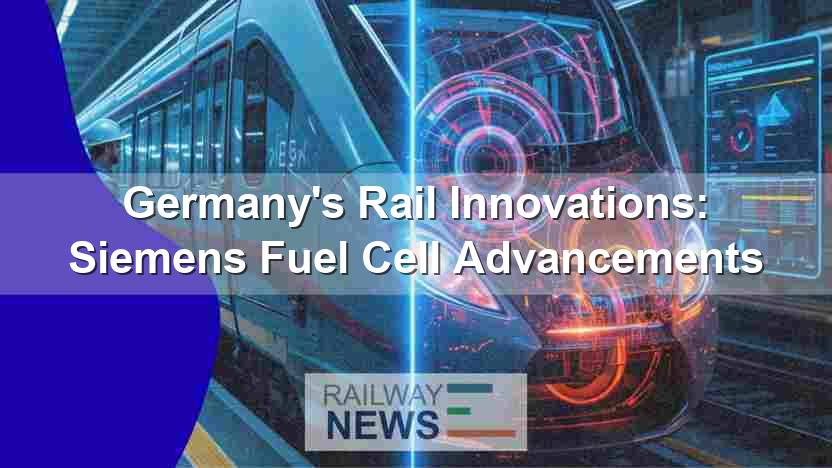
This article examines recent significant developments within the railway industry, focusing on strategic partnerships and infrastructure projects that are shaping the future of rail transportation. We will explore collaborations aimed at developing innovative technologies, such as fuel cell drive systems, and large-scale infrastructure upgrades, including station redevelopments and track replacements. These initiatives highlight the industry’s commitment to sustainability, efficiency improvements, and enhanced passenger experience. The analysis will delve into the specific roles of various organizations, including government agencies like the German Federal Ministry of Transportation and Digital Infrastructure (BMVI), and private sector companies such as Siemens, VolkerRail, and Lendlease. By examining these case studies, we aim to provide insights into the key trends driving innovation and investment within the railway sector and to illustrate the complex interplay between public and private entities in delivering major rail infrastructure projects.
Fuel Cell Technology for Emission-Free Rail Travel
A groundbreaking collaboration between Siemens, Ballard Power Systems, and RWTH Aachen University exemplifies the push towards sustainable rail transport. This partnership focuses on developing a fuel cell drive system for Siemens’ Mireo train platform, significantly reducing reliance on fossil fuels. The German Federal Ministry of Transportation and Digital Infrastructure (BMVI) has provided substantial funding (€12 million) for this project, highlighting the government’s commitment to advancing hydrogen and fuel cell technologies. The project aims to improve several key aspects of fuel cell technology: extending the lifecycle of fuel cells, increasing power density for improved performance, and enhancing overall efficiency. The successful implementation of this technology is expected to contribute to cleaner and more environmentally friendly rail operations.
Track Replacement and Network Enhancement: The Sheffield Supertram Example
VolkerRail’s ongoing work on the Sheffield Supertram network demonstrates the continuous need for infrastructure maintenance and upgrades to improve network performance and reliability. The second phase of track replacement, spanning 11.5km, focuses on enhancing line speed and overall operational efficiency. This project, planned for completion by 2021 (with yearly phased implementation), builds upon the success of phase one completed between 2013 and 2015. This phased approach minimizes disruption while ensuring the systematic improvement of the tram network’s infrastructure. The project highlights the importance of proactive maintenance and modernization to maintain a safe, efficient, and reliable public transport system.
Euston Station Redevelopment: A Collaborative Approach to Enhance Passenger Experience
The selection of Lendlease as the Master Development Partner (MDP) for the Euston station redevelopment underscores the increasing emphasis on improving passenger experience and accessibility in major railway hubs. This extensive project involves collaboration with various stakeholders, including the Greater London Authority and the London Borough of Camden, to create a detailed master plan. The redevelopment, scheduled to begin in 2019, promises to significantly increase passenger seating capacity, improve overall accessibility, and revitalize the surrounding area. The project’s success hinges on effective coordination among multiple stakeholders, demonstrating the complexities of large-scale urban regeneration projects within the context of rail infrastructure.
Conclusion
The projects highlighted in this article – the development of fuel cell technology for trains, track replacement on the Sheffield Supertram, and the Euston station redevelopment – represent key trends in the rail industry. These initiatives showcase a concerted effort towards sustainability, technological innovation, and enhanced passenger experience. The involvement of government agencies like the BMVI, alongside private sector companies such as Siemens, VolkerRail, and Lendlease, highlights the importance of public-private partnerships in driving infrastructure development. The successful implementation of these projects depends not only on technological advancements but also on effective collaboration, meticulous planning, and proactive management of resources. The future of rail transportation lies in the integration of innovative technologies with robust infrastructure planning and effective partnerships between public and private sectors, guaranteeing the provision of safe, efficient, and sustainable rail services for future generations. The commitment to emission-free transportation, exemplified by the fuel cell initiative, represents a significant step towards environmentally responsible rail operations. Meanwhile, strategic infrastructure upgrades like track replacements and station redevelopments ensure the continued reliability and efficiency of the rail network, directly benefiting passengers and the wider community. Ultimately, the collaborative nature of these projects provides a model for future infrastructure development, emphasizing the crucial role of public-private partnerships in achieving ambitious goals for the rail industry.

Railway infrastructure, rolling stock and transport technologies specialist focused on global rail industry developments, high-speed rail systems, signaling technologies and freight transportation. Covering railway investments, public transport modernization, rail operations and international mobility projects across Europe, Asia and North America.
RELATED POSTS

September 6, 2026 5:19 am
Hitachi delivered Taiwan's first N700ST high-speed train from Japan in...

September 5, 2026 4:19 pm
CPK launched formal tender talks with four consortia to design...

September 5, 2026 7:14 pm
HS2 Ltd signed renegotiated civils contracts with EKFB and Align...

September 6, 2026 4:12 am
Alstom delivered the first of 100 new G Class trams...

September 6, 2026 1:17 am
Hitachi Toshiba Supreme Consortium confirmed the first of 12 N700ST...
September 6, 2026 6:17 am
Hungary ordered a national ban on most freight trains from...