
Rail Baltica Kaunas-Poland: Linking Lithuania & Poland Rail Benefits
Rail Baltica’s Kaunas-Poland link, a key European rail project, boosts Baltic connectivity and economic growth.
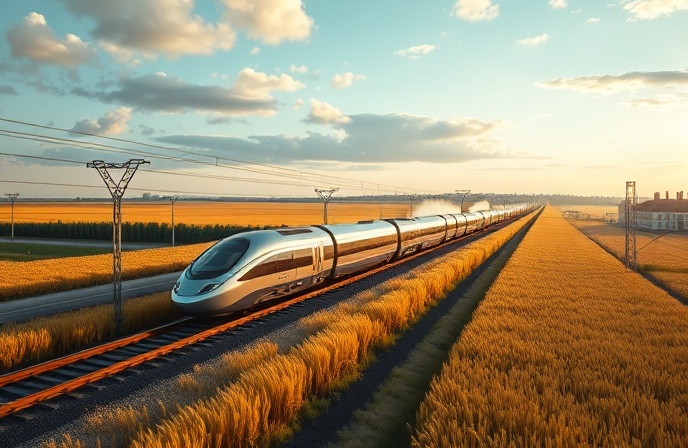
Unlocking Connectivity: The Strategic Significance of Rail Baltica Kaunas-Poland
The ambitious Rail Baltica project, a crucial high-speed rail line connecting the Baltic states with the European rail network, continues its steady progress. This article will focus on the critical segment of the project: the vital Rail Baltica Kaunas-Poland corridor. This section acts as a critical bridge, linking Lithuania with Poland and ultimately the broader European railway system. The “why” behind this project is clear: to enhance regional connectivity, boost economic growth, and improve transport efficiency. The “when” is now, with construction and planning continuing across various segments. The “who” involves many international stakeholders, including the national railway companies of each country, the European Union, and various construction firms. This piece will explore the specifics of this crucial link and its strategic implications for the railway sector.
The Rail Baltica project aims to link the Baltic States (Estonia, Latvia, and Lithuania) with Poland and, further, with the rest of the European railway network.
Strategic Importance and Economic Advantages of the Kaunas-Poland Link
The Rail Baltica Kaunas-Poland section is arguably the most strategically important part of the entire Rail Baltica project. It forms the critical link to the EU rail gauge, and is vital for seamless freight and passenger transport integration. This corridor is designed to accommodate high-speed trains, cutting travel times significantly, which is expected to attract both business and leisure travelers. Economically, the enhanced connectivity is a catalyst for increased trade and investment, facilitating the movement of goods and services between the Baltic states, Poland, and the wider European market. The reduction in transit times and transport costs will significantly benefit businesses and contribute to the economic development of the region. Additionally, it provides an alternative transport option for goods currently transported by road, supporting the EU’s goals of sustainable transportation.
Engineering Challenges and Infrastructure Development
The construction of the Rail Baltica Kaunas-Poland line presents a number of complex engineering challenges. The primary hurdle involves the difference in rail gauge (the distance between the rails). The current 1,520 mm gauge used in the Baltic states and most of the former Soviet Union must be converted to the 1,435 mm standard gauge used across most of Europe. This involves significant infrastructure investment in new tracks, switches, and signaling systems. Further challenges include negotiating complex land acquisition processes and adhering to stringent environmental regulations. Significant investment is directed to modern signaling and safety systems, using the European Train Control System (ETCS) Level 2. This increases safety and efficiency on the line. Bridges and tunnels, often needed to overcome difficult terrain, also add to the complexity of the project.
Advancements in Rolling Stock and Operational Planning
The successful operation of the Rail Baltica Kaunas-Poland corridor also hinges on the procurement of modern rolling stock and robust operational planning. The new high-speed trains will be specially designed for the standard gauge track, meeting demanding European standards. This includes trains that are compatible with the ETCS and are designed for high passenger comfort and optimal energy efficiency. Operational planning is critical to ensure smooth service, including optimized timetables, coordinated freight handling, and effective passenger management. Close collaboration between the railway operators of Lithuania and Poland is essential to create a harmonized operating environment that facilitates cross-border travel and freight movement. The use of digital technologies, such as real-time data analysis, will be important for operational optimization and improved passenger information services.
Conclusion
The Rail Baltica Kaunas-Poland segment stands as a pivotal element in the larger Rail Baltica initiative, representing a significant advancement in European rail infrastructure. The integration with Poland is crucial for linking the Baltic States to the broader European network, boosting regional connectivity, and generating significant economic benefits. Overcoming the engineering challenges, procuring advanced rolling stock, and implementing robust operational plans are all critical for the project’s success. The completion of this project will dramatically improve the efficiency of both passenger and freight transport, as well as foster economic activity in the region. Looking ahead, the successful implementation of the Rail Baltica Kaunas-Poland corridor will act as a model for future cross-border railway projects in Europe, demonstrating the potential for sustainable transportation solutions and regional integration. The development of the project will support new jobs, and open new markets for businesses.

Railway infrastructure, rolling stock and transport technologies specialist focused on global rail industry developments, high-speed rail systems, signaling technologies and freight transportation. Covering railway investments, public transport modernization, rail operations and international mobility projects across Europe, Asia and North America.
RELATED POSTS
October 1, 2026 10:14 am
HS2 installed a 55-metre steel span in Birmingham, completing phase...

October 4, 2026 11:08 pm
Sound Transit confirmed the September 30 opening of Seattle Pinehurst...

October 5, 2026 6:12 pm
AECOM and Jacobs secured a contract in September 2026 to...
October 6, 2026 12:16 am
FTA awarded $233 million in grants to eight US rail...
October 1, 2026 11:13 am
Norfolk Southern expanded its 3B Corridor in Alabama in 2025,...
October 1, 2026 1:12 pm
CSX expanded Queensgate Yard in Cincinnati by installing 42 power...