
Luton Rail Freight: Sustainable Construction & Breedon’s Impact
Luton MP backs rail freight for sustainable construction, reducing road traffic and emissions. Rail transport delivers materials for new homes, schools, and hospitals.
Luton MP Championing Rail Freight for Sustainable Construction
Luton North MP Sarah Owen recently visited Breedon Group’s construction materials depot on Leagrave Road to highlight the benefits of rail freight in supporting sustainable housing development. The visit, which took place on August 6, 2025, showcased how Breedon is utilizing rail transport to deliver materials, significantly reducing reliance on road haulage and contributing to lower emissions. This article examines the logistical advantages and environmental benefits of this approach, exploring its impact on local communities and the wider industry’s sustainable practices.
Rail Freight’s Role in Sustainable Development
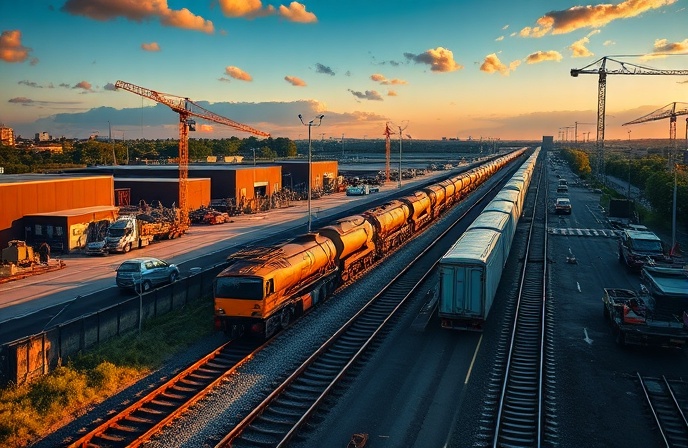
The primary focus of the visit was to emphasize how rail freight streamlines the supply chain for construction materials. The MP observed a freight train unloading aggregates transported 130 miles from Derbyshire. This delivery, which provides materials for up to 30 new homes, effectively removes approximately 76 Heavy Goods Vehicle (HGV) movements from Luton’s roads. This shift to rail directly addresses the need to reduce urban congestion, improve air quality, and lower the carbon footprint associated with construction projects. The materials, arriving near Leagrave Station’s rail sidings, are then transferred to lorries for the final distribution across Luton to various sites, including new housing developments, school and hospital upgrades, and the new stadium at Power Court.
Supporting Local Jobs and Community Initiatives
Beyond the environmental benefits, the initiative also supports local employment. The Breedon site employs local workers, and Ms. Owen highlighted the importance of creating “good, local jobs” while reducing pressure on local roads. During the visit, the MP met with apprentices recruited through Breedon’s partnership with Barnfield College, emphasizing the importance of practical training and apprenticeships in the construction industry. Inspired by Breedon’s commitment to community work, Ms. Owen encouraged local charities and organizations to contact her office for volunteer support.
Industry Perspectives and Future Developments
Torquil Hall, Breedon’s Land Manager for strategic development, stressed the importance of rail and the need to extract and deliver more materials from quarries to meet housing targets. He expressed his welcome for government rail reforms, hoping to speed up the planning process. Huw Merriman, from the Rail Freight Group, echoed this sentiment, highlighting the environmental advantages of rail freight and its crucial role in supplying materials for housing and the UK’s wider sustainability goals. Merriman emphasized that the UK’s rail freight usage rate of only 7% offered significant opportunities for growth, particularly with the implementation of new rail reforms and the creation of Great British Railways, provided the industry can secure long-term investment certainty.
The Last-Mile Logistics Challenge
While the use of rail freight significantly reduces road transport, the final distribution of materials to construction sites still relies on road transport. This presents a “last-mile” challenge. Breedon’s operation mitigates this by establishing a strategic transfer point close to the rail network. This minimizes the distance HGVs must travel within Luton. Exploring alternative last-mile delivery options, such as electric lorries or strategically located distribution hubs, could further decrease the environmental impact of construction material delivery. This would align with the government’s sustainability aims.
Conclusion
Sarah Owen’s visit to Breedon’s depot underscores the vital role rail freight plays in promoting sustainable construction practices and supporting local economic growth. The ability to transport large volumes of construction materials via rail offers significant environmental benefits by reducing traffic congestion and lowering emissions, and it also fosters the development of local employment and community programs. The success of such initiatives depends on continued investment, strategic planning, and effective partnerships between industry, government, and educational institutions. The ongoing reforms in the rail sector and the emergence of new rail infrastructure provide excellent opportunities to increase the efficiency and sustainability of freight transport. Breedon Group’s commitment provides a good example of innovation. Future developments within the sector, such as electrification and the use of more efficient rolling stock, can further boost the environmental advantages of rail freight, creating a more sustainable and environmentally responsible future for the construction industry.
Breedon Group: A Brief Profile
Breedon Group, a leading construction materials group, is focused on the production and supply of aggregates, asphalt, ready-mixed concrete, and other building materials. They operate extensive quarrying and processing facilities across the UK and Ireland, with a significant focus on rail freight to transport bulk materials. Breedon’s operations include a strong emphasis on environmental sustainability, reducing carbon emissions, and supporting local communities through job creation and investment.

Railway infrastructure, rolling stock and transport technologies specialist focused on global rail industry developments, high-speed rail systems, signaling technologies and freight transportation. Covering railway investments, public transport modernization, rail operations and international mobility projects across Europe, Asia and North America.
RELATED POSTS

October 1, 2026 7:09 am
United States regulators confirmed a September 30 deadline for the...

October 8, 2026 1:15 pm
Alstom secured a €1bn contract to build 13 automated trains,...

October 4, 2026 5:14 pm
Alstom secured a CA$4.7 billion order from VIA Rail Canada...

October 1, 2026 12:13 am
Illinois approved $1.5 billion annually for the Northern Illinois Transit...

October 8, 2026 12:18 pm
Siemens Mobility signed an agreement with VinSpeed to supply 350...

October 6, 2026 2:14 am
Union Pacific launched export rail shipments with Ferromex to deliver...