
voestalpine’s Hydrogen Rail: Sustainable Infrastructure’s Future
Voestalpine unveils world’s first hydrogen-based rail, a sustainable railway innovation. The new rail, made with hydrogen-reduced iron, marks a step toward decarbonizing steel production.
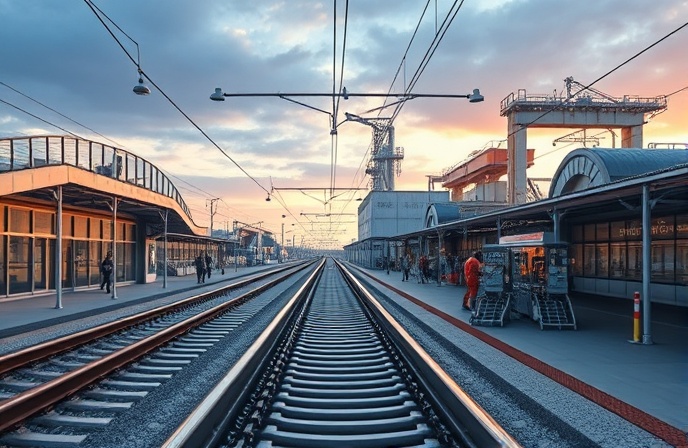
voestalpine Unveils World’s First Hydrogen-Based Rail, Marking a Milestone in Sustainable Railway Infrastructure
In a groundbreaking achievement for the global railway industry, voestalpine has successfully manufactured the world’s first rail utilizing hydrogen-reduced iron. This innovative “green” rail, produced at the company’s Donawitz site in Austria, represents a significant step toward decarbonizing steel production and, consequently, railway infrastructure. The milestone was achieved on July 30, 2025. The rail, installed at Linz Central Station, was crafted using a combination of scrap and hydrogen-reduced pure iron from the HYFOR (Hydrogen-based Fine Ore Reduction) pilot plant. This development answers the industry’s need for more sustainable practices and highlights voestalpine’s commitment to net-zero CO2 emissions by 2050. This article will explore the technical aspects of this breakthrough, its broader implications for the railway sector, and the future trajectory of sustainable steel production.
Hydrogen-Based Steel Production: A Paradigm Shift
The core of voestalpine’s innovation lies in its utilization of hydrogen-reduced iron. The process leverages hydrogen, ideally sourced from renewable energy, to extract oxygen from iron ore. This method produces water vapor as a byproduct, effectively eliminating the CO2 emissions traditionally associated with steel production. The hydrogen-reduced iron, sourced from the HYFOR pilot plant, is then combined with scrap metal. This raw material mixture then undergoes melting in voestalpine’s TechMet research steelworks, also in Donawitz. Subsequently, the molten steel is processed into the finished rail product at a neighboring rail rolling mill, ensuring consistent quality and performance.
The “Green” Rail: Technical Specifications and Performance
The finished hydrogen-based rail boasts the same high hardness and wear resistance as conventional rails, maintaining the stringent performance characteristics required for railway applications. This achievement is critical, as it demonstrates that sustainable production methods do not compromise quality or durability. This ensures the new rail can handle the demands of modern rail transport. Voestalpine’s commitment to quality control and stringent testing protocols confirms the new rail’s compatibility with existing infrastructure, requiring no alteration or reduced lifespan compared to existing rail products.
Sustainability and the Future of Rail Infrastructure
voestalpine’s initiative is part of a broader strategy to transform steel production and reduce its environmental footprint. The company plans to integrate green-powered electric arc furnaces at its Linz and Donawitz sites by 2027. This approach highlights the company’s phased plan for achieving net-zero CO2 emissions in steel production by 2050. The focus on electric arc furnaces, combined with the hydrogen-based production method, demonstrates a commitment to decarbonizing the entire steel production process. This transition has significant implications for the railway industry, reducing the embodied carbon of track infrastructure and supporting the overall goal of creating more sustainable transportation systems.
Industry Leadership and Strategic Investments
The development of hydrogen-based rail underscores voestalpine’s position as a leader in railway infrastructure systems. The company’s strategic investments in pilot and presentation projects, combined with ongoing research, reflect its proactive approach to innovation. This ensures the company continues to be at the forefront of technological advancements in steel production. This commitment is driven by a vision of creating sustainable solutions for the future of mobility. The company is also collaborating with partners across the railway supply chain to facilitate the widespread adoption of sustainable practices and technologies, to create the railway infrastructure of the future.
Conclusion
voestalpine’s production of the world’s first hydrogen-based rail represents a pivotal moment for the railway industry and the broader steel sector. This innovation showcases the viability of sustainable steel production and offers a tangible solution for reducing the carbon footprint of railway infrastructure. The successful integration of hydrogen-reduced iron and scrap demonstrates that sustainable practices can be implemented without compromising quality or performance, a critical factor for widespread adoption. The company’s phased approach towards net-zero emissions by 2050, including the deployment of electric arc furnaces and continued research into new processes, is a clear indication of the company’s commitment to pioneering sustainable steel production technologies. This achievement not only sets a precedent for other steel manufacturers but also signals a shift toward a more environmentally responsible future for rail transport, highlighting the synergy between innovation and sustainability. Future developments will focus on expanding capacity and further refining the hydrogen reduction process to achieve even greater efficiencies.

Railway infrastructure, rolling stock and transport technologies specialist focused on global rail industry developments, high-speed rail systems, signaling technologies and freight transportation. Covering railway investments, public transport modernization, rail operations and international mobility projects across Europe, Asia and North America.
RELATED POSTS
September 6, 2026 5:19 am
Hitachi delivered Taiwan's first N700ST high-speed train from Japan in...

September 5, 2026 4:19 pm
CPK launched formal tender talks with four consortia to design...
September 6, 2026 6:17 am
Hungary ordered a national ban on most freight trains from...
September 6, 2026 1:17 am
Hitachi Toshiba Supreme Consortium confirmed the first of 12 N700ST...
September 7, 2026 8:16 am
Midea, Gree and TCL shipped air conditioners via China Railway...
September 6, 2026 12:20 pm
Indian Railways ordered a probe after a fire destroyed 2...