
Portugal HSR: Lisbon-Porto High-Speed Rail Project Overview
Portugal’s high-speed rail between Lisbon and Porto receives €875M funding. Project aims to cut travel time drastically.
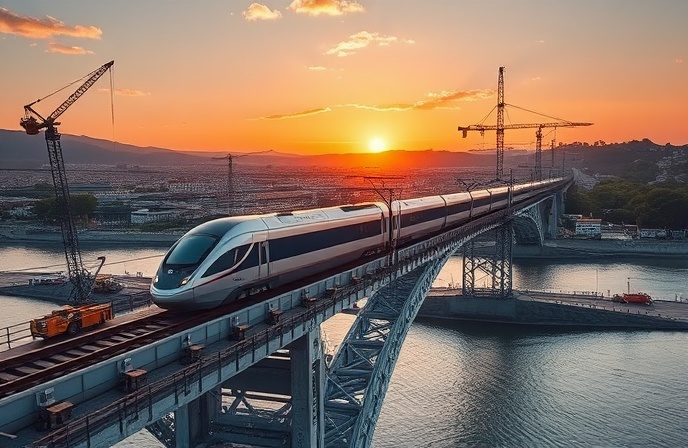
Portugal Embarks on High-Speed Rail Revolution with Lisbon-Porto Line
Portugal is poised to reshape its transportation landscape with the groundbreaking high-speed rail (HSR) line connecting Lisbon and Porto. This ambitious project, representing a significant investment in the nation’s infrastructure, received a critical boost with the signing of a major concession agreement and the securing of initial financing. The European Investment Bank (EIB) has committed EUR 875 million to the Porto-Oiã section, a crucial component of Phase 1. This funding, coupled with other sources, will drastically cut travel times, linking Portugal’s two major cities in just over an hour, compared to the current nearly three-hour journey. The “who” involves the Portuguese government, the EIB, and the consortium Avan Norte. The “what” is the construction of a high-speed rail line. The “when” is now, with the financing and concession agreement finalized. The “where” is between Lisbon and Porto, specifically the Porto-Oiã section initially. The “why” is to enhance connectivity, promote sustainable transport, and stimulate economic growth. The “how” involves a public-private partnership, leveraging substantial EU funding and advanced engineering.
Financing and Project Overview
The EIB loan of EUR 875 million is pivotal, but it’s just one piece of a larger financial puzzle. This tranche of funding is part of a broader EUR 3 billion EIB package approved under InvestEU, marking a landmark investment. The project’s total funding encompasses EUR 900 million from other financial institutions, EUR 480 million from the Connecting Europe Facility, and EUR 150 million from Infraestruturas de Portugal (IP), the national rail infrastructure manager. This multifaceted financial approach underscores the project’s strategic importance and the collaborative effort driving its realization. This blended financing model highlights the importance of public and private collaboration. The project is expected to serve up to 10 million passengers annually.
Concession and Infrastructure Details
A 30-year concession has been awarded to Avan Norte – Gestão Da Ferrovia de Alta Velocidade, formed by the LusoLAV consortium, for the design, construction, and maintenance of the 71 km Porto–Oiã segment. This Public-Private Partnership (PPP) structure is a cornerstone of the project’s feasibility, leveraging private sector expertise in construction and ongoing maintenance to ensure operational efficiency. Phase 1 of the HSR line will extend 143 km from Porto-Campanhã to Soure. This will include new connections to the Northern Line, a strategically positioned station in Vila Nova de Gaia, and a state-of-the-art bridge over the Douro River. The planned route reflects an effort to optimize passenger access and integrate the HSR line seamlessly with existing infrastructure, enhancing overall network efficiency and passenger convenience.
Strategic Alignment and European Union Support
This high-speed rail initiative is a critical element of Portugal’s sustainable transport strategy, aligning with the European Union’s climate objectives. The project’s inclusion in the EIB’s 2024–2027 Strategic Roadmap underscores its long-term importance. The development of this line promotes a shift from air and road transport to a more environmentally friendly mode. This project will also create economic opportunities through increased tourism, business connectivity and improve overall quality of life for the population. This alignment is a vital element in securing funding and support from EU bodies.
Coordinated Implementation and Key Stakeholder Statements
During the signing ceremony, an Implementing Agreement was established between the EIB and IP, the rail infrastructure manager, ensuring coordinated project delivery. The collaboration highlights the commitment to ensuring timely execution and compliance with the highest standards. EIB President Nadia Calviño praised the project, calling it “a real game changer” for Portuguese mobility. Minister Miguel Pinto Luz emphasized the project’s national significance, labeling it “one of the largest projects our country will undertake this century.” The enthusiastic backing from key stakeholders underlines the project’s strategic value and its potential to redefine transportation in Portugal.
Conclusion
The Lisbon-Porto high-speed rail project marks a pivotal moment for Portugal’s infrastructure and connectivity. The substantial financial commitment from the EIB, alongside various other funding sources, coupled with the awarding of a 30-year concession, firmly establishes the project’s viability. This venture not only promises a significant reduction in travel times between Lisbon and Porto but also aligns with EU sustainable transport goals, promoting a shift toward more environmentally friendly travel options. The integrated infrastructure upgrades, including new stations and network connections, are poised to transform passenger mobility and facilitate economic growth. The project’s success hinges on effective coordination among public and private stakeholders, and smooth execution of the planned infrastructure. The focus on sustainability, financial backing from leading institutions, and government commitment suggest a promising future for high-speed rail in Portugal. The project’s success will likely pave the way for further expansion of high-speed rail networks within Portugal and encourage other European nations to make similar commitments.

Railway infrastructure, rolling stock and transport technologies specialist focused on global rail industry developments, high-speed rail systems, signaling technologies and freight transportation. Covering railway investments, public transport modernization, rail operations and international mobility projects across Europe, Asia and North America.
RELATED POSTS

October 1, 2026 7:09 am
United States regulators confirmed a September 30 deadline for the...

October 8, 2026 1:15 pm
Alstom secured a €1bn contract to build 13 automated trains,...

October 4, 2026 5:14 pm
Alstom secured a CA$4.7 billion order from VIA Rail Canada...

October 1, 2026 12:13 am
Illinois approved $1.5 billion annually for the Northern Illinois Transit...

October 6, 2026 2:14 am
Union Pacific launched export rail shipments with Ferromex to deliver...

October 1, 2026 6:10 am
Amtrak approved a System Expansion Committee on July 30 to...