
Union Pacific & Norfolk Southern Merge for $250 Billion in Rail
Union Pacific and Norfolk Southern merge, creating a transcontinental US railroad. The $250B deal aims to boost supply chains and freight competition.
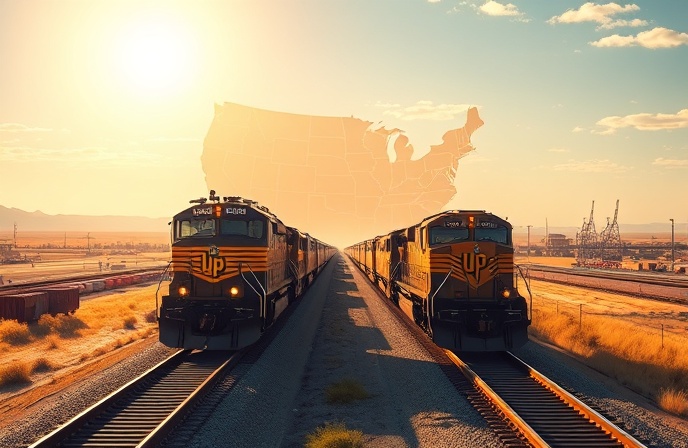
Transcontinental Railroad Dream Becomes Reality: Union Pacific and Norfolk Southern to Merge in Historic Deal
In a landmark move set to redefine the landscape of American freight transportation, Union Pacific (UP) and Norfolk Southern (NS) have announced their merger, creating the first fully transcontinental railroad in U.S. history. The agreement, unveiled on July 29th, marks a pivotal moment in railroading, combining two of the nation’s oldest and most significant rail operators in a stock-and-cash transaction valued at over USD 250 billion. This historic consolidation, spanning over 50,000 route miles across 43 states and connecting nearly 100 ports from coast to coast, is designed to bolster the U.S. supply chain, foster domestic manufacturing, and enhance freight competition, while also ensuring the preservation of union jobs. This article will delve into the specifics of the deal, its potential impact on the industry, and its implications for the future of rail freight.
The Genesis of a Transcontinental Giant: Transaction Details and Rationale
The merger agreement sees Union Pacific acquiring Norfolk Southern at a value of $320 per share, representing a 25% premium on Norfolk Southern’s 30-day average trading price, placing Norfolk Southern’s enterprise value at $85 billion. Jim Vena, Union Pacific’s CEO, emphasized the deal’s transformative nature, stating that it represents “the next step in advancing the industry.” The primary drivers behind this strategic alliance include the elimination of interchange delays, the opening of new, more direct routes, and the provision of faster and more detailed freight services to shippers across the nation. The combined entity is also poised to expand intermodal capacity, improve connectivity, and ultimately reduce highway congestion, positioning rail freight as a more competitive alternative to trucking. The deal builds on a 200-year legacy of both railroads, further highlighting the significance of their combined history.
Operational Synergies and Efficiency Gains
The merged company will undoubtedly focus on streamlining operations to leverage its expanded network. One of the most significant benefits anticipated from the merger is the reduction of delays associated with interchanging freight between different rail networks, a common challenge in the current fragmented rail system. By integrating operations and eliminating the need for shippers to navigate multiple carriers, the new entity should significantly cut transit times, thus increasing efficiency. Additionally, the expanded network will allow for the optimization of routes and the introduction of new services, such as direct intermodal routes between key ports and inland distribution centers. This will drive a more efficient supply chain with a potential for increased volume of freight. The merger promises to allow for better planning in railcar scheduling and a larger, integrated network to accommodate both manifest and unit train traffic.
Investment in Infrastructure and Technology
Union Pacific and Norfolk Southern collectively invest approximately $5.6 billion annually in infrastructure and innovation, a figure that is likely to increase under the merged entity. This combined investment will be crucial for maintaining and upgrading the extensive track network, as well as implementing advanced technologies to enhance safety and operational efficiency. These investments will allow for the adoption of technologies such as Positive Train Control (PTC), already in use by both railroads, to improve safety and reduce the risks of accidents. They may also include the deployment of advanced train control systems, improved track monitoring systems, and expanded use of data analytics to optimize train operations and maintenance. The new company will aim to become the safest railroad in North America, a goal that will necessitate substantial investments in safety technology, employee training, and infrastructure improvements.
Employee Commitments and Economic Impact
A critical aspect of the merger involves ensuring job security for union employees. Executives have stated that all union employees who wish to continue working will retain their positions within the merged organization, a commitment that underscores the importance of the workforce in this historic undertaking. The merger is poised to stimulate economic growth by improving the efficiency of the U.S. supply chain and strengthening domestic manufacturing. By increasing the volume of freight that can be transported by rail, the merger will free up highway capacity, reducing congestion and wear and tear on roads. This, in turn, will make the entire logistics network more efficient and reduce costs for businesses and consumers. Mark George, CEO of Norfolk Southern, notes the deal will strengthen rail’s role in the national economy, combining the two railroads from a position of strength.
Conclusion
The merger of Union Pacific and Norfolk Southern represents a monumental transformation in the rail industry, creating a truly transcontinental railroad that promises to reshape freight transportation across the United States. The transaction, valued at over USD 250 billion, signifies a shift towards greater efficiency, enhanced supply chain capabilities, and increased competitiveness. The successful integration of these two powerful entities will depend on the ability to integrate their operations, invest in infrastructure and cutting-edge technologies, and uphold their commitment to safety and employee relations. If executed well, the merged company is well-positioned to become a cornerstone of the American economy. The long-term impact on freight rates, intermodal competition, and overall economic growth remains to be seen, but the move signals a clear belief in the continued viability and importance of rail freight. It’s a bold step towards realizing President Abraham Lincoln’s vision of a connected nation, and this merger will define the direction of American railroading for years to come. It will require close scrutiny from the Surface Transportation Board (STB), the primary regulatory body for railroads, to ensure competition and prevent any negative repercussions on shippers and smaller rail operators.
Company Summary
Union Pacific Corporation (UNP): Founded in 1862, Union Pacific operates a vast network spanning 23 states in the western two-thirds of the United States. Its primary focus is on freight transportation, including intermodal, bulk, and merchandise traffic. UP’s extensive infrastructure and strategic positioning are crucial for moving a wide range of commodities, linking ports, and facilitating long-haul freight movements across the country.
Norfolk Southern Corporation (NSC): Tracing its roots to the 1830s, Norfolk Southern operates a large freight railroad system primarily in the Eastern United States. The company transports a variety of goods, including coal, intermodal containers, automobiles, and agricultural products. Its network of tracks, terminals, and logistics capabilities is an integral part of the U.S. supply chain.

Railway infrastructure, rolling stock and transport technologies specialist focused on global rail industry developments, high-speed rail systems, signaling technologies and freight transportation. Covering railway investments, public transport modernization, rail operations and international mobility projects across Europe, Asia and North America.
RELATED POSTS
September 6, 2026 5:19 am
Hitachi delivered Taiwan's first N700ST high-speed train from Japan in...

September 5, 2026 4:19 pm
CPK launched formal tender talks with four consortia to design...

September 6, 2026 4:12 am
Alstom delivered the first of 100 new G Class trams...

September 5, 2026 7:14 pm
HS2 Ltd signed renegotiated civils contracts with EKFB and Align...
September 6, 2026 1:17 am
Hitachi Toshiba Supreme Consortium confirmed the first of 12 N700ST...
September 6, 2026 6:17 am
Hungary ordered a national ban on most freight trains from...