
ORR ECML Open Access Expansion: UK Rail Enhancements 2025
ORR approves expanded open access rail services on East Coast Main Line, starting December 2025. Boosting connectivity to northern cities.
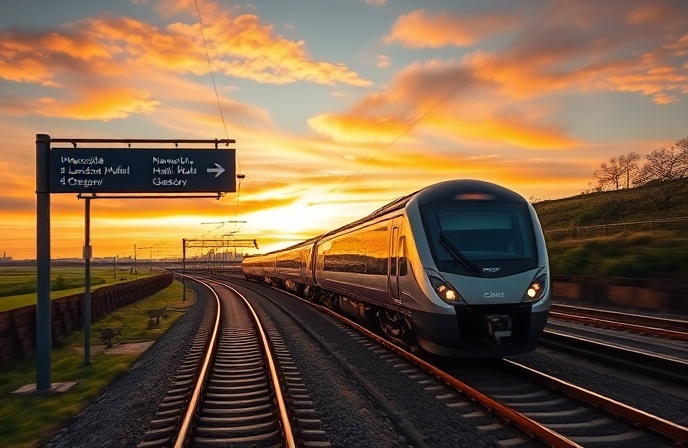
ORR Approves Open Access Service Expansions on East Coast Main Line
The Office of Rail and Road (ORR), the independent safety and economic regulator of the railway in Great Britain, has given the green light to a series of new and expanded open access rail services on the East Coast Main Line (ECML), set to commence in December 2025. This decision, announced this week, will impact three existing open access operators: Lumo, Grand Central, and Hull Trains. The approved enhancements aim to bolster connectivity between London King’s Cross and several key northern destinations including Glasgow, Hull, Newcastle, and Seaham. The “what” is additional services and route extensions. The “when” is December 2025. The “where” is primarily the ECML. The “who” involves the ORR and the three operators mentioned. The “why” centers on enhancing competition, passenger choice, and regional mobility. This article will detail the approved service expansions, the rationale behind the ORR’s decision, and the implications for passengers and the rail industry.
Expanding Service Offerings: Approved Enhancements
The ORR’s approval encompasses a range of service enhancements. Grand Central has received authorization for two additional weekday and Saturday services between Wakefield Kirkgate and Bradford Interchange, plus one extra service in each direction on Sundays. Additionally, existing Grand Central services will now incorporate stops at Seaham. Hull Trains will see one extra northbound service added between London King’s Cross and Hull on weekdays and Saturdays. Lumo (Newcastle) is approved for an additional return service between London King’s Cross and Newcastle on weekdays, with an extra service in each direction on Saturdays and Sundays. Additionally, Lumo will extend selected services currently terminating at Edinburgh to Glasgow Queen Street, including two northbound and one southbound train on weekdays, with a return service on Sundays. These developments represent a significant expansion of open access services, designed to offer passengers more choice and flexibility. These changes also signify a commitment to improving regional connections and catering to increasing passenger demand.
Strategic Rationale: ORR’s Decision-Making Process
The ORR’s decision to approve these expansions was driven by several key factors. The regulator emphasized its commitment to supporting competition within the rail network, promoting increased network usage, protecting taxpayer funding, and providing operators with commercial certainty. The approval process involved a thorough evaluation of applications against these statutory duties. While several proposals were granted, the ORR also rejected certain applications based on factors such as insufficient network capacity, potential performance risks, or negative impacts on public finances. Stephanie Tobyn, ORR’s Director of Strategy, Policy and Reform, stated that the approved services have been designed to complement significant capacity uplifts planned by other operators. This synergy is intended to maximize benefits for both passengers and freight customers, ensuring more direct connections and a wider range of options. The ORR’s strategic approach prioritizes a balance between competition, operational efficiency, and financial sustainability to ensure the long-term health of the railway system.
Denied Proposals: Capacity and Performance Considerations
While celebrating the approved expansions, it’s important to recognize that the ORR also rejected specific applications. Hull Trains’ proposal for new services between London King’s Cross and Sheffield was turned down. Several Grand Central proposals, including additional return services between Bradford and London, a York–London service, and more King’s Cross–Wakefield trains, also failed to gain approval. These rejections underscore the challenges of balancing service expansion with existing network capacity constraints and the need to mitigate potential performance risks. The ORR must ensure that new services can be accommodated without negatively impacting the punctuality and reliability of existing train operations. This assessment highlights the importance of careful planning and coordination when introducing new services on an already complex and heavily utilized rail network.
A Complementary Approach: Integrated Timetable Enhancements
The ORR’s decision is designed to harmonize with the broader network timetable changes planned for December 2025. This integrated approach is key to maximizing the benefits of the new open access services. The ORR has ensured that the approved services can be integrated without disrupting service provided by other operators. It signifies a collaborative effort to optimize the ECML’s capacity and enhance passenger experience. This coordination will allow passengers and freight customers to benefit from increased options and improved regional connectivity. This is a strategic move to future proof the rail network and provide a solid foundation for sustained growth in rail transport services.
Conclusion
The ORR’s recent decision to approve a series of open access service expansions on the ECML represents a significant development for the UK rail industry. The additional services from Lumo, Grand Central, and Hull Trains, are set to enhance competition, improve passenger choice, and strengthen regional connectivity. While the ORR’s decision-making process prioritizes network capacity, operational performance, and financial sustainability, the approved enhancements will complement a more extensive capacity uplift planned by other operators. The expansions underscore the growing demand for rail travel and the increasing role of open access operators in providing diverse service options. The successful implementation of these new services, in conjunction with the planned timetable changes, will be crucial in shaping the future of rail travel. A well-coordinated approach will contribute to the long-term health of the rail network and its ability to meet evolving passenger and freight demands. Looking ahead, a focus on infrastructure investment, technological advancements, and continued regulatory oversight will be essential to ensure that the ECML remains a vital and efficient transport artery for years to come.

Railway infrastructure, rolling stock and transport technologies specialist focused on global rail industry developments, high-speed rail systems, signaling technologies and freight transportation. Covering railway investments, public transport modernization, rail operations and international mobility projects across Europe, Asia and North America.
RELATED POSTS
September 6, 2026 5:19 am
Hitachi delivered Taiwan's first N700ST high-speed train from Japan in...

September 5, 2026 4:19 pm
CPK launched formal tender talks with four consortia to design...

September 5, 2026 7:14 pm
HS2 Ltd signed renegotiated civils contracts with EKFB and Align...

September 6, 2026 4:12 am
Alstom delivered the first of 100 new G Class trams...
September 6, 2026 1:17 am
Hitachi Toshiba Supreme Consortium confirmed the first of 12 N700ST...
September 6, 2026 6:17 am
Hungary ordered a national ban on most freight trains from...