
U.S. FEMA Act: Rail Infrastructure Resilience & Disaster Response
US House introduces FEMA reform bill, aiming to improve disaster response, including railway infrastructure restoration.
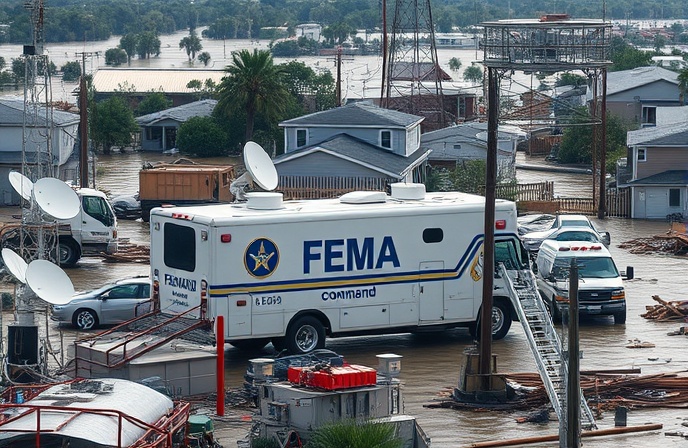
Landmark FEMA Reform Bill Introduced in U.S. House of Representatives
In a move poised to reshape federal disaster response, U.S. House Transportation and Infrastructure (T&I) Committee leadership has introduced a detailed bill aiming for significant reforms to the Federal Emergency Management Agency (FEMA) and its associated disaster assistance programs. The Fixing Emergency Management for Americans (FEMA) Act of 2025 (H.R. 4669), unveiled recently, seeks to modernize FEMA’s operational framework, streamlining processes and bolstering its effectiveness in responding to and recovering from natural disasters. The bill’s introduction, spearheaded by T&I Committee Chairman Sam Graves (R-Mo.) and Ranking Member Rick Larsen (D-Wash.), signals a bipartisan commitment to enhance the nation’s preparedness for increasingly frequent and severe weather events. The impetus stems from a discussion draft released earlier this month, and the subsequent feedback from members of congress and the emergency management stakeholder community.
A Bipartisan Effort for Disaster Resilience
The driving force behind H.R. 4669 represents a significant bipartisan effort to address persistent challenges within FEMA. The bill’s introduction, also supported by former Economic Development, Public Buildings and Emergency Management Subcommittee lead Republican Daniel Webster (R-Fla.) and the subcommittee’s Ranking Member Greg Stanton (D-Ariz.), underscores a shared understanding of the critical need for updated disaster management protocols. This collaboration aims to streamline the application and allocation of federal assistance, reduce bureaucratic hurdles, and ensure resources are deployed more efficiently to affected communities. By working together, the sponsors hope to create a more resilient and responsive disaster relief system that can adapt to the evolving nature of natural hazards.
Addressing the Evolving Landscape of Disaster Management
The impetus for this overhaul lies in the increasing frequency and intensity of extreme weather events, including hurricanes, wildfires, and floods, which are placing immense strain on FEMA’s existing capabilities. These events have highlighted vulnerabilities in the current system, prompting calls for innovative solutions. This legislation is designed to address these challenges by potentially incorporating advanced technologies, like artificial intelligence, to improve situational awareness and rapid response capabilities. Moreover, the bill is expected to offer enhanced support for pre-disaster mitigation efforts. These measures aim to reduce the impact of future disasters and promote long-term resilience within vulnerable communities. The goal is to minimize the need for reactive responses.
Key Provisions and Potential Impacts
While specific details of the bill’s provisions are still being finalized, early indications suggest a focus on several key areas. These include streamlining the process for individual assistance, particularly for homeowners and businesses affected by disasters. The bill is also expected to include provisions to strengthen the integration of state and local emergency management agencies into the federal response network. Another critical area the bill is likely to address is the strengthening of public-private partnerships, including collaborative efforts with railway operators to ensure the prompt restoration of critical infrastructure and transportation links following a disaster. These provisions collectively aim to enhance the efficiency, speed, and effectiveness of disaster relief efforts across the nation.
Conclusion
The introduction of the FEMA Act of 2025 marks a pivotal moment in the evolution of U.S. disaster management policy. With its bipartisan support and a focus on modernizing FEMA’s operational capabilities, the bill offers a detailed approach to addressing the evolving challenges of natural disasters. If enacted, this legislation has the potential to significantly improve the efficiency and effectiveness of disaster relief efforts, offering a more streamlined and resilient response system. While the exact implications will depend on the final form of the bill and its implementation, the early indications suggest a concerted effort to enhance preparedness, streamline assistance, and foster stronger partnerships. The successful passage of this bill will be critical in creating a more resilient nation, safeguarding communities from the increasing impact of natural disasters and ensuring a robust response system to aid in the recovery process.

Railway infrastructure, rolling stock and transport technologies specialist focused on global rail industry developments, high-speed rail systems, signaling technologies and freight transportation. Covering railway investments, public transport modernization, rail operations and international mobility projects across Europe, Asia and North America.
RELATED POSTS

October 1, 2026 7:09 am
United States regulators confirmed a September 30 deadline for the...

October 8, 2026 1:15 pm
Alstom secured a €1bn contract to build 13 automated trains,...

October 4, 2026 5:14 pm
Alstom secured a CA$4.7 billion order from VIA Rail Canada...

October 1, 2026 12:13 am
Illinois approved $1.5 billion annually for the Northern Illinois Transit...

October 6, 2026 2:14 am
Union Pacific launched export rail shipments with Ferromex to deliver...

October 1, 2026 6:10 am
Amtrak approved a System Expansion Committee on July 30 to...