
Mozambique Rail Upgrade: EU & AFD Invest €145M for Capacity Boost
Mozambique’s railway network is set for a significant transformation following a €145 million (approximately $169 million) investment spearheaded by the Agence Française de Développement (AFD) and the European Union (EU).
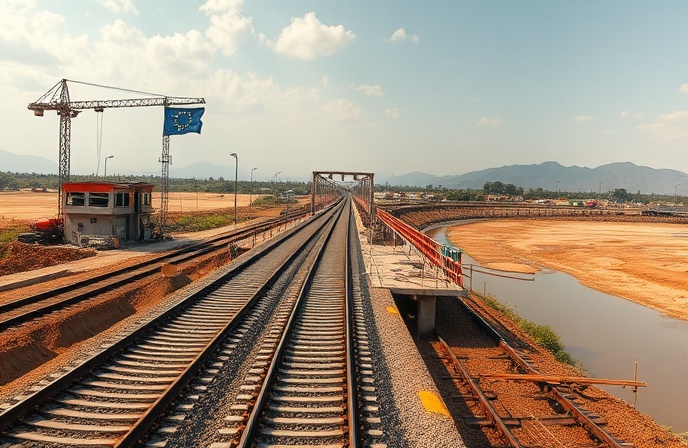
EU and France Invest €145 Million in Mozambique’s Rail Infrastructure Upgrade
Mozambique’s railway network is set for a significant transformation following a €145 million (approximately $169 million) investment spearheaded by the Agence Française de Développement (AFD) and the European Union (EU). The financial package, agreed upon on July 22, 2025, combines two non-sovereign loans from the AFD and a grant from the EU, aiming to significantly enhance the capacity and efficiency of the Maputo–Ressano Garcia railway line. This initiative seeks to modernize the existing infrastructure, primarily through line doubling and signalling system upgrades, with the overarching goal of bolstering freight and passenger transport and facilitating a shift from road to rail. The project directly addresses Mozambique’s strategic need for improved logistics and contributes to the country’s climate goals. Why is this investment crucial? Because it aims to fortify Mozambique’s position as a key logistics hub within Southern Africa. How will this be achieved? Through infrastructure upgrades and a focus on sustainable transportation practices. Who benefits? The entire nation of Mozambique and the broader Southern African region.
Modernization of the Maputo–Ressano Garcia Line
The primary focus of the €145 million investment is the modernization of the Maputo–Ressano Garcia railway line, a critical artery for both passenger and freight movement in southern Mozambique. The project encompasses two key components: doubling the line’s final section and upgrading its signalling system. This is a significant undertaking; doubling the line will require extensive track laying, bridge modifications, and other civil engineering works. The signalling upgrade will involve the installation of modern signalling technology that offers improved train control and safety, ultimately improving the operational efficiency and reducing delays along the corridor. This is crucial for increased throughput and will enhance the capacity to handle the projected traffic increases.
Boosting Capacity and Modal Shift
The investment is designed to drastically increase the railway line’s capacity. Current estimates state that the throughput will increase from the present 14.9 million tonnes per year to an impressive 44.6 million tonnes annually once the second phase of the project is finished. This boost in capacity has the potential to shift a considerable amount of freight from road transport to rail, as a more efficient and robust rail network will create a more attractive alternative for shippers. The EU’s support for this initiative is underpinned by its Global Gateway strategy, which is committed to promoting smart, clean, and secure transport corridors to promote regional integration and economic development.
Environmental Sustainability and Economic Development
Beyond the capacity enhancements, this project has significant environmental implications. By encouraging a shift from road to rail, the project directly contributes to Mozambique’s climate goals by reducing greenhouse gas emissions. The project is expected to reduce carbon emissions by approximately 30,000 tonnes of CO₂ equivalent annually. Additionally, this rail project represents a significant step towards Mozambique’s economic development goals. Improved transport infrastructure is key to regional integration and trade, which further stimulates economic growth and attracts foreign investment.
Project Implementation and Future Phases
The project’s second phase will focus on the recruitment of consulting firms for design, supervision, and project management. This will be vital to ensure the project is carried out according to the highest industry standards. The construction phase is on track for completion by 2030. CFM Chairman Agostinho Langa Júnior has highlighted that CFM requested the funding to realize several planned projects, including the expansion and signalling modernization of the Ressano Garcia line, alongside rolling stock acquisition. These developments aim to enhance urban mobility and contribute to the detailed economic advancement of Mozambique, in line with the country’s regional integration efforts.
Conclusion
The €145 million investment by the AFD and the EU represents a major step forward for Mozambique’s railway infrastructure, promising to dramatically increase capacity, improve efficiency, and promote sustainable transport practices. The focus on modernizing the Maputo–Ressano Garcia line, coupled with plans for future expansion and rolling stock acquisition, underscores a long-term strategy for strengthening the nation’s transportation network. The expected increase in rail capacity, and the resulting shift from road to rail, carries the potential to significantly lower greenhouse gas emissions, aligning with global climate goals. These developments have strong implications for the logistics sector, regional trade, and overall economic growth within Mozambique and Southern Africa. Additionally, the project serves as an example of how strategic infrastructure investments can drive economic and environmental sustainability within the railway industry, promoting regional integration and enhancing a nation’s competitiveness in the global market. The success of this project will serve as a model for future railway development initiatives throughout the region.

Railway infrastructure, rolling stock and transport technologies specialist focused on global rail industry developments, high-speed rail systems, signaling technologies and freight transportation. Covering railway investments, public transport modernization, rail operations and international mobility projects across Europe, Asia and North America.
RELATED POSTS

September 6, 2026 5:19 am
Hitachi delivered Taiwan's first N700ST high-speed train from Japan in...

September 5, 2026 4:19 pm
CPK launched formal tender talks with four consortia to design...

September 6, 2026 6:17 am
Hungary ordered a national ban on most freight trains from...

September 6, 2026 1:17 am
Hitachi Toshiba Supreme Consortium confirmed the first of 12 N700ST...
September 6, 2026 8:17 am
DB InfraGO reopened the Nuremberg-Regensburg line in Bavaria on 31...
September 7, 2026 8:16 am
Midea, Gree and TCL shipped air conditioners via China Railway...