
UP, NS Merger: Impact on North American Freight Rail
Union Pacific and Norfolk Southern are in merger talks, sparking speculation in the railway sector. A potential mega-merger could create North America’s largest railroad.
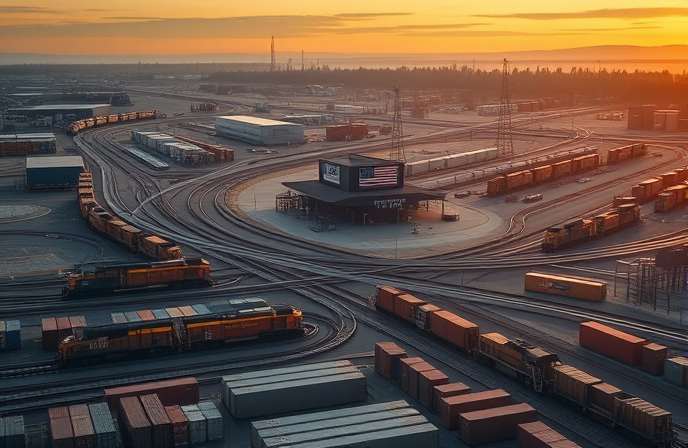
Union Pacific and Norfolk Southern Merger Talks Ignite Industry Speculation
Whispers of a potential mega-merger are echoing through the North American rail industry, as Union Pacific Railroad (UP) and Norfolk Southern Railway (NS) are reportedly engaged in preliminary discussions. National news outlets, including The Wall Street Journal, have broken the story, sparking immediate interest and analysis across the sector. While both Class I railroads have declined to comment on the reports, the possibility of a tie-up between two of the industry’s giants has sent shockwaves through the market. If successful, such a merger would create the largest railroad in North America, boasting a truly transcontinental network connecting the East and West coasts. This article will examine the potential drivers behind this move, the regulatory hurdles, and the broader implications for the freight rail landscape.
The Potential Catalyst: Strategic Vision and Market Dynamics
The rationale behind the rumored merger appears to align with long-term strategic goals. Jim Vena, the current CEO of Union Pacific, has previously signaled his support for the concept of a transcontinental rail network, emphasizing the value such a combination could unlock. Baird Equity Research Industrial senior research analyst Daniel Moore, in an investment “Flash” to clients, observed that the current environment might represent a public vetting process, rather than a random leak of information. A merger of this magnitude, particularly given its considerable regulatory complexities and the broad range of stakeholder interests involved, is unlikely to advance without first gauging the responses of investors, policymakers, and industry participants. This proactive approach suggests a strategic intent and detailed planning behind the scenes.
The Regulatory Landscape: Navigating a Complex Path
Any merger between UP and NS faces substantial regulatory scrutiny. The Surface Transportation Board (STB), the primary federal agency responsible for regulating railroads in the United States, would likely review any proposed combination with intense focus. Previous significant railroad mergers, such as the Union Pacific-Southern Pacific merger in the 1990s, have faced intense scrutiny regarding competitive impacts and implications for shippers. The STB is charged with ensuring that mergers are in the public interest, which involves considering factors such as the effect on competition, service quality, and the overall health of the rail network. Given the size of the potential UP-NS merger, the regulatory process could be lengthy and complex, potentially including public hearings, detailed analysis of the proposed merger’s impacts, and the possible imposition of conditions to mitigate any perceived adverse effects.
Impact on Shippers and Competition
A merger of this scale could dramatically reshape the competitive landscape. While creating a network spanning the entire continent could offer shippers greater access to markets and potentially streamlined logistics, it would also create a massive entity with considerable market power. Concerns about reduced competition, particularly in areas where the two railroads currently compete, are bound to surface. Shippers, who rely heavily on freight rail for transporting goods, would likely be keen to analyze the terms and conditions of the proposed merger, with particular attention given to potential impacts on pricing, service levels, and capacity. The merged entity’s ability to effectively integrate the two networks, ensuring smooth operations and efficient handling of freight, will be crucial.
Industry Reaction and Stakeholder Perspectives
The news has sparked immediate discussions across the industry. Railroad analysts are busy examining potential synergies and risks, while shippers are considering the potential impact on their supply chains. Labor unions, representing the employees of both UP and NS, will also be crucial stakeholders, as any merger could affect jobs, working conditions, and labor agreements. The reactions of policymakers, including those in the current administration, are also critical and may influence the process. The industry is watching with bated breath, understanding that this potential merger has the power to change the North American freight rail map.
Conclusion
The unfolding scenario of potential merger talks between Union Pacific and Norfolk Southern has captured the attention of the entire North American rail sector. The potential advantages of a unified, transcontinental network are enticing, but the regulatory hurdles and the needs of a myriad of stakeholders, from shippers to labor, must be carefully considered. A successful merger depends on overcoming potential antitrust concerns, securing government approvals, and successfully integrating two complex operating organizations. If realized, the resulting mega-railroad would set a new standard for size and scope, transforming the movement of goods across the United States and beyond, while reshaping the competitive playing field. The coming months will be crucial in determining if these early discussions lead to a historic combination that reshapes the future of freight rail.
Company Summary
Union Pacific Railroad (UP): Founded in 1862, Union Pacific is one of the largest Class I railroads in North America, operating a vast network across 23 states in the western two-thirds of the United States. It transports a diverse range of commodities, including agricultural products, automobiles, chemicals, and intermodal containers.
Norfolk Southern Railway (NS): Another major Class I railroad, Norfolk Southern Railway operates primarily in the Eastern United States. It focuses on serving the eastern half of the country, with extensive intermodal, coal, and merchandise traffic. NS is headquartered in Atlanta, Georgia.

Railway infrastructure, rolling stock and transport technologies specialist focused on global rail industry developments, high-speed rail systems, signaling technologies and freight transportation. Covering railway investments, public transport modernization, rail operations and international mobility projects across Europe, Asia and North America.
RELATED POSTS
July 4, 2026 9:18 am
Intramotev deployed its TugVolt autonomous railcar in March 2025 at...
July 1, 2026 1:37 pm
NRHS awarded $187K to 34 U.S. rail heritage projects in...
July 4, 2026 11:41 pm
Eurostar cancelled all direct London–Amsterdam trains through July 2 after...
July 1, 2026 6:37 am
Amtrak launched a small-plate dining program for Acela First Class...
July 1, 2026 1:42 am
UK government launched a £30bn Better Connected plan, allocating £15.6bn...
July 4, 2026 11:02 pm
Eurostar suspends all direct London–Dutch trains through 2 July after...