
Stadler’s Mälartåg: Swedish Rail Advancements
Experience the future of Swedish rail with Stadler’s Mälartåg: a high-speed, climate-resilient double-decker designed for ultimate passenger comfort. Discover how!
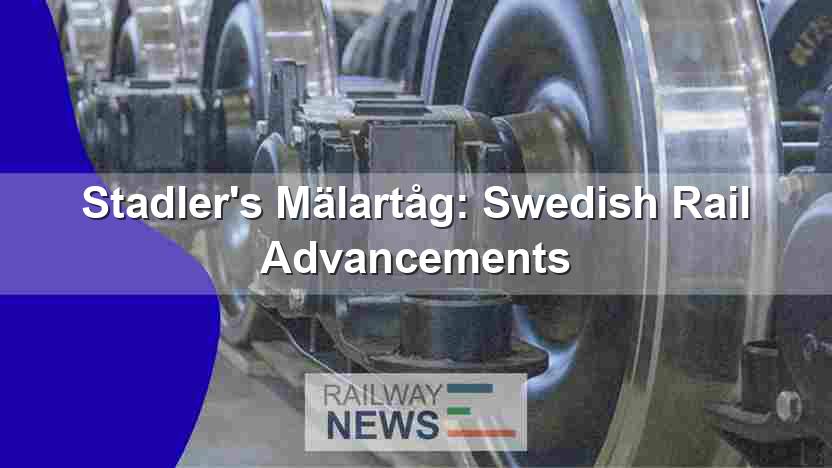
This article explores the unveiling of Stadler’s first Mälartåg (Mälar train) in Stockholm, Sweden, marking a significant advancement in Swedish passenger rail. The introduction of this new double-decker train represents a substantial investment in improving regional transit within the Mälardalen region. We will delve into the technological specifications of the Mälartåg, highlighting its design features optimized for Nordic climates and commuter needs. Additionally, we will examine the collaboration between Stadler, Mälab (Mälardalsbanan), and Transitio in bringing this project to fruition. Finally, we will analyze the broader implications of this new rolling stock on the future of Swedish rail transportation, considering its potential to influence future procurement strategies and passenger experiences.
Design and Technological Advancements
The Mälartåg, part of Stadler’s DOSTO (Double Deck Open Standard Train) portfolio, is a 105-meter-long double-decker train designed to reach a top speed of 200 km/h (124 mph). Crucially, it’s engineered to withstand the harsh conditions of the Nordic winter, a key consideration for reliable year-round operation in Sweden. Beyond climate resilience, the train incorporates features mitigating wildlife collisions, a common issue affecting rail infrastructure. The design prioritizes passenger comfort, featuring adjustable seating with work tables, power outlets, and Wi-Fi access, catering to commuters’ needs during typical one-to-two-hour journeys. Each train boasts 357 fixed seats, supplemented by folding seats, and ample storage space for luggage and bicycles. The inclusion of a European driver’s cabin (EUROCAB) with cab doors adheres to European rail safety standards.
Collaboration and Procurement
The successful unveiling of the Mälartåg is a testament to the collaborative effort between Stadler, Mälab, and Transitio. This partnership demonstrates a successful model for public-private collaboration in the railway sector. Mälab, as the commissioner, defines the operational requirements and brand identity. Transitio, as the ordering party, manages the procurement and delivery process. Stadler, as the manufacturer, leverages its expertise in designing and producing state-of-the-art rolling stock to meet these specific requirements. This collaborative approach underscores the importance of shared responsibility and expertise in delivering effective and efficient railway systems.
Operational Efficiency and Passenger Experience
The increased seating capacity and improved amenities significantly enhance passenger comfort and operational efficiency. The design prioritizes accessibility and convenience, with dedicated storage areas for luggage and bicycles, reflecting a modern understanding of commuter needs. The inclusion of Wi-Fi and power outlets also addresses the evolving demands of modern commuters who require connectivity and the ability to work remotely while traveling. The high-speed capability of 200 km/h (124 mph) contributes to reduced travel times and increased service frequency, optimizing transit efficiency within the Mälardalen region.
Stadler’s Global Reach and Technological Expertise
Stadler’s proven track record with DOSTO trains across various countries, including Switzerland, Austria, Germany, Luxembourg, Russia, Georgia, Azerbaijan, and the US, underlines their capacity for adapting and tailoring designs to meet diverse operational requirements. This global expertise ensures that the Mälartåg benefits from established engineering principles, coupled with specific adaptations to meet the unique demands of the Swedish rail network. The collaboration with Swedish designers further emphasizes a commitment to local knowledge and design preferences, ensuring the train seamlessly integrates into the existing infrastructure and resonates with the local commuter base.
Conclusion
The unveiling of the first Mälartåg represents a significant milestone for Swedish rail transit, showcasing a successful collaboration between Stadler, Mälab, and Transitio. The train’s design, incorporating features optimized for the Nordic climate and modern commuter demands, demonstrates a commitment to both operational efficiency and enhanced passenger experience. The incorporation of features such as ample seating, luggage space, Wi-Fi, and power outlets reflects a customer-centric approach to railway design. Stadler’s proven track record with DOSTO trains, coupled with local design input, ensures a robust and well-integrated solution. The project highlights the potential of public-private partnerships in modernizing railway infrastructure and improving regional connectivity. The success of the Mälartåg deployment could serve as a model for future rail procurement projects, emphasizing the importance of collaboration, technological innovation, and a focus on the evolving needs of passengers. The 33 Mälartåg units planned for deployment will undoubtedly transform rail travel in the Mälardalen region, improving accessibility, efficiency, and passenger comfort, and setting a new standard for regional rail transit in Sweden.

Railway infrastructure, rolling stock and transport technologies specialist focused on global rail industry developments, high-speed rail systems, signaling technologies and freight transportation. Covering railway investments, public transport modernization, rail operations and international mobility projects across Europe, Asia and North America.
RELATED POSTS
September 6, 2026 5:19 am
Hitachi delivered Taiwan's first N700ST high-speed train from Japan in...
September 6, 2026 1:17 am
Hitachi Toshiba Supreme Consortium confirmed the first of 12 N700ST...
September 6, 2026 6:17 am
Hungary ordered a national ban on most freight trains from...

September 5, 2026 4:19 pm
CPK launched formal tender talks with four consortia to design...

September 6, 2026 4:12 am
Alstom delivered the first of 100 new G Class trams...

September 5, 2026 7:14 pm
HS2 Ltd signed renegotiated civils contracts with EKFB and Align...