
Hitachi’s Class 385: Scotland’s Rail Advancements
Scotland’s rail network gets a major upgrade! The ORR’s approval of Hitachi’s Class 385 electric trains means faster, safer journeys for passengers. Discover how!
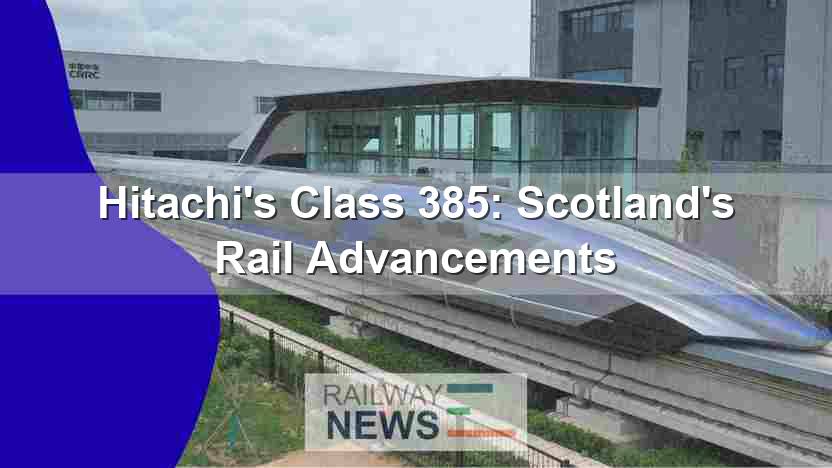
This article explores the significant milestone achieved with the Office of Rail and Road (ORR)’s approval of Hitachi’s Class 385 electric trains for passenger service in Scotland. The approval, granted after rigorous safety and performance assessments, marks a crucial step in modernizing Scotland’s rail network, particularly along the heavily trafficked Edinburgh-Glasgow corridor. This decision is not merely a regulatory clearance; it represents a culmination of collaborative efforts between Hitachi Rail Europe, ScotRail, and the ORR, showcasing a commitment to enhancing passenger experience and addressing the growing demands of Scotland’s rail infrastructure. The introduction of these advanced electric multiple units (EMU) promises substantial improvements in journey times, passenger comfort, and overall operational efficiency. This article explores the key aspects of this approval, examining the technical specifications of the trains, the safety standards met, and the anticipated benefits for Scottish commuters. Further, we will analyze the broader implications of this development for the future of rail transport in Scotland and beyond.
Meeting Stringent Safety Standards
The ORR’s approval signifies that the Class 385 EMUs (Electric Multiple Units) have successfully met the stringent safety and performance standards mandated for railway operation in the UK. This involved detailed testing and evaluation, covering aspects such as train control systems, braking systems, emergency procedures, and passenger safety features. The rigorous process ensured the trains’ compliance with all relevant regulations, guaranteeing the safety and well-being of passengers and railway staff. A particularly noteworthy aspect was the ORR’s acceptance of the redesigned flat windscreens, addressing prior safety concerns. This demonstrates the commitment to continuous improvement and proactive risk mitigation in the railway industry. The successful completion of these assessments underscores Hitachi’s commitment to delivering high-quality, safe rolling stock.
Enhanced Passenger Experience
Beyond safety, the Class 385 trains offer significant improvements to the passenger experience. The new fleet boasts enhanced features designed to improve comfort and convenience for commuters. Key improvements include improved air conditioning for a more pleasant journey, especially during peak seasons, and upgraded Wi-Fi connectivity for seamless communication and entertainment during travel. The design also considers the needs of passengers with disabilities, ensuring accessibility and inclusivity. Additionally, the improved acceleration capabilities of the Class 385 trains contribute directly to reduced journey times between key cities like Glasgow and Edinburgh, a benefit widely anticipated by commuters.
Addressing Congestion and Increasing Capacity
The introduction of the Class 385 trains is directly aimed at addressing congestion on Scotland’s busiest routes. The increased capacity offered by the new EMUs will provide more seats for passengers during peak hours, leading to a reduction in overcrowding and improved comfort for all. This is crucial for meeting the growing demands of Scotland’s expanding population and the increase in rail travel as a sustainable transportation option. The modern design and efficient operational capabilities of the trains will contribute to a more efficient and reliable rail service, further alleviating congestion and enhancing the overall travel experience.
Collaborative Success and Future Implications
The successful approval of the Class 385 trains highlights the importance of collaboration between different stakeholders in the rail industry. The joint effort of Hitachi Rail Europe, ScotRail, and the ORR demonstrates a commitment to delivering a modernized and efficient rail system for Scotland. This collaborative approach ensures the seamless integration of new technology and infrastructure, minimizing disruptions and maximizing benefits for passengers. The project’s success serves as a model for future rail infrastructure projects, emphasizing the benefits of proactive communication and a shared commitment to quality and safety. The improved rail service will not only benefit commuters on the Edinburgh-Glasgow line but also have positive ripple effects across Scotland’s broader rail network, stimulating economic growth and promoting sustainable transportation.
Conclusion
The Office of Rail and Road’s approval of Hitachi’s Class 385 electric trains marks a significant advancement in Scotland’s rail infrastructure. The rigorous safety testing and the incorporation of passenger-centric design features demonstrate a commitment to providing a modern, safe, and efficient rail service. The improved journey times, increased capacity, and enhanced passenger experience will significantly benefit commuters on the Edinburgh-Glasgow line and across Scotland. The successful collaboration between Hitachi Rail Europe, ScotRail, and the ORR underscores the importance of a coordinated approach to infrastructure development. This achievement serves as a model for future projects, emphasizing the benefits of shared goals and a commitment to quality and safety. The successful deployment of the Class 385 trains not only addresses present needs but also lays a foundation for future enhancements in Scotland’s rail network, promoting sustainable transportation and economic growth. The project’s success showcases a modern approach to railway development, balancing technological advancement with stringent safety protocols and a focus on improving the overall passenger experience. The improved journey times, increased seating capacity, and enhanced comfort features represent a tangible improvement to the lives of Scottish commuters, reinforcing the positive impact of collaborative efforts in the railway industry. The ORR’s role in ensuring compliance with safety standards is also crucial, highlighting the importance of independent regulatory oversight in maintaining public safety and confidence in the rail system. The introduction of these new trains signifies a move towards a more efficient, comfortable, and sustainable rail future for Scotland.

Railway infrastructure, rolling stock and transport technologies specialist focused on global rail industry developments, high-speed rail systems, signaling technologies and freight transportation. Covering railway investments, public transport modernization, rail operations and international mobility projects across Europe, Asia and North America.
RELATED POSTS

October 8, 2026 1:15 pm
Alstom secured a €1bn contract to build 13 automated trains,...

October 1, 2026 7:09 am
United States regulators confirmed a September 30 deadline for the...

October 8, 2026 12:18 pm
Siemens Mobility signed an agreement with VinSpeed to supply 350...

October 4, 2026 5:14 pm
Alstom secured a CA$4.7 billion order from VIA Rail Canada...

October 5, 2026 6:12 pm
AECOM and Jacobs secured a contract in September 2026 to...

October 1, 2026 12:13 am
Illinois approved $1.5 billion annually for the Northern Illinois Transit...