
Stadler-Arriva Netherlands: Rail Maintenance Innovations
Stadler’s 15-year Arriva Netherlands maintenance contract: a model for sustainable rail lifecycle management. Discover how long-term partnerships drive economic growth and innovation!
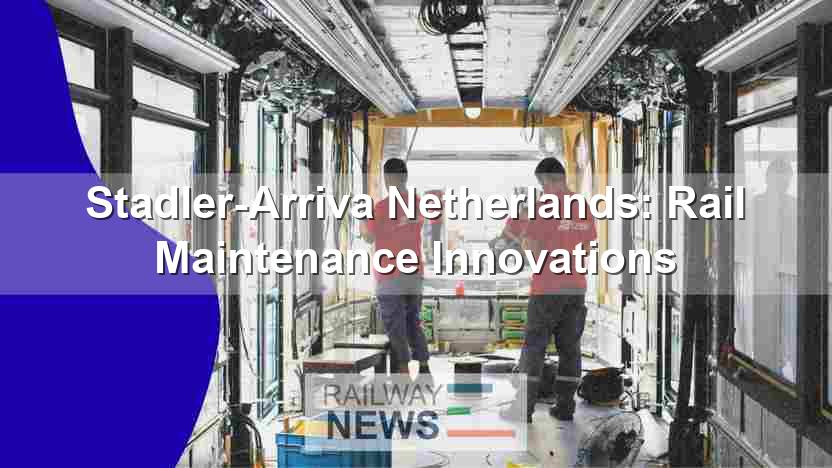
This article examines the strategic partnership between Stadler Rail and Arriva Netherlands, focusing on a significant 15-year maintenance contract encompassing 69 trains. The agreement, extending existing collaboration, underscores the growing importance of long-term lifecycle management in the railway industry. The deal covers both the maintenance of 51 refurbished GTW (Gelenktriebwagen – articulated railcar) trains and 18 newly delivered WINK (Wide-body Innovative New generation Kombibahn – a wide-body, innovative, new generation combined railcar) bi-modal trains, showcasing Stadler’s commitment to both legacy systems and cutting-edge technology. This long-term perspective allows for strategic planning and investment in infrastructure and workforce development, directly impacting the regional economy and setting a benchmark for sustainable rail operations in the Netherlands. The analysis will explore the economic implications, infrastructural adaptations, and technological advancements inherent in this agreement, illustrating the complex interplay of factors driving modern railway maintenance strategies.
Expanding Maintenance Capabilities and Infrastructure
The contract necessitates a significant expansion of Stadler’s depot in Leeuwarden, Netherlands. This expansion includes the addition of a third track, directly reflecting the increased volume of trains requiring maintenance. This infrastructural investment highlights the commitment required to support a large-scale maintenance contract. The expansion also creates new job opportunities, stimulating local employment and underscoring the positive economic impact of long-term railway partnerships. This signifies a synergistic relationship between private investment and regional economic growth, a model potentially replicable in other regions.
Technological Advancements and Sustainability
The inclusion of 18 new WINK bi-modal trains, capable of running on both Hydrotreated Vegetable Oil (HVO) and battery power, underscores the increasing focus on sustainable railway operations. The planned transition to fully electric operation on parts of the Leeuwarden-Groningen route by 2025, relying solely on battery power, represents a significant step towards decarbonizing the rail network. This transition also requires a sophisticated maintenance approach, as it necessitates the handling of advanced battery systems and the integration of new technologies within the existing maintenance procedures. Additionally, the modernization of the existing GTW fleet to incorporate battery power emphasizes the ongoing need for adaptable maintenance strategies capable of integrating new technological capabilities into existing rolling stock.
Economic Impact and Regional Development
The contract’s value and its long-term nature translate to a substantial economic injection into the northern Netherlands. The maintenance contract, coupled with the previous €170 million contract for the supply and refurbishment of the trains, represents a considerable investment in the regional economy. This investment fosters employment opportunities both directly within Stadler and indirectly through the supporting industries that serve the railway sector. The contract also fosters long-term economic stability, providing predictable revenue streams for Stadler and securing essential railway services for Arriva Netherlands. This model demonstrates the mutual benefits of public-private partnerships in facilitating sustainable regional growth.
Long-Term Strategic Planning and Collaboration
The 15-year timeframe of the maintenance contract highlights the importance of long-term strategic planning in the railway industry. This extended commitment allows Stadler and Arriva to collaborate closely on maintenance strategies, optimize resource allocation, and proactively address potential challenges. This long-term partnership enables the development of specialized expertise and optimized maintenance procedures, ultimately contributing to improved reliability and reduced operating costs. It also facilitates proactive planning for future technological upgrades and adaptations to changing operational requirements, ensuring the sustained efficiency and effectiveness of the rail system.
Conclusion
The Stadler-Arriva Netherlands maintenance contract provides a compelling example of a successful long-term partnership in the rail industry. The agreement demonstrates the importance of considering the entire lifecycle of rail infrastructure, from initial procurement to ongoing maintenance, and the need for long-term strategic planning and investment. The project showcases the potential for synergy between private investment, regional economic development, and sustainable transportation solutions. The integration of cutting-edge technologies, such as bi-modal trains and battery-powered operations, demonstrates a commitment to environmental sustainability. The expansion of Stadler’s depot and the creation of new jobs are clear indicators of the positive economic impact of such partnerships. Additionally, the close collaboration between Stadler and Arriva Netherlands underscores the value of building strong, lasting relationships in the rail sector, emphasizing the importance of shared goals and mutual benefits. This model serves as a valuable case study, highlighting the best practices for efficient and sustainable rail system management that can inform future rail infrastructure projects globally.

Railway infrastructure, rolling stock and transport technologies specialist focused on global rail industry developments, high-speed rail systems, signaling technologies and freight transportation. Covering railway investments, public transport modernization, rail operations and international mobility projects across Europe, Asia and North America.
RELATED POSTS

October 8, 2026 1:15 pm
Alstom secured a €1bn contract to build 13 automated trains,...

October 1, 2026 7:09 am
United States regulators confirmed a September 30 deadline for the...

October 4, 2026 5:14 pm
Alstom secured a CA$4.7 billion order from VIA Rail Canada...

October 8, 2026 12:18 pm
Siemens Mobility signed an agreement with VinSpeed to supply 350...

October 1, 2026 12:13 am
Illinois approved $1.5 billion annually for the Northern Illinois Transit...

October 5, 2026 6:12 pm
AECOM and Jacobs secured a contract in September 2026 to...