
Amtrak’s Gulf Coast Rail: Infrastructure, Connectivity & Growth
Amtrak’s Gulf Coast rail service resumes after 20 years, connecting Mobile and New Orleans.
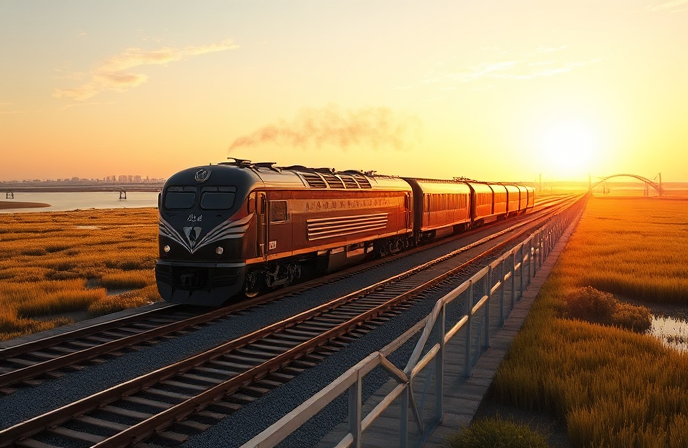
Amtrak Reintroduces Passenger Rail Service to the Gulf Coast After Two Decades
After a 20-year absence, passenger rail service is returning to the Gulf Coast. Beginning August 18th, Amtrak will once again operate trains between Mobile, Alabama, and New Orleans, Louisiana. This momentous occasion, spurred by extensive infrastructure repairs and a growing demand for accessible transportation, marks a significant milestone for the region and the national rail network. The new service, aptly named the “Mardi Gras,” will offer twice-daily intercity train journeys with morning and evening departures from both Mobile and New Orleans, providing crucial connectivity for both business and leisure travelers. The return of rail is a direct response to the devastation caused by Hurricane Katrina in 2005, which effectively suspended service on the line. This article explores the specifics of this revitalized service, exploring its features, the wider network integration, and its potential impact on the future of passenger rail along the Gulf Coast.
The Mardi Gras: A New Era of Gulf Coast Rail
The “Mardi Gras” service signifies more than just a restoration; it’s a re-imagining of passenger rail along the Gulf Coast. Amtrak has invested significantly in infrastructure repairs and upgrades to ensure a comfortable and reliable travel experience. The trains themselves will feature modern amenities, aiming to enhance the journey for passengers. Reservations are now open, enabling potential riders to secure their seats in advance and plan their trips accordingly. Amtrak President Roger Harris emphasized the importance of this moment, urging customers to book their tickets and embrace this long-awaited return to rail travel, especially along the scenic Mississippi Gulf Coast.
Seamless Connectivity and Expanded Networks
A key advantage of the new “Mardi Gras” service lies in its integrated connections. Passengers will benefit from same-day connections to the Amtrak “City of New Orleans” trains, facilitating travel between New Orleans and Chicago via Jackson, Mississippi, and Memphis, Tennessee. This strategic integration extends the network’s reach and opens up new travel possibilities for customers. Additionally, next-day connections in New Orleans will provide access to the “Crescent” trains, offering routes to and from New York via Atlanta, and the “Sunset Limited” trains, linking to and from Los Angeles via Tucson, San Antonio, and Houston. These extended connections enhance the overall value of the service by increasing the geographical destinations available.
Addressing Infrastructure Challenges
The successful relaunch of the Gulf Coast rail service required overcoming significant infrastructure challenges. The aftermath of Hurricane Katrina had inflicted considerable damage on the tracks, bridges, and signaling systems. Extensive repairs, encompassing track reconstruction, bridge strengthening, and signal upgrades, were essential to meet the safety standards and operational requirements of Amtrak. The project involved close coordination between Amtrak, local authorities, and private contractors, highlighting the collaborative nature of such large-scale restoration endeavors. Additionally, the long-term viability and expansion of the service depend on continued investment and maintenance. The reintroduction of rail also requires an upgrade to the current PTC system, if one is not already in place.
Economic and Environmental Impact
The resumption of passenger rail service carries substantial economic and environmental implications for the Gulf Coast region. Passenger rail provides an alternative to driving, reducing highway congestion and lowering greenhouse gas emissions. Amtrak’s commitment to environmental sustainability is evident in its ongoing efforts to reduce its carbon footprint. Passenger rail also facilitates tourism and economic activity, benefiting local businesses and communities along the route. Moreover, the improved accessibility offered by the “Mardi Gras” has the potential to encourage regional development and investment. The reintroduction of rail is expected to contribute to job creation and economic growth throughout the region.
Conclusion
The return of Amtrak passenger rail service to the Gulf Coast on August 18th represents a significant achievement, symbolizing resilience and progress. The “Mardi Gras” service, with its strategic connections and upgraded infrastructure, provides a new and valuable transportation option for travelers between Mobile and New Orleans. This initiative has widespread implications that go beyond passenger convenience. This demonstrates a commitment to enhance transport networks and promote economic development along the Gulf Coast. The success of this venture, however, relies on continued investment in infrastructure, efficient operations, and strategic collaborations. As Amtrak continues to refine its services and expand its network, the potential for the Gulf Coast region’s rail infrastructure to grow is real, with significant implications for the economy, the environment, and the communities it serves. Further expansion of the rail network may be on the horizon as demand increases and funding becomes available, strengthening the role of passenger rail in the region’s future.

Railway infrastructure, rolling stock and transport technologies specialist focused on global rail industry developments, high-speed rail systems, signaling technologies and freight transportation. Covering railway investments, public transport modernization, rail operations and international mobility projects across Europe, Asia and North America.
RELATED POSTS

September 5, 2026 4:19 pm
CPK launched formal tender talks with four consortia to design...

September 19, 2026 11:19 am
China launched an experimental 1.11-tonne maglev test sled to 800...
September 5, 2026 6:17 pm
Universal Signalling won a deal to install its U-Cross system...
September 7, 2026 11:16 pm
China Railway Tunnel Group completed the 11.3-km underwater Yangtze tunnel...
September 6, 2026 12:20 pm
Indian Railways ordered a probe after a fire destroyed 2...
September 8, 2026 5:14 am
STB ordered Belt Railway Co. of Chicago on Aug. 3,...