
Alstom’s Coradia iLint: German Rail’s Green Revolution
Revolutionize your rail network with Alstom’s Coradia iLint hydrogen trains! Zero emissions, maximum efficiency – discover how.
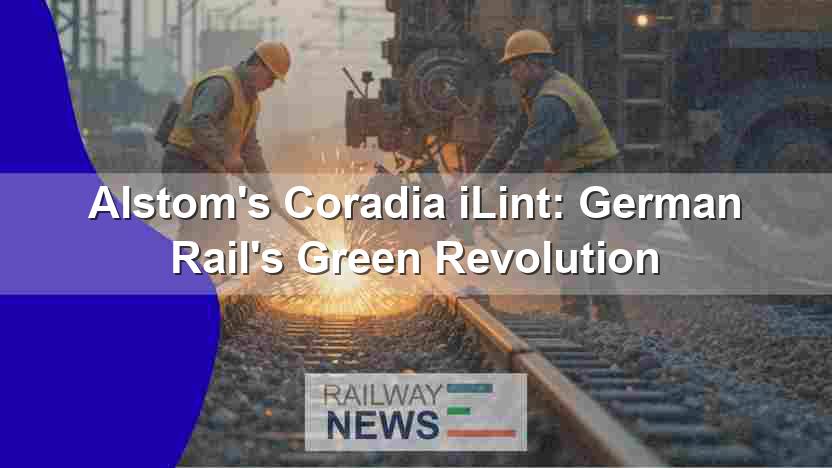
This article explores the significant advancement in sustainable rail transportation marked by the launch of Alstom’s Coradia iLint hydrogen-powered trains in Lower Saxony, Germany. The deployment of these trains represents a pivotal moment in the transition towards emission-free rail networks, addressing the environmental concerns associated with diesel-powered trains operating on non-electrified lines. We will delve into the technical aspects of the Coradia iLint, its operational implications for the Eisenbahnen und Verkehrsbetriebe Elbe-Weser (EVB) network, the broader economic and environmental benefits, and the future prospects of hydrogen fuel cell technology in the railway sector. The success of this initiative in Germany holds crucial implications for the global adoption of clean energy solutions within the rail industry, providing a blueprint for other regions seeking to decarbonize their transportation systems. This case study highlights the potential for collaboration between government, industry, and research institutions in driving technological innovation and sustainable infrastructure development.
The Coradia iLint: Technology and Operation
The Coradia iLint, manufactured by Alstom in Salzgitter, Germany, is a revolutionary passenger train powered by hydrogen fuel cells. Unlike traditional diesel trains, the Coradia iLint converts hydrogen and oxygen into electricity through a fuel cell, generating emission-free power for propulsion. This process eliminates harmful pollutants like nitrogen oxides (NOx) and particulate matter, significantly reducing the environmental impact of rail travel on non-electrified lines. The trains boast a maximum speed of 140 km/h and are designed for efficient operation on regional rail networks. The hydrogen fuel is stored in high-pressure tanks, allowing for a full day’s operation on a single refueling. Refueling involves simply replacing the used hydrogen tanks with pre-filled ones, a process streamlined for quick turnaround times. This technology offers a viable alternative to diesel, addressing the significant environmental challenges presented by existing diesel fleets on lines where electrification is impractical or uneconomical.
Deployment and Impact on the EVB Network
The initial deployment of two Coradia iLint trains on the EVB Elbe-Weser network in Lower Saxony marks a significant step towards sustainable regional transport. These trains operate on approximately 100 km of non-electrified lines, replacing older diesel units and immediately reducing emissions within the region. The successful integration of the Coradia iLint into the existing infrastructure demonstrates the operational feasibility of hydrogen fuel cell technology in real-world scenarios. The experience gained from this initial deployment will be invaluable in refining operational strategies and addressing any challenges related to maintenance and fuel supply. This transition significantly improves the environmental footprint of the EVB network and serves as a strong demonstration project for other regional rail operators considering similar upgrades.
Economic and Environmental Benefits
The adoption of the Coradia iLint presents substantial economic and environmental advantages. From an environmental perspective, the elimination of harmful diesel emissions contributes to cleaner air and a reduction in greenhouse gas emissions. This aligns with Germany’s and the European Union’s broader climate goals. Economically, while the initial investment is higher compared to maintaining a diesel fleet, the long-term operational costs are competitive due to the relatively low cost of hydrogen fuel and reduced maintenance needs compared to diesel engines. Additionally, the positive environmental impact attracts public support and improves the image of the rail operator. The investment by the Lower Saxony Ministry of Economy and Transport of over €81 million for an additional 14 trains underscores the government’s commitment to supporting sustainable transport solutions.
Future Prospects and Global Implications
The successful introduction of the Coradia iLint in Germany has significant implications for the global railway industry. It demonstrates the viability and practicality of hydrogen fuel cell technology as a clean alternative to diesel power, particularly for non-electrified lines. This breakthrough provides a viable pathway for other countries and regions to decarbonize their rail networks without the extensive infrastructure upgrades required for widespread electrification. Alstom’s plans to deliver 14 more Coradia iLint trains by 2021 show considerable confidence in the technology’s success. This success is expected to encourage further investment in research and development of hydrogen fuel cell technology, leading to advancements in efficiency, cost-effectiveness, and scalability. The technology’s potential to significantly contribute to global efforts in reducing greenhouse gas emissions and mitigating climate change is considerable.
Conclusion
The introduction of Alstom’s Coradia iLint hydrogen trains in Lower Saxony marks a significant milestone in the evolution of sustainable rail transport. This initiative showcases the practical application of hydrogen fuel cell technology, offering a compelling alternative to diesel-powered trains on non-electrified lines. The successful integration of the Coradia iLint into the EVB network demonstrates the operational viability of this technology, highlighting its ability to deliver both environmental and economic benefits. The elimination of harmful emissions contributes to cleaner air and aligns with broader climate goals. Economically, while initial investment is higher, long-term operational costs are competitive and the positive environmental impact enhances public image. The Lower Saxony government’s significant investment underscores the importance of this technology and its future potential. The success of this project serves as a compelling case study, setting a precedent for other regions to adopt similar solutions and accelerate the global transition towards decarbonizing rail transport. The combination of technological innovation, government support, and a commitment to sustainability has proven to be a winning formula, paving the way for a greener and more environmentally friendly future for railway systems worldwide. The long-term implications for the global railway sector are significant, offering a pathway to reduce greenhouse gas emissions and improve air quality across various regions.

Railway infrastructure, rolling stock and transport technologies specialist focused on global rail industry developments, high-speed rail systems, signaling technologies and freight transportation. Covering railway investments, public transport modernization, rail operations and international mobility projects across Europe, Asia and North America.
RELATED POSTS
September 6, 2026 5:19 am
Hitachi delivered Taiwan's first N700ST high-speed train from Japan in...
September 6, 2026 6:17 am
Hungary ordered a national ban on most freight trains from...
September 6, 2026 1:17 am
Hitachi Toshiba Supreme Consortium confirmed the first of 12 N700ST...

September 5, 2026 4:19 pm
CPK launched formal tender talks with four consortia to design...
September 7, 2026 8:16 am
Midea, Gree and TCL shipped air conditioners via China Railway...

September 6, 2026 4:12 am
Alstom delivered the first of 100 new G Class trams...