
EU Rail Projects: CEF III Funding & TEN-T Corridor Priorities
European railway leaders urge continued centralized EU funding for vital TEN-T projects. Centralized funding crucial for completion of crucial infrastructure.
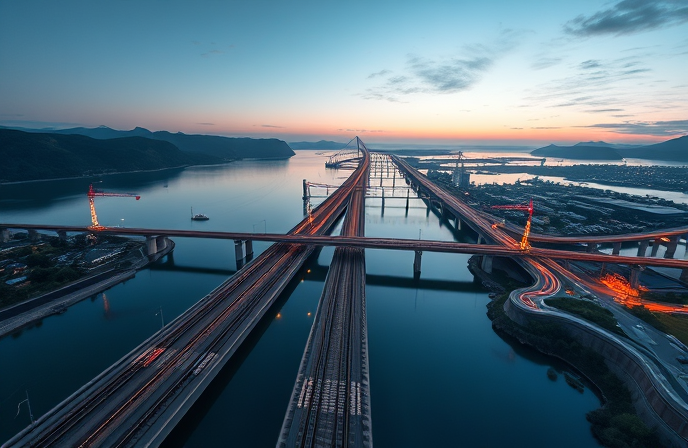
European Infrastructure Leaders Call for Continued Centralised Transport Funding Under CEF III
In a move signaling the critical need for unified transport strategy, leaders of four pivotal European cross-border infrastructure projects have issued a joint statement urging the European Union to maintain a centralised funding model under the next Connecting Europe Facility (CEF III). This call to action, published on the 20th anniversary of the European Trans-European Transport Network (TEN-T) Coordinators, highlights the ongoing importance of large-scale investment in core transport infrastructure. The warning, from Rail Baltica, TELT (Lyon–Turin rail tunnel), BBT (Brenner Base Tunnel), and Canal Seine–Nord Europe, underscores the risk of fragmented national initiatives diverting crucial EU funds and potentially delaying the completion of vital TEN-T corridors. These corridors are essential for European economic integration, climate objectives, and geopolitical resilience. The leaders are requesting financial stability and a continuation of the current strategic model. Their initiative illustrates a strategic push to safeguard the future of the continent’s transport network, emphasizing a coordinated approach for projects of continental significance.
Preserving a Unified European Vision
The core of the joint statement revolves around the imperative of upholding a coordinated, centralized transport investment strategy. The four projects—Rail Baltica, TELT, BBT, and Canal Seine–Nord Europe—are deeply interconnected and depend on robust, sustained, and strategically allocated funding from the EU. The leaders of these projects are concerned that shifting funds to fragmented national initiatives could hinder the timely completion of key TEN-T corridors. These corridors are crucial for promoting economic growth, meeting climate goals, and bolstering geopolitical stability across Europe. They propose five critical recommendations, not explicitly stated in the source material, to ensure project success. This collective plea represents a unified voice advocating for a detailed approach to infrastructure development. This is particularly important considering that these projects span multiple nations and require consistent, Europe-wide financial support.
Advancing the Rail Baltica Project
Rail Baltica, a project linking the Baltic states to Poland and the broader EU network, serves as a critical case study for this argument. Currently under construction in all three Baltic countries, Rail Baltica is a prime example of a pan-European project. Marko Kivila, CEO of Rail Baltica, emphasized that “These projects are not national – they are European. Their success depends on shared ambition and investment.” The construction of this key rail link highlights the importance of sustained financial backing and a shared vision among all participating nations and the EU. As it progresses, Rail Baltica will not only improve passenger and freight transport but will also integrate the Baltic states more fully into the broader European infrastructure network. This demonstrates how projects of this scale require sustained funding and unified support to ensure their successful completion and operation.
Key Projects: Lyon–Turin Rail Tunnel and the Brenner Base Tunnel
TELT, responsible for the Lyon–Turin tunnel, reports that 25% of tunneling is complete, with over 3,000 workers engaged across 11 sites. The tunnel is critical for connecting France and Italy, thereby enhancing freight and passenger transport capacity. Project leaders stress the significance of financial stability and local engagement to maintain momentum and achieve operational goals. BBT SE, overseeing the Brenner Base Tunnel between Austria and Italy, reports that 86% of excavation is complete. This tunnel, once operational, will significantly shift alpine freight from road to rail, substantially reducing travel times and emissions, thereby aligning with environmental objectives. The progress of both projects underlines the need for continuous support and consistent funding to ensure the realization of critical infrastructure goals.
Canal Seine–Nord Europe: Linking Northern France and Belgium
The Canal Seine–Nord Europe, which will connect northern France with Belgium by waterway, is entering a key construction phase, with bridges and locks now underway. Project head Jérôme Dezobry advocates for continued EU support to maintain progress, further highlighting the vital need for sustained investment. This project exemplifies the EU’s commitment to improving transport infrastructure and facilitating trade and transport across Europe. The timely completion of this waterway will have a significant impact on transportation logistics, and therefore requires sustained funding and strategic planning.
Conclusion
The joint statement from the leaders of Rail Baltica, TELT, BBT, and Canal Seine–Nord Europe underscores the critical need for the EU to uphold a coordinated and centralised transport investment strategy under the next Connecting Europe Facility (CEF III). By highlighting the risks of diverting funds to fragmented national initiatives, these infrastructure leaders have underscored the importance of completing Trans-European Transport Network (TEN-T) corridors to support economic integration, climate objectives, and geopolitical resilience. The progress made on projects such as Rail Baltica, the Lyon–Turin rail tunnel, the Brenner Base Tunnel, and the Canal Seine–Nord Europe demonstrates the collective commitment to greener, more connected transport. The success of these projects depends on a unified approach, sustained financial support, and shared ambition. The future outlook for European transport hinges on a cohesive, long-term investment strategy that prioritises the completion of strategically vital infrastructure projects, ultimately ensuring the continent’s economic and environmental prosperity.

Railway infrastructure, rolling stock and transport technologies specialist focused on global rail industry developments, high-speed rail systems, signaling technologies and freight transportation. Covering railway investments, public transport modernization, rail operations and international mobility projects across Europe, Asia and North America.
RELATED POSTS
September 6, 2026 5:19 am
Hitachi delivered Taiwan's first N700ST high-speed train from Japan in...

September 5, 2026 4:19 pm
CPK launched formal tender talks with four consortia to design...

September 5, 2026 7:14 pm
HS2 Ltd signed renegotiated civils contracts with EKFB and Align...
September 6, 2026 1:17 am
Hitachi Toshiba Supreme Consortium confirmed the first of 12 N700ST...
September 6, 2026 6:17 am
Hungary ordered a national ban on most freight trains from...
September 5, 2026 6:17 pm
Universal Signalling won a deal to install its U-Cross system...