
City Rail Link (NZ) Wins Sustainability Accolades: Rail Innovation
Auckland’s City Rail Link earns top sustainability rating, setting a new standard for NZ & Australia railways.
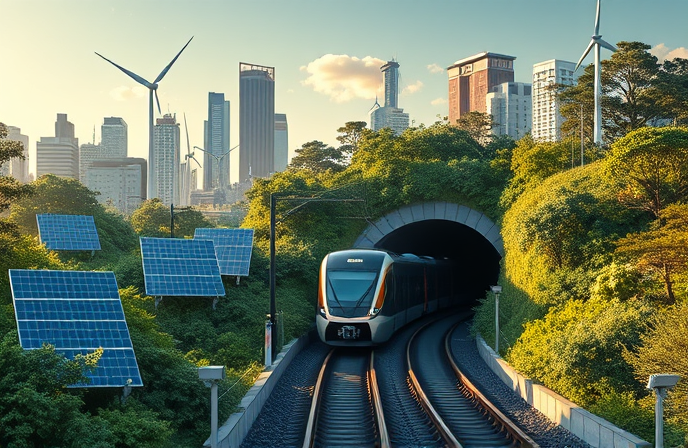
Auckland’s City Rail Link Achieves Historic Sustainability Accolades
Auckland’s City Rail Link (CRL), a transformative 3.45-kilometer rail project comprising tunnels and stations, has been awarded two prestigious As-Built Leading ratings from the Infrastructure Sustainability Council (ISC). This achievement marks the first time a project in New Zealand and Australia has received the highest possible sustainability recognition for its entire scope of design and construction, signifying a significant milestone in sustainable infrastructure development. The “who” is the City Rail Link project itself; the “what” is the Leading ISC ratings; the “when” is now, reflecting the project’s completion; the “where” is Auckland, New Zealand; the “why” is to build sustainable infrastructure; and the “how” is through incorporating sustainability into every aspect of the CRL’s development. This article explores the CRL’s exceptional performance, highlighting the project’s dedication to environmental stewardship, social responsibility, and innovative engineering practices, setting a new benchmark for the rail industry.
Detailed Sustainability: A Project-Wide Commitment
The ISC’s As-Built Leading rating, utilizing the ISC’s IS (Mahi Rauora Aratohu version 1) program, recognizes the entire CRL project for its commitment to sustainability across all aspects of design and construction, including the C1, C2, and C3 contracts. This holistic approach encompasses the construction of tunnels, stations, and all associated infrastructure. The scope included the construction of three underground stations: Te Waihorotiu (Aotea), Karanga-a-Hape (Karangahape), and Maungawhau (Mt Eden). The use of a tunnel boring machine (TBM) between Maungawhau and Te Waihorotiu highlights the project’s use of advanced technologies. This top-tier rating underscores the CRL’s success in reducing its environmental footprint, optimizing resource utilization, and incorporating sustainable practices throughout its lifecycle.
Environmental Protection and Carbon Footprint Reduction
A core element of the CRL’s sustainability success lies in its robust environmental protection measures. Key achievements include a substantial reduction in the project’s carbon footprint through the use of low-carbon construction materials, renewable energy sources, and energy-efficient operational systems. The project has also demonstrated a significant commitment to resource efficiency, implementing strategies for efficient water and materials usage, and drastically reducing waste destined for landfills. These initiatives were supported by high-tech computer technology to produce more efficient design and construction methodology.
Social and Cultural Integration: A Commitment to Community
Beyond environmental considerations, the CRL project exemplifies a commitment to social responsibility, particularly through the integration of Māori cultural values. The project partnered with mana whenua (local Māori iwi, or tribes) to embed cultural considerations into the project’s design and implementation. Additionally, the CRL has actively pursued positive social outcomes by creating employment and training opportunities, as well as supporting Māori and Pasifika businesses through supply chain opportunities. This approach reflects a conscious effort to benefit the local community and contribute to its socio-economic development.
The Link Alliance: Collaborative Excellence in Delivery
The success of the C3 contract, specifically for the tunnels and stations, highlights the pivotal role of the Link Alliance. This is a collaboration of various industry partners working together. The project’s achievements, recognized by the ISC’s As-Built Leading rating, exemplify the Link Alliance’s dedication to sustainability. Patrick Brockie, CRL Ltd Chief Executive, notes the testament of the partnership’s dedication to delivering a project that benefits not just Auckland, but also sets a higher bar for the entire infrastructure sector. This partnership model demonstrates how collaborative efforts can drive sustainable outcomes in large-scale infrastructure projects.
Conclusion
The City Rail Link’s dual As-Built Leading ratings from the ISC represent a landmark achievement in sustainable rail infrastructure development. The project’s success provides a compelling case study for the integration of environmental, social, and cultural considerations into large-scale infrastructure projects. The CRL’s emphasis on carbon footprint reduction, resource efficiency, and social responsibility, particularly its engagement with Māori cultural values, sets a new standard for railway projects across New Zealand and Australia. This achievement has significant implications for the rail industry, demonstrating that sustainability can be fully integrated into all aspects of project design, construction, and operation. As the industry moves forward, the lessons learned from the CRL will be invaluable in guiding future infrastructure projects toward achieving a more sustainable and socially responsible future. The project’s ongoing operations and impact on the local community will serve as a long-term example of how these principles can translate into tangible benefits.

Railway infrastructure, rolling stock and transport technologies specialist focused on global rail industry developments, high-speed rail systems, signaling technologies and freight transportation. Covering railway investments, public transport modernization, rail operations and international mobility projects across Europe, Asia and North America.
RELATED POSTS

October 1, 2026 7:09 am
United States regulators confirmed a September 30 deadline for the...

October 8, 2026 1:15 pm
Alstom secured a €1bn contract to build 13 automated trains,...

October 4, 2026 5:14 pm
Alstom secured a CA$4.7 billion order from VIA Rail Canada...

October 1, 2026 12:13 am
Illinois approved $1.5 billion annually for the Northern Illinois Transit...

October 6, 2026 2:14 am
Union Pacific launched export rail shipments with Ferromex to deliver...

October 1, 2026 6:10 am
Amtrak approved a System Expansion Committee on July 30 to...