
Croatia Rail Upgrade: Dugo Selo-Križevci Boosts Connectivity
Croatia’s Dugo Selo-Križevci rail line nears completion, a key modernization project. The EUR 196 million project aims to boost capacity and connectivity with Hungary.
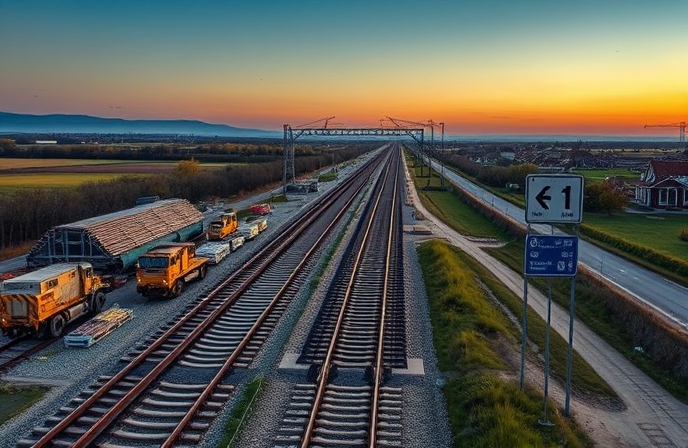
Croatia’s Dugo Selo – Križevci Rail Line Nears Completion: A Key Step in Modernizing Rail Infrastructure
Croatian rail infrastructure is poised for a significant upgrade as the Dugo Selo – Križevci rail project nears completion, with a target date of the end of this year. Announced by Minister of the Sea, Transport and Infrastructure, Žarko Tušek, and Chairman of HŽ Infrastruktura, Ivan Kršić, the project represents a crucial investment in Croatia’s railway network. This initiative involves the reconstruction of the existing track and the construction of a second track along the 38.2-kilometer stretch, aiming to increase capacity and enhance connectivity, particularly with Hungary. The project, valued at approximately EUR 196 million, forms part of a larger strategy to modernize Croatia’s rail infrastructure, improve cross-border connections, and facilitate higher operational speeds. The ‘who, what, when, where, why, how’ of this project is detailed within this article. The aim is to present a detailed overview of the project’s progress, challenges, and its future impact on the nation’s railway system.
Progress Report: Reconstruction and Second Track Construction
The Dugo Selo – Križevci rail project is multifaceted, involving the reconstruction of the existing single-track line and the simultaneous construction of a second track. The initial phases, including the connection of the section from Dugo Selo to Vrbovec, are already complete. At Dugo Selo station, significant work is underway, with the goal of connecting the entire double-track rail line by the end of the year, including the completion of all overpasses and the finalization of half of the station’s works. This coordinated effort aims to minimize disruption to existing rail traffic while accelerating the construction of the new infrastructure. Completion of remaining station works is projected for the following year. The project’s progress has been affected by the weather, specifically heavy rain periods, which has slightly affected the pace of works. The project is anticipated to be fully completed by April 2025.
Dugo Selo Station: A Key Focus
A significant challenge, as highlighted by the contractor Dalekovod, has been the ongoing work at Dugo Selo station, given the high volume of rail traffic passing through it. Despite this, operations have continued throughout the construction phase. The focus now is on the completion of overpasses by June and all bridges by September. The contractor is deploying approximately 200 workers on-site, and, provided weather conditions remain favorable, the project is on track to meet its deadlines. The construction process includes the reconstruction of Dugo Selo, Vrbovec, and Križevci stations. The reconstruction of the 36.4 km line, including construction of a second track along the entire 38.2 km, will lead to new bridges and grade-separated crossings. The entire project timeline involves extensive coordination to ensure the seamless integration of new infrastructure while minimizing disruptions to existing operations.
Funding and Contractual Agreements
The Dugo Selo – Križevci rail project is backed by significant funding, with a total value of EUR 193.4 million derived from grant agreements and a contract value of EUR 196 million. A EUR 23.5 million grant agreement was secured in 2015 through the Transport Operational Programme 2007 – 2013 (TOP) and the European Regional Development Fund (ERDF). Additional financing, amounting to EUR 3.5 million, was provided by the State Budget. In 2016, HŽ Infrastruktura signed a EUR 164.6 million construction contract with a consortium, including DIV Grupa, Dalekovod, and Zagreb Montaža. A EUR 2.5 million supervision service contract was also signed with a consortium including Investinženjering and SGS Adriatica, completed at the end of 2021. These financial arrangements and contractual agreements have been crucial in driving the project forward and meeting the necessary timelines.
Cross-Border Connectivity and Future Plans
The Dugo Selo – Križevci rail line is a critical component of Croatia’s railway network, facilitating a vital cross-border connection with Hungary, specifically through the Gyekenyes town. This strategic link is part of the broader Rijeka – Zagreb – Budapest mainline on the Mediterranean corridor. A follow-up project is already underway for the reconstruction of the 42.6 km line from Križevci to Koprivnica. Upon completion of the project, trains will be capable of operating at speeds of up to 160 km/h from Dugo Selo to the Hungarian border, significantly reducing travel times and enhancing regional connectivity. The overall investment in Croatia’s rail projects until 2035 is estimated at EUR 1.7 billion, with further plans to invest an additional EUR 6 billion. By the end of this year, 70 new trains are expected to be in operation, with contracts for 13 more trains including battery and electro-diesel multiple units are in preparation. The projected plan includes having 130 new and modern trains in operation across the Croatian rail network by 2032.
Conclusion
The Dugo Selo – Križevci rail project represents a pivotal step in Croatia’s ongoing efforts to modernize its railway infrastructure. The nearing completion of the line signifies improved connectivity and enhanced operational capabilities, particularly for cross-border travel with Hungary. While challenges such as weather and the complexity of construction around existing rail traffic have impacted the schedule, the project remains on track to deliver significant benefits. The investment of nearly EUR 200 million, combined with strategic European funding, underscores the commitment to upgrading the rail system. The anticipated increases in train speeds and the deployment of new rolling stock will lead to enhanced passenger and freight transport across the nation. Looking ahead, the project will set the foundation for future investments and establish Croatia as a key hub for regional rail travel. The successful completion of this project will not only benefit Croatia, but it will also make the whole corridor to Hungary more effective.

Railway infrastructure, rolling stock and transport technologies specialist focused on global rail industry developments, high-speed rail systems, signaling technologies and freight transportation. Covering railway investments, public transport modernization, rail operations and international mobility projects across Europe, Asia and North America.
RELATED POSTS
September 6, 2026 5:19 am
Hitachi delivered Taiwan's first N700ST high-speed train from Japan in...

September 5, 2026 4:19 pm
CPK launched formal tender talks with four consortia to design...
September 6, 2026 6:17 am
Hungary ordered a national ban on most freight trains from...
September 6, 2026 1:17 am
Hitachi Toshiba Supreme Consortium confirmed the first of 12 N700ST...
September 5, 2026 6:17 pm
Universal Signalling won a deal to install its U-Cross system...
September 6, 2026 8:17 am
DB InfraGO reopened the Nuremberg-Regensburg line in Bavaria on 31...