
Northern, EMR, TPE Ticket Pact: Resilience for North England Rail
Northern England rail operators expand ticket acceptance, boosting passenger resilience. New agreement lets travelers use tickets on other lines after cancellations.
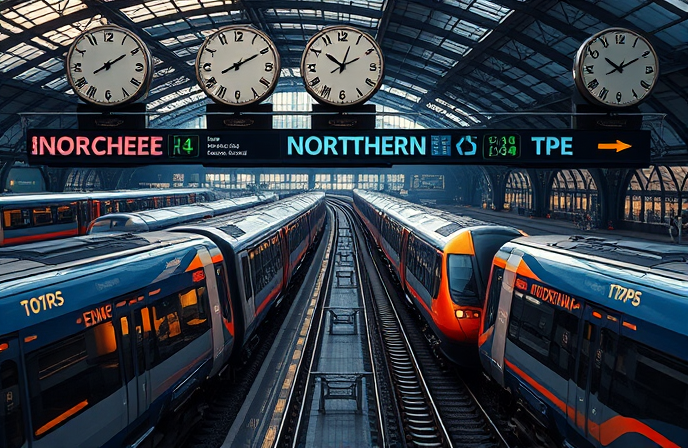
Ticket Acceptance Pact Bolsters Resilience for Northern England Rail Passengers
In a move designed to enhance passenger experience and mitigate the impact of disruptions, train operators Northern, East Midlands Railway (EMR), and TransPennine Express (TPE) have forged a new ticket acceptance agreement across the North of England. Effective from Sunday, 22 June 2025, the agreement provides a crucial safety net for travelers, allowing them to utilize their tickets on any of the three operators’ services within a two-hour window following a cancellation. This initiative, addressing both pre-planned engineering works and unforeseen incidents, represents a significant step towards passenger convenience and operational efficiency. The impetus for this partnership lies in a shared commitment to ensuring seamless travel, particularly during times of difficulty, thereby strengthening the interconnectedness of communities across the region. The article will focus on the details and implications of this ticket acceptance agreement, exploring its practical applications, the broader context of public ownership initiatives, and the anticipated positive effects on rail users.
Expanded Ticket Acceptance: A Customer-Centric Approach
The core of this agreement centers on the ability for passengers holding valid tickets for Northern, EMR, or TPE services to travel on any of the three operators’ trains within a two-hour window following a cancellation of their original service. This covers all tickets, and allows passage on any reasonable alternative route as indicated by standard journey planning tools. This is a notable extension of a pilot program launched in December 2024, which offered ticket acceptance for Northern customers on EMR and TPE services on Sundays where cancellations occurred. The new arrangement formalizes and expands on that initial offering, making it automatically available across all days of the week. This automated system reduces the need for manual intervention and offers passengers immediate solutions during times of operational difficulty, streamlining the claims process and ensuring that passengers can reach their destinations with minimal disruption.
Operational and Logistical Frameworks
The implementation of the ticket acceptance agreement necessitates close collaboration among the three train operators. This includes robust real-time communication systems to instantly notify staff and passengers of service alterations. Additionally, the agreement necessitates the sharing of passenger information and ticket validity protocols, enabling staff across all three networks to efficiently manage passenger flows during disruptions. The “reasonable route” clause in the agreement requires journey planning tools to reflect these options accurately. This will likely involve modifications to existing journey planning applications and the integration of real-time service updates across platforms, increasing the ease for customers in navigating changes and making informed travel decisions. In short, the agreement is underpinned by a strong digital infrastructure to support passenger movements.
Complementing Broader Government Initiatives
The enhanced ticket acceptance agreement is directly in line with the UK government’s public ownership programme. As part of this initiative, passengers impacted by disruption on any LNER, Northern or TPE service already benefit from ticket acceptance across those operators. This latest agreement formalizes and improves passenger support and provides a tangible example of the collaborative approach being fostered under public ownership. It reflects a concerted effort to improve rail services and prioritizes the passenger experience, demonstrating a clear strategic focus on integrated services. This is also crucial in the context of ongoing infrastructure upgrades and potential disruptions across the region. The agreement thus becomes an essential tool for minimizing inconvenience for passengers.
Conclusion
The collaboration between Northern, EMR, and TPE, encapsulated in the new ticket acceptance agreement, represents a significant improvement in passenger support throughout the North of England. This initiative, slated to become operational on 22 June 2025, underscores a commitment to enhancing travel reliability and minimizing passenger inconvenience. The implications extend beyond immediate traveler benefits, contributing to the broader aims of the UK government’s public ownership programme by improving service integration and delivering an enhanced customer experience. Looking ahead, the success of this venture can be a template for future collaborations between operators to enhance the flexibility and resilience of the rail network. Potential evolutions could involve further automation of disruption management, enhanced real-time information systems, and expanded data-sharing protocols to continuously optimize passenger flow and service recovery. This strategy has the potential to increase confidence in rail travel, promoting better and more frequent transportation services.
Company Summary
Northern: The second-largest train operating company in the UK, Northern provides approximately 2,650 daily services to over 500 stations across the North of England. Its operations are crucial to connecting communities, and is central to providing services across its regional network. It operates a diverse fleet of rolling stock, including diesel multiple units (DMUs) and electric multiple units (EMUs). Northern’s commitment to improving customer service, and to ongoing investment in its infrastructure, means it can maintain its place at the core of rail travel in the North of England.

Railway infrastructure, rolling stock and transport technologies specialist focused on global rail industry developments, high-speed rail systems, signaling technologies and freight transportation. Covering railway investments, public transport modernization, rail operations and international mobility projects across Europe, Asia and North America.
RELATED POSTS

October 1, 2026 7:09 am
United States regulators confirmed a September 30 deadline for the...

October 8, 2026 1:15 pm
Alstom secured a €1bn contract to build 13 automated trains,...

October 4, 2026 5:14 pm
Alstom secured a CA$4.7 billion order from VIA Rail Canada...

October 1, 2026 12:13 am
Illinois approved $1.5 billion annually for the Northern Illinois Transit...

October 6, 2026 2:14 am
Union Pacific launched export rail shipments with Ferromex to deliver...

October 8, 2026 12:18 pm
Siemens Mobility signed an agreement with VinSpeed to supply 350...