
South Korea High-Speed Rail Project: Seoul-Pusan KTX
South Korea’s high-speed rail, based on France’s TGV technology, drastically cut Seoul-Pusan travel time, boosting the economy. Railway sector news highlights this successful infrastructure project.
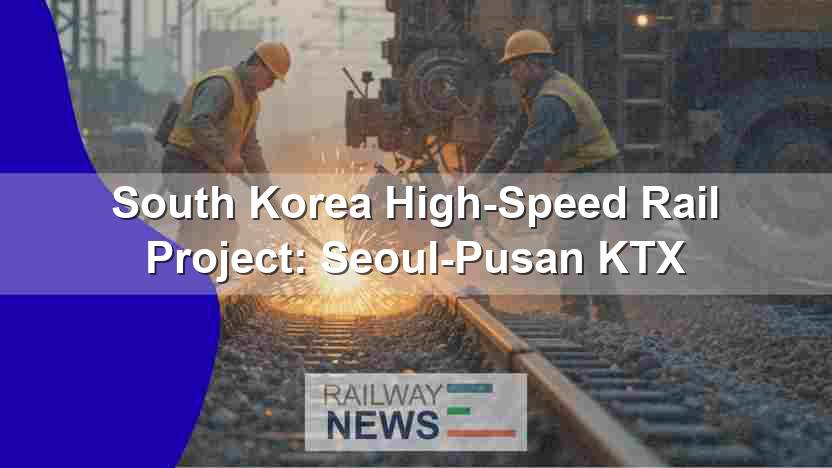
South Korea’s burgeoning economy in the late 20th century faced a critical infrastructure challenge: the overwhelming passenger traffic on the Seoul-Pusan corridor, the nation’s economic backbone. This corridor accounted for a staggering 66% of national passenger rail traffic, served 71% of the population, and generated 75% of the national wealth. Despite this significance, high distribution costs, relative to GDP, plagued the country. Existing rail lines were nearing capacity, and simply upgrading them wouldn’t provide a long-term solution. The need for a high-speed rail (HSR) solution was undeniable. This article examines the project’s aims, implementation, challenges, and ultimate success in transforming South Korea’s rail network, focusing on the strategic decision to adopt the French Train à Grande Vitesse (TGV) model and the resulting technological transfer and infrastructure development.
Project Overview and Justification
The ambitious undertaking involved constructing a high-speed rail line between Seoul and Pusan, mirroring France’s successful TGV network. The project’s rationale stemmed from the urgent need to alleviate congestion on the existing lines and reduce distribution costs, critical for maintaining economic competitiveness. The selection of the TGV model was strategically sound, leveraging France’s extensive experience in HSR technology and infrastructure development. This approach incorporated technology transfer as a key component, ensuring the long-term sustainability of the project through knowledge sharing and local capacity building. The phased approach, beginning with the Seoul-Taegu section, allowed for a more manageable implementation, mitigating risks and enabling continuous learning and refinement.
Construction and Technological Transfer
The project was implemented in two phases. Phase one focused on the Seoul-Taegu section, with simultaneous electrification of existing lines between Taegu-Pusan and Taejon-Taegu. Phase two, completed as part of the 2006-2015 National Rail Network Construction Plan, addressed the remaining Taegu-Pusan segment. Cost optimization measures, such as avoiding expensive civil engineering work in certain areas, were incorporated. The project adhered to international UIC (International Union of Railways) standards, with significant input from SYSTRA, a French engineering firm renowned for its HSR expertise. The involvement of Alstom, a leading rolling stock manufacturer, facilitated the technology transfer crucial for building the new KTX (Korea Train eXpress) fleet. Twelve trainsets were initially built in Belfort, France, before production shifted to South Korea, fostering local manufacturing capabilities and creating jobs. The KTX trains, based on TGV designs, incorporated advanced safety features like triple friction, regenerative, and rheostatic braking systems.
Infrastructure and Operational Aspects
The completed high-speed line boasts a total length of 412km, designed for a maximum speed of 350km/h (220mph). A significant portion (46%) of the track runs through tunnels, highlighting the challenging terrain. The line also incorporates 148 viaducts and bridges. Special measures were implemented to address South Korea’s seismic vulnerability, demonstrating a strong commitment to safety. Five new or upgraded stations were constructed, including three dedicated high-speed rail termini in Taejon, Pusan, and Taegu. The overhead catenary system features heating elements to prevent ice formation, enhancing operational reliability. A new depot and workshop in Pusan ensures efficient maintenance of the KTX fleet. The automatic train control (ATC) system, integrating in-cab signaling and a deadman’s device, ensures maximum safety and operational efficiency.
Project Results and Future Implications
The KTX high-speed rail line dramatically reduced travel time between Seoul and Pusan, from over four hours to just 1 hour and 56 minutes. This time saving is a testament to the successful implementation of advanced rail technology and demonstrates the project’s positive socio-economic impact. The project’s success is exemplified by the projected 500,000 daily passengers using the line and the significant boost to the South Korean economy. This demonstrates the transformative potential of large-scale infrastructure projects in boosting economic growth and improving national connectivity. The adoption of TGV technology provided a proven model for successful high-speed rail implementation in a different geographical and cultural context, demonstrating the value of technology transfer in achieving ambitious infrastructure goals. The project’s detailed approach, incorporating meticulous planning, robust safety measures, and effective technology transfer, sets a benchmark for future high-speed rail projects globally. The meticulous attention to detail, coupled with a focus on safety and sustainability, ensures the long-term viability and success of the project.
| Project Parameter | Value |
|---|---|
| Project Name | Seoul-Pusan High-Speed Rail |
| Route Length | 412 km |
| Design Speed | 350 km/h (220 mph) |
| Operational Speed | 300 km/h (maximum) |
| Average Speed (Seoul-Pusan) | 190 km/h |
| Project Cost | $16.3 billion (USD) |
| Number of Trainsets | 46 |
| Passenger Capacity (per trainset) | 935 |
| Connecting Cities | Seoul, Taejon, Taegu, Pusan |
| Number of Stations (New/Upgraded) | 5 |
Company Information:
- Korail (Korea Railroad Corporation): South Korea’s national railway operator.
- KTRC (Korea Transportation Research Corporation): A research and development organization focusing on transportation technologies in South Korea.
- SYSTRA: A leading French engineering and consulting firm specializing in transport infrastructure projects.
- Alstom: A multinational company operating in the rail transport sector, manufacturing rolling stock and providing various rail-related services.

Railway infrastructure, rolling stock and transport technologies specialist focused on global rail industry developments, high-speed rail systems, signaling technologies and freight transportation. Covering railway investments, public transport modernization, rail operations and international mobility projects across Europe, Asia and North America.