
Germany’s ICE 4 Trains: ETCS Approval & Future of Rail
Germany just approved Siemens’ ICE 4 trains for ETCS operation! This major advancement in European rail boosts safety, efficiency, and cross-border travel. Discover how!
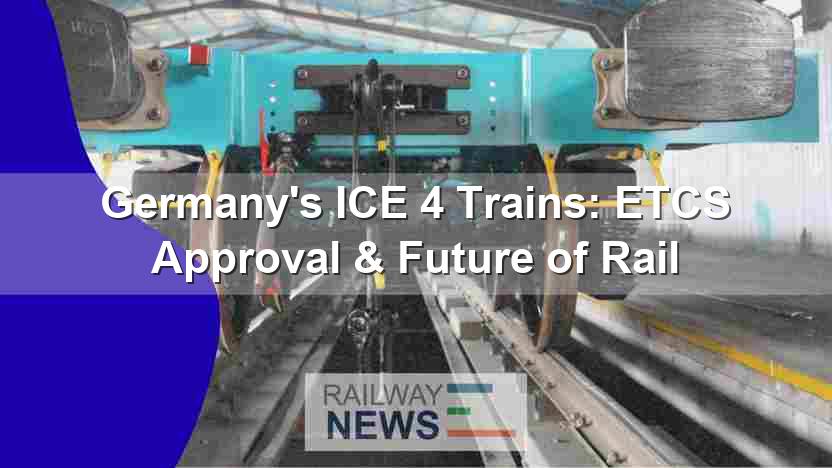
This article explores the significant approval granted by Germany’s Federal Railway Authority (EBA) for the Siemens-manufactured ICE 4 high-speed trains to operate utilizing the European Train Control System (ETCS). This approval marks a crucial step towards enhanced interoperability and safety within the European railway network. The introduction of ETCS on the ICE 4 fleet signifies a major technological advancement, impacting operational efficiency, cross-border travel, and the overall modernization of Germany’s rail infrastructure. We will explore the technical aspects of ETCS integration, the implications for Deutsche Bahn (DB), the broader European railway context, and the future prospects for this technological advancement within the German and international railway sectors. The analysis will also consider the economic and environmental benefits associated with this modernization, highlighting the ongoing commitment to sustainable and efficient rail transport.
ETCS Implementation on ICE 4 Trains
The EBA’s approval of the ICE 4 trains for operation with ETCS (European Train Control System) is a landmark achievement. ETCS is a crucial signalling system designed to standardize train control across Europe, replacing diverse national systems. This system facilitates seamless cross-border operations, improving efficiency and safety. The ICE 4 trains, equipped with ETCS, receive real-time commands and position data via the GSM-R (GSM-Railway) digital radio system from the Radio Block Centre (RBC). This continuous communication allows for precise control of train speed and positioning, enhancing safety and enabling higher operational speeds on compatible lines. The integration of ETCS on the ICE 4 fleet allows for significant improvements in operational efficiency, reducing delays and maximizing the utilization of existing railway infrastructure.
Impact on Deutsche Bahn and Cross-Border Operations
For Deutsche Bahn (DB), the operator of the ICE 4 fleet, the ETCS approval signifies a substantial upgrade to their operational capabilities. The deployment of 137 ICE 4 trains, including 12-car and 13-car units for long-distance routes within Germany, Austria, and Switzerland, and 7-car units for shorter routes, dramatically expands DB’s capacity to offer efficient and reliable high-speed rail services. The seamless integration of ETCS facilitates smooth cross-border operations, reducing the need for complex and time-consuming adaptations at national borders, ultimately enhancing passenger experience and the overall efficiency of the German and broader European rail network.
Broader European Railway Context and Interoperability
The successful integration of ETCS on the ICE 4 trains contributes significantly to the overarching goal of enhancing interoperability across the European railway network. The standardization offered by ETCS paves the way for the smooth operation of trains from different countries and operators on shared lines, effectively creating a more integrated and efficient European rail system. This standardization simplifies maintenance and reduces the operational complexities associated with diverse national signalling systems, leading to cost savings and improved operational efficiency across the entire continent.
Future Prospects and Technological Advancements
The approval of ICE 4 trains equipped with ETCS represents a significant step toward a more modern and efficient European railway system. The success of this initiative will likely encourage further investment in ETCS technology across other railway networks, driving innovation and improving safety standards throughout Europe. Additionally, the introduction of battery-powered alternatives like Siemens’ Desiro ML Cityjet eco, developed in collaboration with ÖBB (Austrian Federal Railways), demonstrates a commitment to sustainable and environmentally friendly rail solutions, complementing the efficiency improvements brought about by ETCS.
Conclusions
The EBA’s approval of Siemens’ ICE 4 trains for operation with ETCS is a momentous event in the modernization of Germany’s and Europe’s railway systems. The integration of ETCS, a state-of-the-art signalling and train control system, dramatically improves safety, efficiency, and interoperability. This approval enables Deutsche Bahn to significantly enhance its high-speed rail services, both domestically and across borders into Austria and Switzerland. The seamless cross-border operation facilitated by ETCS is a major step towards a truly integrated European rail network, reducing operational complexities and improving the overall passenger experience. This success story not only highlights the technological advancements in train manufacturing and signalling but also underscores the commitment to modernizing rail infrastructure for greater efficiency, safety, and environmental sustainability. The combination of ETCS implementation and the development of eco-friendly alternatives, such as battery-powered trains, positions the European railway industry as a leader in sustainable transportation technology, setting a strong example for global rail networks to follow. The future of European rail travel is clearly characterized by increased efficiency, greater interoperability, and a commitment to environmentally responsible operations, all of which are facilitated by innovations like ETCS and the adoption of sustainable train technologies. This approval sets a precedent for broader adoption of ETCS across Europe and paves the way for further advancements in rail technology and operational efficiency.

Railway infrastructure, rolling stock and transport technologies specialist focused on global rail industry developments, high-speed rail systems, signaling technologies and freight transportation. Covering railway investments, public transport modernization, rail operations and international mobility projects across Europe, Asia and North America.
RELATED POSTS

September 6, 2026 5:19 am
Hitachi delivered Taiwan's first N700ST high-speed train from Japan in...

September 6, 2026 1:17 am
Hitachi Toshiba Supreme Consortium confirmed the first of 12 N700ST...

September 6, 2026 6:17 am
Hungary ordered a national ban on most freight trains from...

September 5, 2026 4:19 pm
CPK launched formal tender talks with four consortia to design...

September 6, 2026 4:12 am
Alstom delivered the first of 100 new G Class trams...
September 7, 2026 8:16 am
Midea, Gree and TCL shipped air conditioners via China Railway...