
Stadler’s Bi-Mode Train: Revolutionizing UK Rail
Greater Anglia’s new Stadler bi-mode trains: a game-changer for regional rail, combining electric and diesel power for ultimate efficiency. Discover how!
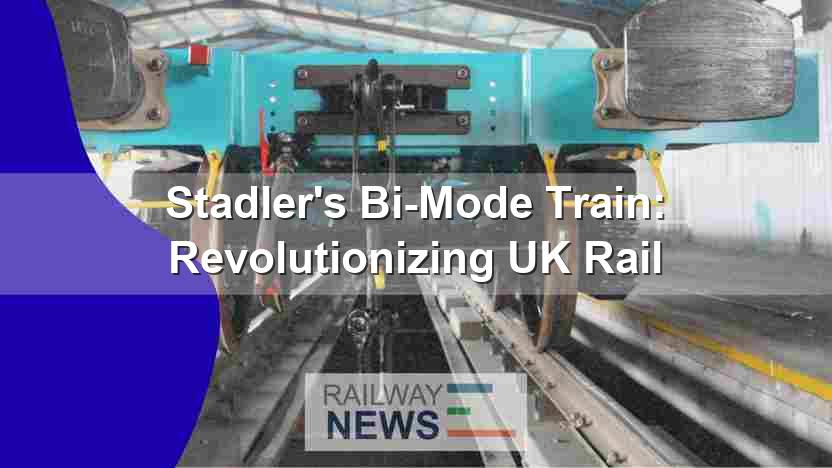
This article examines the delivery of the first bi-mode (capable of operating on both diesel and electric power) train by Stadler to Greater Anglia, a significant event in the modernization of the UK rail network. The introduction of this new rolling stock represents a key step towards improving passenger experience, enhancing operational efficiency, and reducing environmental impact. We will explore the technical specifications of the train, the testing procedures involved before passenger service commencement, the financial arrangements behind the acquisition, and the broader implications for Greater Anglia’s network and the UK rail industry as a whole. The analysis will delve into the advantages of bi-mode technology, considering its flexibility and potential for reducing reliance on diesel-only operation on less-electrified lines. Additionally, the article will assess the significance of this delivery within the context of Greater Anglia’s broader fleet modernization program.
Bi-Mode Technology and its Advantages
Stadler’s delivery of a bi-mode train to Greater Anglia signifies a crucial step towards modernizing the UK’s regional rail network. Bi-mode trains offer a unique advantage, combining the flexibility of diesel operation on non-electrified lines with the efficiency and environmental benefits of electric power on electrified sections. This dual capability eliminates the need for separate diesel and electric fleets, streamlining operations and reducing maintenance costs. The use of bi-mode technology allows Greater Anglia to enhance service on routes where electrification may not be economically feasible or practically possible in the short term, offering a bridge to a fully electrified future. This approach is a cost-effective solution for upgrading services on a diverse network with a mix of electrified and non-electrified lines.
Testing and Commissioning Process
Before entering passenger service, the bi-mode train underwent rigorous testing in Europe and subsequently in the UK on the Greater Anglia network. These tests encompassed a wide range of parameters, including brake performance, noise levels, emissions, and operational safety. Further testing focused on the pantograph (the device that collects electricity from overhead lines), the passenger information system, and the automatic selective door opening system. These detailed trials are vital to ensure the train meets the stringent safety and performance standards required for operation on the UK rail network. Extensive test runs across Norfolk, Suffolk, and Cambridgeshire ensured compatibility with the specific track conditions and signaling systems of the Greater Anglia network.
Financial Aspects and Procurement
The acquisition of 38 bi-mode trains by Greater Anglia – comprising 24 four-carriage and 14 three-carriage units – is a substantial investment financed by Rock Rail East Anglia, a joint venture involving Rock Rail, Aberdeen Standard Investments, and GLIL Infrastructure. This public-private partnership exemplifies the evolving financial models used to fund major rail infrastructure projects. The involvement of private investors demonstrates confidence in the long-term viability of the Greater Anglia network and the benefits of modernizing its rolling stock. This model could serve as a template for future railway modernization initiatives throughout the UK and beyond.
Impact on Greater Anglia and the UK Rail Industry
The introduction of Stadler’s FLIRT (Fast Light Innovative Regional Train) bi-mode trains represents a significant enhancement to Greater Anglia’s services. The trains feature low-floor, level boarding, greatly improving accessibility for passengers with disabilities. The state-of-the-art technology and enhanced passenger comfort contribute to a vastly improved customer experience, increasing ridership and bolstering Greater Anglia’s reputation. This project is part of a wider modernization program that also includes the procurement of 111 electric trains from Bombardier. The completion of this program will lead to a significantly improved and more environmentally friendly rail network for the region, setting a benchmark for other UK railway operators.
Conclusions
The delivery of Stadler’s first bi-mode train to Greater Anglia marks a pivotal moment in the ongoing modernization of the UK’s regional rail network. The adoption of bi-mode technology offers a compelling solution for enhancing services on lines with a mix of electrified and non-electrified sections, combining operational flexibility with environmental responsibility. The rigorous testing program ensures the train meets the highest safety and performance standards. The financial model, involving a public-private partnership, demonstrates a viable approach to funding major rail infrastructure projects. The introduction of these modern, accessible, and environmentally friendly trains significantly improves the passenger experience and enhances the overall efficiency and sustainability of the Greater Anglia network. The success of this project sets a positive precedent for future rail modernization initiatives across the UK, highlighting the potential of bi-mode technology and innovative funding models to deliver improvements in rail services nationwide.
The successful integration of these bi-mode trains into Greater Anglia’s fleet underscores the growing importance of flexible and environmentally conscious railway solutions. This initiative not only enhances passenger comfort and accessibility but also contributes to a more sustainable and efficient rail system. The careful planning, rigorous testing, and innovative financial mechanisms employed in this project serve as a model for future rail modernization efforts, showcasing how advancements in technology and collaborative partnerships can lead to significant improvements in railway infrastructure and service delivery. The long-term effects will likely include increased passenger satisfaction, improved operational efficiency, and a reduced environmental footprint for Greater Anglia, shaping the future of regional rail travel in the UK.

Railway infrastructure, rolling stock and transport technologies specialist focused on global rail industry developments, high-speed rail systems, signaling technologies and freight transportation. Covering railway investments, public transport modernization, rail operations and international mobility projects across Europe, Asia and North America.
RELATED POSTS
September 6, 2026 5:19 am
Hitachi delivered Taiwan's first N700ST high-speed train from Japan in...

September 5, 2026 4:19 pm
CPK launched formal tender talks with four consortia to design...

September 5, 2026 7:14 pm
HS2 Ltd signed renegotiated civils contracts with EKFB and Align...

September 6, 2026 4:12 am
Alstom delivered the first of 100 new G Class trams...
September 6, 2026 6:17 am
Hungary ordered a national ban on most freight trains from...
September 6, 2026 1:17 am
Hitachi Toshiba Supreme Consortium confirmed the first of 12 N700ST...