
Future of Rail: Renfe’s Hub in Aranjuez
Renfe builds cutting-edge Aranjuez maintenance hub, boosting Cercanías efficiency. €69M investment modernizes processes.
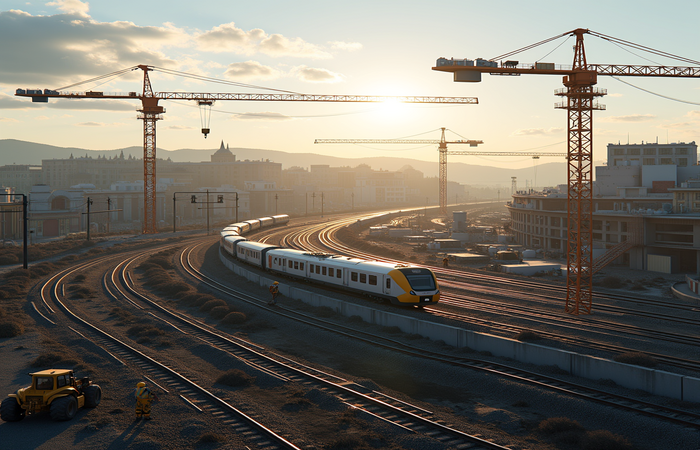
Renfe Breaks Ground on Cutting-Edge Maintenance Hub in Aranjuez
Renfe, Spain’s national railway operator, has initiated construction of a state-of-the-art maintenance facility in Aranjuez, a strategic move poised to significantly enhance the operational efficiency of its Cercanías commuter train services. The project, announced this week, will see an investment exceeding EUR 69 million, with an ambitious aim to modernise and digitise maintenance processes. The 5W1H of this project includes Renfe (Who) constructing a new maintenance facility (What) in Aranjuez (Where) starting now (When) to address growing demand and digitalise maintenance (Why) utilising cutting-edge technology and a phased approach (How). This article will explore the key features of the new facility, its technological advancements, and its implications for Renfe’s maintenance strategy and the broader Spanish railway landscape.
Digital Transformation in Train Maintenance
The new Aranjuez facility represents a pivotal step in Renfe’s ongoing digital transformation journey for its maintenance operations. The investment of EUR 69 million, with EUR 6.2 million specifically dedicated to industrial equipment, underlines the scale and ambition of the project. The integration of digital systems will facilitate fully digitalised preventive and corrective maintenance services, leading to improved data analysis, predictive maintenance capabilities, and enhanced overall fleet availability. The digitalisation effort is expected to streamline workflows, optimise resource allocation, and provide real-time insights into train performance and maintenance needs. The facility’s focus will be on both preventive measures – including safety inspections and scheduled servicing – and corrective maintenance, addressing faults and repairs related to incidents and vandalism.
Advanced Infrastructure and Operational Efficiency
Strategically positioned near Madrid’s Cercanías C-3 line, the Aranjuez base is engineered for optimised train access and network operability. The workshop will be equipped with three maintenance tracks, each 200 metres long, capable of servicing a total of 24 trainsets. It will also feature storage and operational tracks with capacity for 10 trains (200 metres each) and two trains (100 metres each), a turning track, a dedicated washing track, and a loading/unloading track. These infrastructural features are crucial to maintaining the daily operational efficiency of the expanding commuter fleet. Moreover, the project’s significant investment and planned ten-month construction timeline indicate the prioritisation of efficiency and the rapid delivery of enhanced maintenance capabilities.
Technological Innovations and Industrial Equipment
The Aranjuez facility will be equipped with the latest advancements in railway maintenance technology. It will incorporate a detailed suite of industrial systems, including lifting equipment, waste disposal and purification systems, underfloor wheel lathes (UFWLs), and bogie drop pits. UFWLs are essential for maintaining the profile of train wheels without removing them from the bogie, thus increasing efficiency and reducing downtime. Bogie drop pits are vital for removing and replacing bogies, the frame that supports a railway vehicle’s wheels and suspension. The deployment of these advanced systems will significantly enhance the facility’s capacity to handle a wide range of maintenance tasks, ensuring the long-term reliability and sustainability of Renfe’s commuter fleet.
Expanding Renfe’s Maintenance Network
The new Aranjuez base will augment Renfe Ingeniería y Mantenimiento’s existing network of 94 facilities across Spain. This extensive network is comprised of a tiered system, including first-level workshops for quick interventions, second-level centres for more complex tasks requiring train immobilisation, and component-specific repair hubs. This structure enables Renfe to effectively manage a wide range of maintenance requirements. Significantly, Renfe’s maintenance facilities also provide services to other rail operators within Spain’s liberalised passenger transport market, underlining the company’s key role in the industry.
Conclusion
The construction of the Aranjuez maintenance facility signifies a significant commitment by Renfe to improve the efficiency and sustainability of its operations. The investment of over EUR 69 million, coupled with the integration of advanced technologies, promises a streamlined and digitalised maintenance process for its Cercanías commuter train fleet. The facility’s strategic location and detailed infrastructure will enhance network operability, reduce downtime, and ensure the reliability of Renfe’s services. As the facility is completed within the projected 10-month timeframe, it will undoubtedly improve the overall passenger experience for the millions who rely on the Cercanías network. The project underscores Renfe’s proactive approach to address growing demand and future needs, contributing to its continued prominence in the Spanish railway landscape and its competitiveness within the liberalised market.
Company Summary
Renfe is the national railway operator of Spain. Its operations encompass passenger and freight transport, maintenance and infrastructure services. Renfe is actively involved in railway construction, maintenance, and technology development, contributing significantly to the nation’s transportation infrastructure.

Railway infrastructure, rolling stock and transport technologies specialist focused on global rail industry developments, high-speed rail systems, signaling technologies and freight transportation. Covering railway investments, public transport modernization, rail operations and international mobility projects across Europe, Asia and North America.
RELATED POSTS

October 8, 2026 1:15 pm
Alstom secured a €1bn contract to build 13 automated trains,...

October 1, 2026 7:09 am
United States regulators confirmed a September 30 deadline for the...

October 8, 2026 12:18 pm
Siemens Mobility signed an agreement with VinSpeed to supply 350...

October 4, 2026 5:14 pm
Alstom secured a CA$4.7 billion order from VIA Rail Canada...

October 5, 2026 6:12 pm
AECOM and Jacobs secured a contract in September 2026 to...

October 1, 2026 12:13 am
Illinois approved $1.5 billion annually for the Northern Illinois Transit...